
The short version
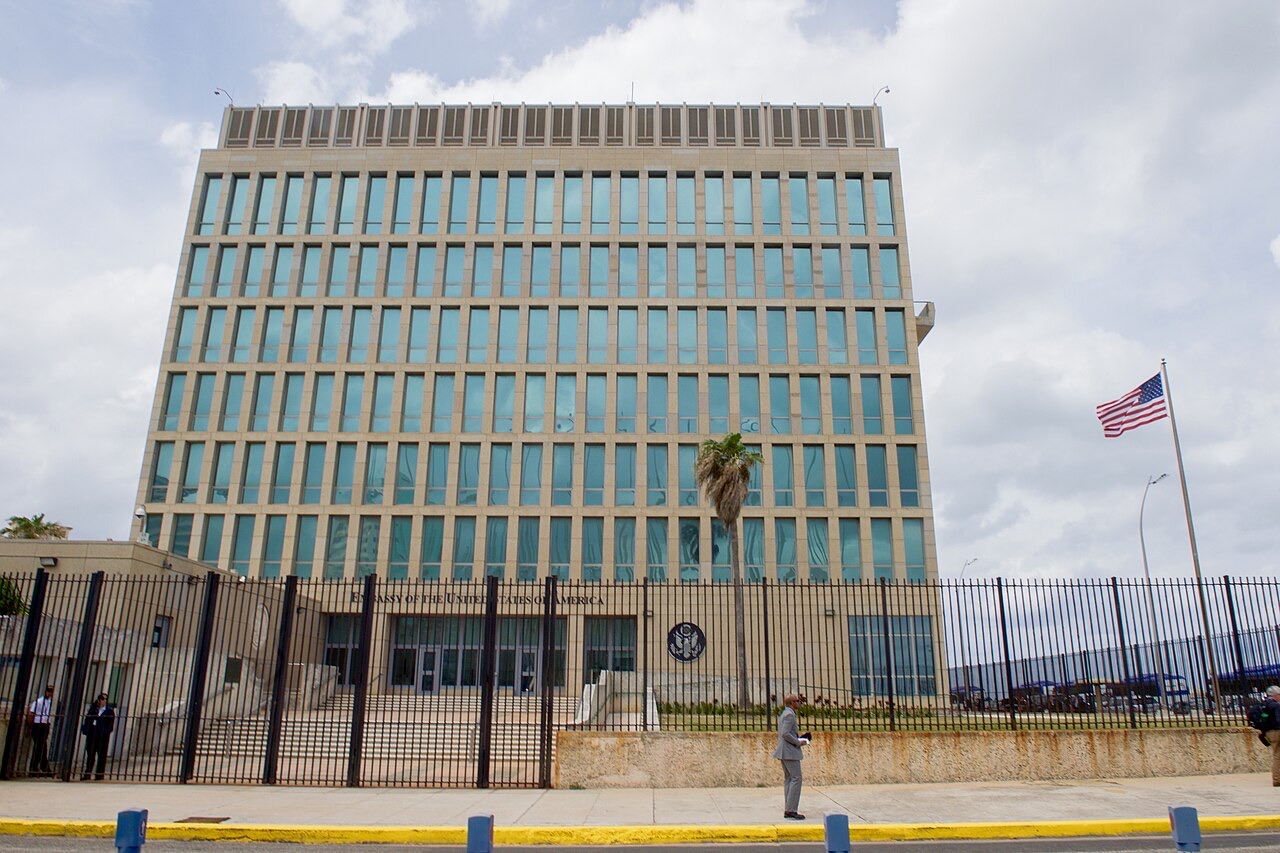
In late 2016, a year after the United States reopened its embassy in Cuba, a CIA officer in Havana reported dizziness, headaches and hearing loss after hearing a high-pitched sound. Soon dozens of embassy staff reported similar symptoms, and later many more US officials did so around the world. The US government calls them “anomalous health incidents”. A 2020 report by the US National Academies of Sciences found that directed, pulsed radio-frequency energy was “the most plausible mechanism”. But in 2023 most US intelligence agencies judged it “very unlikely” that a foreign adversary was responsible, and a large US government medical study in 2024 found no evidence of brain injury on MRI scans. In 2024 a media investigation linked the incidents to a Russian military intelligence unit, which Russia denies. In June 2026 the director of national intelligence, Tulsi Gabbard, withdrew the earlier sceptical assessments.
What people reported
According to the National Academies, many of those affected described a sudden loud noise, often seeming to come from one direction, followed by ear pain, intense pressure or vibration in the head, and dizziness. Some later reported migraines, impaired vision and memory loss. After the cases in Cuba, similar reports came from US officials in China, Austria, Germany and other countries. By 2023, US intelligence agencies had reviewed about 1,500 reports from 96 countries.
Canada also brought home diplomats’ families from Cuba after 10 Canadians stationed there showed symptoms. The US cut its embassy staff in Havana and expelled Cuban diplomats.
The explanations
A weapon. In December 2020 a committee of the National Academies of Sciences, asked by the State Department to study the cases, found that “directed, pulsed radio frequency energy appears to be the most plausible mechanism” for the distinct early symptoms. It added that it “could not rule out other possible mechanisms”, and it did not say who might be responsible.
Crickets. In 2019 two scientists matched a recording of the sound made by embassy staff in Havana to the mating call of a cricket, the Indies short-tailed cricket. Their study did not address the medical problems reported by the diplomats.
Illness and stress. Some neurologists and sociologists have argued that many cases could be “mass psychogenic illness”, in which real symptoms spread through a group under stress. “The symptoms of mass psychogenic illness are real,” said Dr Robert Baloh, a neurologist at UCLA. Cuba’s Academy of Sciences concluded that the cases were not one syndrome but “a collection of diverse medical conditions, some of them preexisting conditions”, and Cuba has accused Washington of using them as a pretext for cutting off relations.
The official findings
Intelligence agencies. In March 2023 the US intelligence community concluded that it was “very unlikely” that a foreign adversary was responsible, or that a weapon caused the symptoms. A senior official said: “This is not simply an absence of evidence … We have a lot of evidence that points the other way.” CIA Director William Burns stressed that the findings “do not call into question the experiences and real health issues” of those affected. In an update in January 2025, two of the seven agencies shifted their view, with low confidence. One judged there was a “roughly even chance” that a foreign actor had used a novel weapon or prototype device against a small number of people.
Medical studies. In March 2024 the US National Institutes of Health published a study of more than 80 affected people. It found “no significant evidence of MRI-detectable brain injury” compared with healthy volunteers. The researchers stressed that the symptoms “are very real”, and one said the results did not exclude “that an adverse event impacting the brain occurred at the time” of the incidents.
The Russia investigation
In March 2024 a joint investigation by The Insider, the American TV programme 60 Minutes and the German magazine Der Spiegel said that members of Unit 29155, a Russian military intelligence (GRU) unit, had been placed near some of the incidents, and that senior members of the unit had received awards for work on “non-lethal acoustic weapons”. The Kremlin’s spokesman, Dmitry Peskov, said “no one has ever published or expressed any convincing evidence of these unfounded accusations anywhere”.
Developments in 2026
In January 2026 CNN and CBS reported that the Pentagon had spent more than a year testing a device bought in an undercover operation, which some investigators suspect could be linked to the incidents. According to CNN, it contains Russian components, and there is “skepticism” in some parts of government about any link.
In June 2026 Gabbard rescinded two earlier intelligence assessments, saying they had “selectively excluded relevant intelligence” and relied on an “ethically flawed medical study”. The former CIA officer Marc Polymeropoulos, who fell ill on a trip to Moscow in 2017 and has spoken publicly about it, said: “This has been a fight for the truth that many of us have been engaged in for almost a decade.” Even before this, some officials in the Biden administration had remained unconvinced by the sceptical assessments, and the White House said at the end of that administration that the truth was still unknown. In July 2026 the Defense Department said it had paid nearly $3 million in compensation, “the first HAVANA Act payments made under any presidential administration”.
The arguments, point by point
A secret weapon
Those who believe it say: the symptoms are similar across many countries, the scientific panel found pulsed radio-frequency energy the most plausible cause, and investigators have tracked a Russian unit to the scenes.
The response: most US intelligence agencies concluded in 2023 that a foreign weapon was very unlikely, and the medical study found no brain damage visible on scans. Russia denies any involvement.
Something else
Those who believe it say: the symptoms can be explained by existing illnesses, stress and environmental factors, and the famous sound recording was made by crickets.
The response: those affected and their supporters, including members of Congress, say the sceptical assessments ignored evidence, and the current US administration has withdrawn them.
What is still argued about
- Whether any device has been used against US personnel, and by whom.
- Whether a new official assessment will be published to replace the ones that were withdrawn.
No poll appears to have asked whether people believe Havana Syndrome is caused by a weapon.
Sources
- History.com, “‘Havana Syndrome’ first reported by CIA officer in Cuba”
- National Academies of Sciences, Engineering, and Medicine, “New Report Assesses Illnesses Among U.S. Government Personnel and Their Families at Overseas Embassies” (2020)
- CBS News, on staff withdrawn from China and the cases in Cuba (2018)
- NBC News, “As many as 200 Americans have now reported possible symptoms of Havana syndrome” (2021)
- PBS NewsHour, “‘Very unlikely’ foreign adversary caused Havana Syndrome, U.S. intelligence says” (2023)
- The Globe and Mail, “No sign adversaries behind Havana syndrome: U.S. intelligence agencies” (2023)
- NBC News, “U.S. intel review finds no evidence linking foreign adversary to Havana syndrome” (2023)
- VOA, “US intelligence mostly rejects links between Havana syndrome, adversaries” (2025)
- NIH Intramural Research Program, “IRP studies find severe symptoms of Havana Syndrome but no evidence of MRI-detectable brain injury” (2024)
- EurekAlert, NIH news release on the studies (2024)
- The Insider, “Unraveling Havana Syndrome: New evidence links the GRU’s assassination Unit 29155 to mysterious attacks on U.S. officials and their families” (2024)
- The Globe and Mail, “Kremlin dismisses report Russia behind Havana syndrome” (2024)
- CNN via Yahoo News, on the device bought by the Pentagon (2026)
- CBS News, “Device that may be tied to ‘Havana Syndrome’ obtained by U.S. government” (2026)
- CNN via CP24, “Gabbard rescinds Biden-era intel assessments that were skeptical about Havana Syndrome” (2026)
- The New York Times via Hawaii Tribune-Herald, “Gabbard revokes Biden-era assessments on mysterious ailments” (2026)
- The Defense Post, “US Delivers First Payments to ‘Havana Syndrome’ Victims” (2026)
- Berkeley News, “Recorded sounds that plagued U.S. diplomats in Cuba? Just crickets hard at work” (2019)
- Salon, “Scientists are skeptical that Havana syndrome is anything more than a psychogenic illness” (2021)
- Scientific American, “How ‘Anomalous Health Incidents’ in Cuba Sidelined Science” (2023)
- The Star / Reuters, “Cuba blasts US for years of disregarding evidence on ‘Havana syndrome’” (2023)
- The World, “Havana syndrome is ‘an act of war and we have to stop it,’ former CIA agent says” (2021)
- House Intelligence Committee, statement by Chairman Crawford (2026)