
The short version
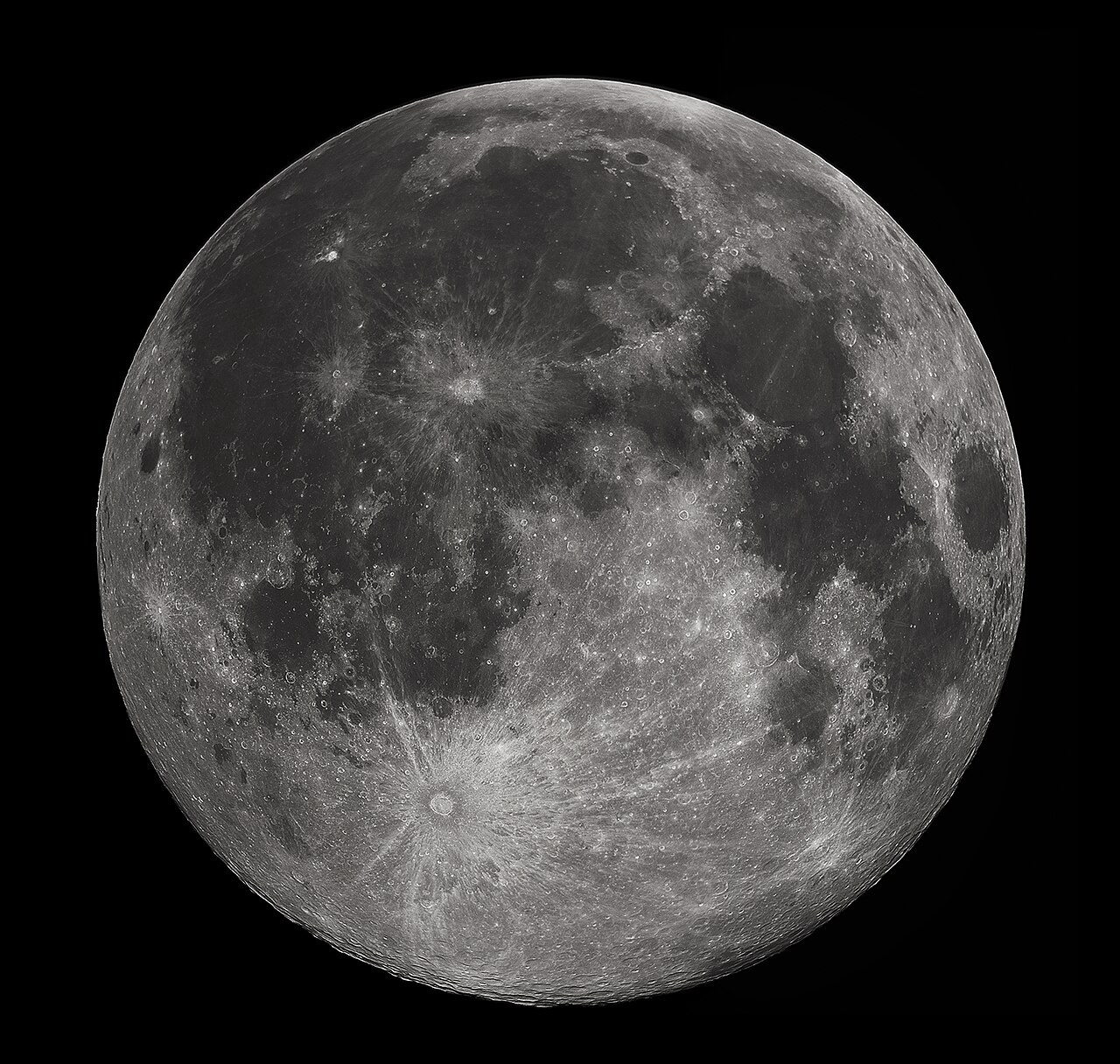
The hollow Moon theory says that the Moon is not a solid ball of rock. In its mildest form the Moon is a natural body with a vast empty interior. In its boldest form it is a machine: an ancient spacecraft, hollowed out and parked in orbit around the Earth by someone else. The theory leans on real measurements from the Apollo programme. Scientists read the same measurements, and many later ones, as showing a Moon that is solid almost all the way through, with a small core of iron at the centre.
Where the idea comes from
Fiction came first. In H. G. Wells’s novel The First Men in the Moon, published in 1901, travellers find that the Moon is hollow and inhabited by insect-like creatures called Selenites.
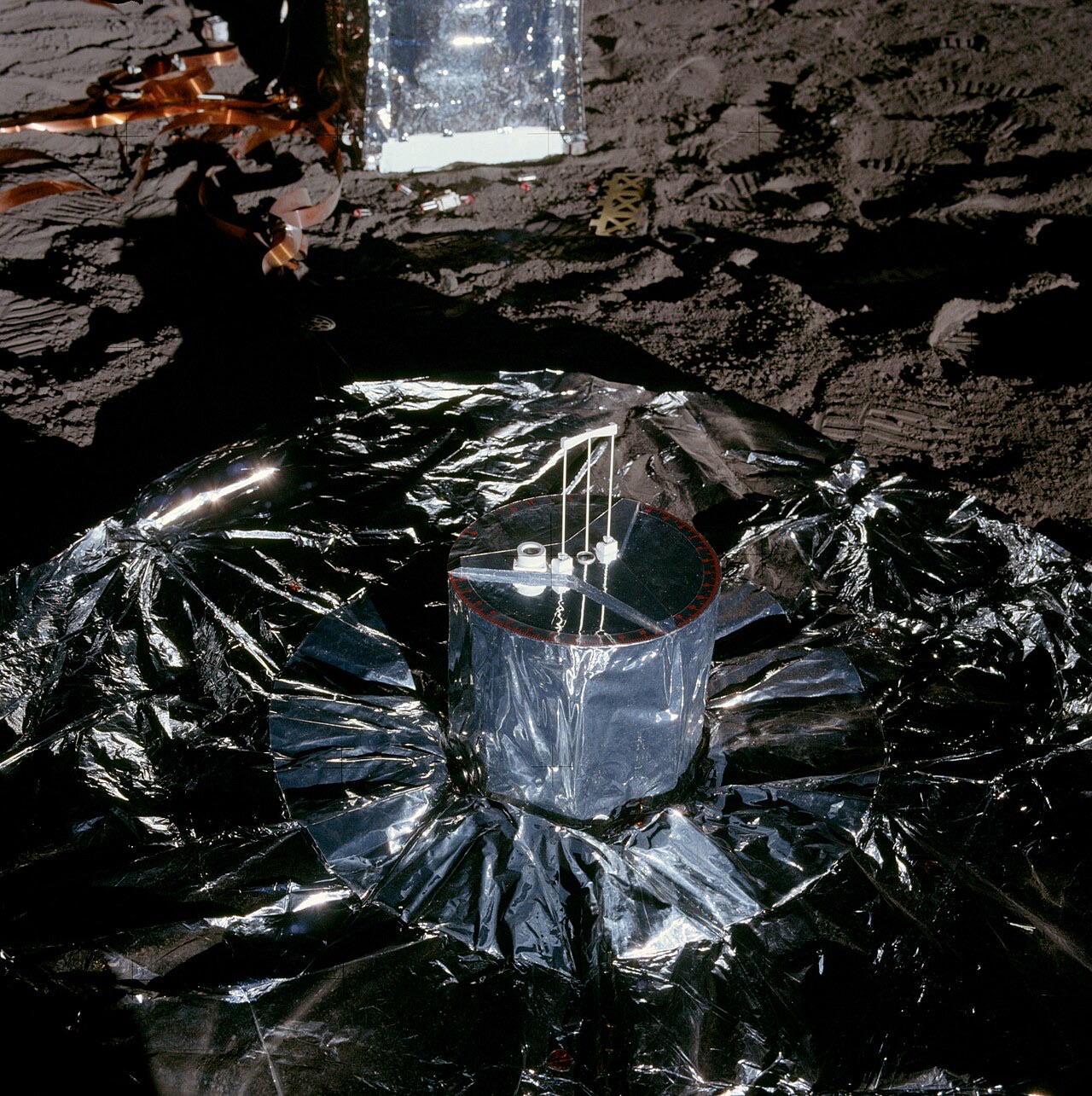
Then came Apollo. In November 1969, the crew of Apollo 12 had finished with their lunar module and it was crashed into the Moon on purpose, about 60 kilometres from a seismometer the astronauts had left on the surface. NASA calls it the first recorded artificial moonquake. The impact had roughly the force of a ton of TNT. The vibrations built up for about eight minutes and took around an hour to die away.
Maurice Ewing, the geophysicist who led the experiment, reached for a comparison: “It is as though one had struck a bell, say, in the belfry of a church” and found that it kept reverberating for thirty minutes. On Earth, the vibrations from an earthquake usually die away in about half a minute, and even the biggest quakes stop shaking in less than two minutes.
In April 1970 the spent third stage of the Apollo 13 rocket was aimed at the Moon and hit about 135 kilometres from the same instrument. This time the signal lasted more than three hours.
Then came the spaceship. In 1970 the Soviet magazine Sputnik, a popular digest and not a scientific journal, published an article by Mikhail Vasin and Alexander Shcherbakov, who are described as members of the Soviet Academy of Sciences. They proposed that the Moon is “an artificial Earth satellite put into orbit around the Earth by some intelligent beings unknown to ourselves”, and called it “a very ancient spaceship”. Their idea did not find much favour, but it travelled.
The books. Don Wilson’s book Our Mysterious Spaceship Moon followed in 1975. In the 2000s Christopher Knight and Alan Butler argued in Who Built the Moon? that it is unreasonable to regard the Moon as a natural object. The writer David Icke has gone further and described the Moon as a hollowed-out craft that is used to control human minds.
The arguments, point by point
The Moon rings like a bell
Believers say: solid rock does not ring for an hour. A bell rings because it is hollow.
The response: seismologists say the long ringing comes from what the Moon lacks. Rock on Earth contains water, which soaks up vibrations in the way a sponge would. The Moon is dry, cool and rigid, and its outer layers have been cracked by ages of meteorite bombardment. Seismic waves bounce and scatter through that broken, dry rock and fade very slowly.
The Moon is too light
Believers say: the Moon’s average density is 3.34 grams per cubic centimetre. The Earth’s is 5.51. Something is missing from the inside.
The response: what is missing is iron. The Earth’s heavy iron core makes up about 30 per cent of its mass. The Moon’s core is less than 2 per cent of its mass. NASA’s leading explanation for the Moon’s origin is that about 4.5 billion years ago an object perhaps the size of Mars struck the young Earth, and the Moon formed from the debris. Gravity measurements suggest that the Moon’s overall composition is similar to the Earth’s, apart from the missing iron.
The craters are too shallow
Believers say: Vasin and Shcherbakov argued that lunar craters are too shallow for their width.
The response: measurements of the Moon’s gravity show a crust of rock between 34 and 43 kilometres thick on average, with a mantle and a core beneath it.
The eclipse coincidence
Believers say: the Sun is about 400 times wider than the Moon and about 400 times farther away, so the two look the same size in the sky and total solar eclipses are possible. The Moon is also unusually large compared with its planet, at 27 per cent of the Earth’s diameter. That looks like design.
The response: astronomers call the match a coincidence, and a temporary one. The Moon is moving away from the Earth by about an inch a year, so the fit was different in the past and will be lost in the future.
What the measurements show
How the mass is spread. From the Moon’s gravity and the way it turns, scientists can work out how its mass is distributed. The result is expressed as a single number. A ball that is the same all the way through scores 0.4. A body with its weight packed towards the centre scores less; the Earth is 0.33. A body with its denser material towards the outside would score more. The Moon is about 0.39, which means almost uniform with a slight concentration at the centre.
The core. In 2011 a NASA-led team re-analysed the Apollo seismic records and reported the first direct detection of the Moon’s core: a solid, iron-rich inner core with a radius of about 240 kilometres, surrounded by a layer of liquid iron. A study published in Nature in 2023, combining several kinds of data, again found a solid inner core, with a radius of about 258 kilometres.
Gravity. In 2012 NASA’s twin GRAIL spacecraft mapped the Moon’s gravity in detail. They found a crust that is heavily fractured and porous, with about 12 per cent of its volume as empty space to a depth of at least a few kilometres. NASA describes the Moon as a layered world with a crust, a mantle and a core.
Lasers. Reflectors left by the Apollo crews are still used to measure the distance to the Moon with lasers. Decades of those measurements also point to a fluid layer in the core.
The hollows that are real
The Moon does have cavities, on a much smaller scale. More than 200 pits have been found on the surface since 2009, and about 16 of them are thought to be collapsed lava tubes, tunnels left behind by flowing lava. In 2024 a team writing in Nature Astronomy used radar data to show that a pit in the Sea of Tranquillity leads to a cave tens of metres long, more than 100 metres below the surface. At least one headline asked whether the hollow Moon theory had just been confirmed. The cave is a tunnel in the outermost part of a crust that is tens of kilometres thick.

What is still argued about
- Scientists still debate the details of the Moon’s origin, including whether there was one giant impact or several.
- The exact size and state of the core are still being refined. The 2011 and 2023 studies give slightly different figures.
Sources
- NASA Space Science Data Coordinated Archive, “Apollo 12 Lunar Module / ALSEP”
- University of Texas Institute for Geophysics, “Remembering the Apollo moon landings: Yosio Nakamura and the birth of planetary seismology” (2019)
- Popular Science, “Does the Moon Sound Like a Bell?” (2016)
- NASA History, “Apollo 13” mission summary
- Armagh Observatory and Planetarium, “Is the Moon Hollow?” (2015)
- Skeptoid, “The Engineered Moon Conspiracy” (2021)
- NASA, “Moon Fact Sheet”
- NASA Science, “Moon Formation”
- NASA Jet Propulsion Laboratory, “NASA’s GRAIL Creates Most Accurate Moon Gravity Map” (2012)
- Astronomy, “NASA research team reveals the Moon has earthlike core” (2011)
- Briaud and others, “The lunar solid inner core and the mantle overturn”, Nature (2023)
- Carrer and others, “Radar evidence of an accessible cave conduit on the Moon below the Mare Tranquillitatis pit”, Nature Astronomy (2024)
- Jason Colavito, “‘Spaceship Moon’ and Soviet Scientific Politics”
- NASA, “Moonquakes” (2006), archived copy
- NASA Science, “Moon Facts”
- NASA, “NASA’s LRO Finds Lunar Pits Harbor Comfortable Temperatures” (2022)
- Eos, “Lunar Lava Tube Revealed Beneath Collapsed Pit” (2024)
- NASA, “Laser Beams Reflected Between Earth and Moon Boost Science” (2020)
- Space.com, “Why Total Solar Eclipses Are Total Coincidences” (2017)