
The short version
There was a real Order of the Illuminati. It was founded in 1776, tried to spread Enlightenment ideas through secret lodges, and was crushed by the Bavarian government in the 1780s. The theory holds that it never ended: that it went underground, caused the French Revolution, and today controls governments, banks and the entertainment industry. Historians find no trace of the order after its suppression.
The real Illuminati
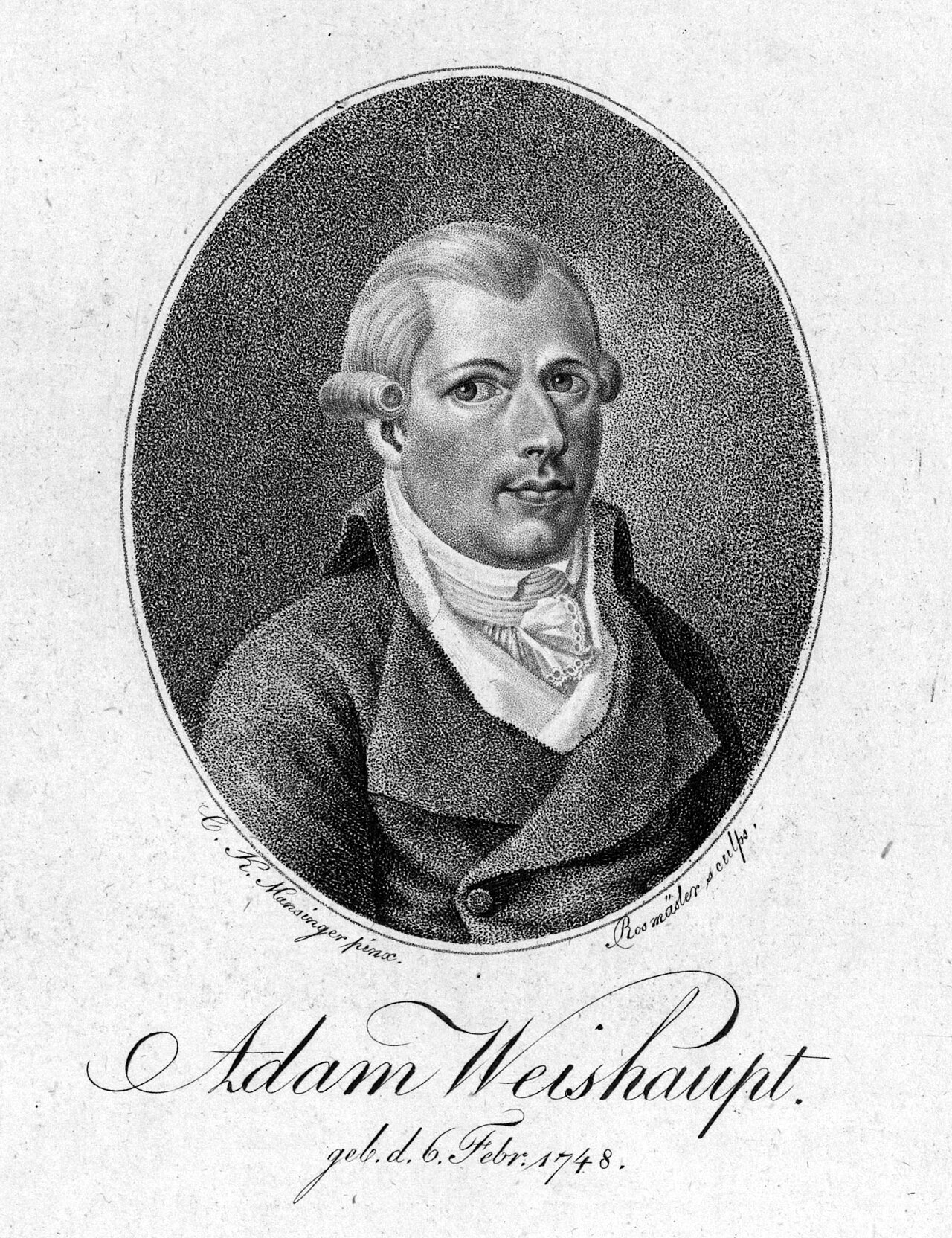
On 1 May 1776, Adam Weishaupt, a law professor at the University of Ingolstadt in Bavaria, founded a secret society with a handful of students. Its aims were to promote reason and science, reduce the influence of the church over public life, and place its members in positions where they could shape society.
The order used code names and ranks, and recruited through Masonic lodges. With the help of the diplomat Adolph Knigge it grew to perhaps two thousand members across the German states, including nobles, officials and writers.
It did not last. Weishaupt and Knigge fell out, and Bavaria’s ruler issued edicts against secret societies in 1784 and 1785. Police raids seized the order’s papers, which the government published to discredit it. Weishaupt lost his post and lived in exile until his death in 1830. By about 1787 the order had ceased to function.
How the legend grew
The French Revolution. In 1797 two writers working independently, the French priest Augustin Barruel and the Scottish scientist John Robison, published books arguing that the revolution had been engineered by surviving Illuminati working through the Freemasons. Their books were bestsellers and set the pattern for everything that followed.
America’s first Illuminati panic. In 1798 New England clergy warned that Illuminati agents were at work in the United States. The scare faded within a couple of years.
The 20th century. Writers revived the idea to explain communism and world wars. During the Cold War, American groups on the far right used it to describe a hidden elite steering both sides.
The joke that got loose. In the 1960s, a group of pranksters connected to a satirical religion sent fake letters about the Illuminati to magazines, to make people question what they read. Two of them wrote the Illuminatus! trilogy of novels in 1975, mixing every conspiracy theory into one comic plot. Many readers took the material seriously.
Pop culture. From the 1990s the idea spread through hip-hop, where rappers were accused of membership, through novels such as Angels & Demons, and then through online video dissecting hand gestures at award shows.
Versions of the theory
The surviving order. Weishaupt’s society continued in secret and passes control from generation to generation.
The New World Order. The Illuminati is a name for an elite of financiers and politicians working towards a single world government.
The entertainment Illuminati. Famous musicians and actors are members, and signal it through symbols such as triangles and a covered eye.
The bloodlines. A small number of families have ruled from behind the scenes for centuries.
Some versions go further and name Jewish people or other groups as the power behind the scenes. Those versions draw on The Protocols of the Elders of Zion, a text fabricated in Russia in the early 1900s and exposed as a forgery in 1921. It has been used to justify persecution and violence.
The arguments, point by point
The dollar bill
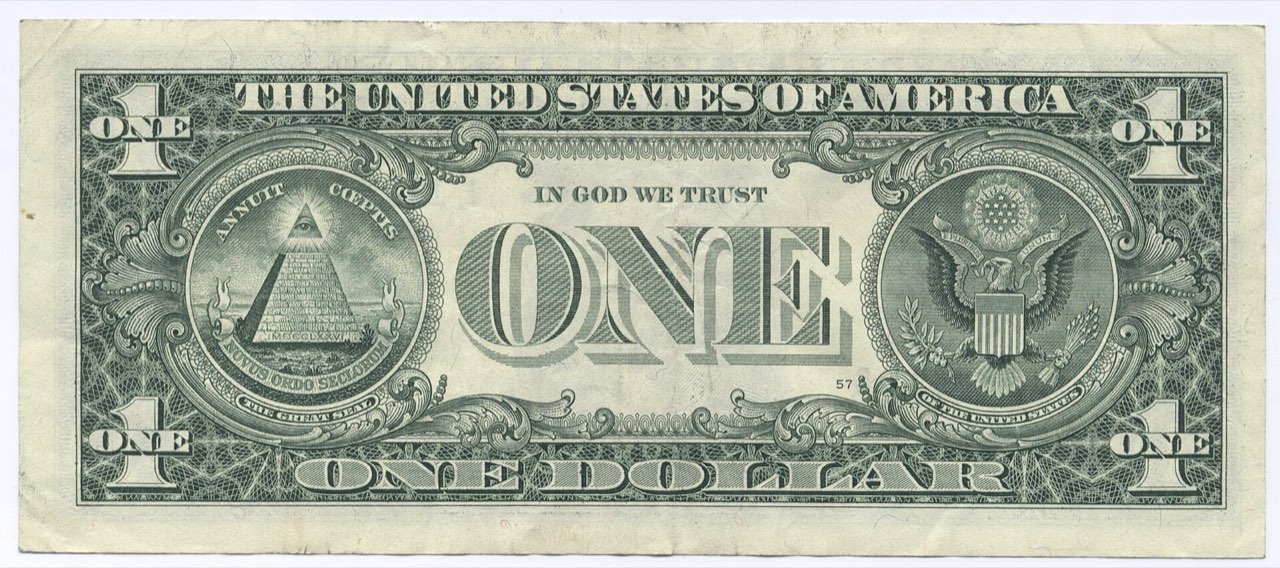
Believers say: the pyramid and all-seeing eye on the US one-dollar bill are Illuminati symbols, the date in Roman numerals is 1776, the year the order was founded, and the motto means “new world order”.
The response: 1776 is the year of American independence. The seal was designed in 1782 and placed on the dollar in 1935. The eye was a common Christian symbol of God watching over humanity, and the Bavarian order’s own emblem was an owl. The motto is better translated as “a new order of the ages”.
Powerful people do meet in private
Believers say: gatherings such as the Bilderberg meetings and Bohemian Grove are real, closed to the press and attended by the people who run the world.
The response: those meetings exist and are fair targets for criticism about transparency. Nothing connects them to an 18th-century Bavarian society, and their participants openly disagree with each other in public.
Celebrities use the symbols
Believers say: the same gestures and images appear too often to be chance.
The response: artists and designers know the legend and play with it, partly because controversy sells. Several have said so.
Events are too well coordinated
Believers say: wars, financial crises and pandemics benefit the same small group every time.
The response: historians point out that a plan requiring thousands of participants across centuries, with no defectors and no documents, is far harder to keep than the ordinary explanation of competing interests.
What the evidence shows
The order’s internal papers survive because the Bavarian government printed them. They show ambitious plans, quarrels and a group that was broken up within nine years. No membership lists, correspondence or records of any continuing organisation after the 1780s have been found. Several modern groups use the name, and none can show a link to the original.

What is still argued about
- How much influence the real Illuminati had on later reform movements in Germany.
- Why the legend proved so durable. Scholars often answer that it offers a simple explanation for complicated events and puts a face on the feeling that ordinary people are not in control.
- Where legitimate concern about the influence of wealth on politics ends and conspiracy theory begins.
How many people believe it
In a 2013 US survey, 34% of Republicans and 15% of Democrats agreed that a secretive power elite with a globalist agenda is conspiring to rule the world.
Sources
- Live Science, “Faked Moon Landing? Conspiracy Beliefs Fall Along Party Lines” (2013 Public Policy Polling survey)
- Augustin Barruel, Memoirs Illustrating the History of Jacobinism (1797)
- John Robison, Proofs of a Conspiracy (1797)
- Robert Shea and Robert Anton Wilson, The Illuminatus! Trilogy (1975)
- Encyclopaedia Britannica, “Illuminati”
- US Department of State, history of the Great Seal of the United States
- Reinhard Markner, Monika Neugebauer-Wölk and Hermann Schüttler (eds.), Die Korrespondenz des Illuminatenordens (published correspondence of the order)