
The short version
In December 1924 the leading lightbulb makers of Europe and Japan, together with foreign subsidiaries of the American company General Electric, formed a cartel known as Phoebus. It divided the world market into zones with sales quotas and, by 1925, set a standard life of 1,000 hours for an ordinary household bulb, down from the 1,500 to 2,000 hours that had previously been common. Factories were tested and fined if their bulbs lasted longer, or shorter, than the standard. The cartel collapsed with the Second World War. Unlike most theories on this site, this one rests on documents: the historian Markus Krajewski found the cartel’s records in corporate archives. What is still argued about is why the cartel did it. Critics say it was to sell more bulbs. The cartel and later defenders said shorter-lived bulbs were brighter and used electricity more efficiently.
The cartel
According to Krajewski, a professor of media studies at the University of Basel, the leading lightbulb makers met in Geneva on 23 December 1924 to found the cartel. A 1949 US court ruling dates the agreement to 20 December 1924 in Zurich. Its members included Osram of Germany, Philips of the Netherlands, Compagnie des Lampes of France, Tungsram of Hungary, Associated Electrical Industries of Britain and Tokyo Electric of Japan. General Electric, one of the prime movers, was not itself a member, but took part through its British subsidiary and other overseas companies.
The cartel’s founding document spoke of “ensuring and maintaining a uniformly high quality, increasing the effectiveness of electric lighting and increasing light use to the advantage of the consumer”. It also standardised the screw-in bulb socket still used today.
The 1,000-hour rule
By early 1925 the cartel had fixed a life of 1,000 hours for a standard pear-shaped household bulb. Factories had to send samples to a central laboratory in Switzerland. “If any factory submitted bulbs lasting longer or shorter than the regulated life span for its type, the factory was obliged to pay a fine,” Krajewski writes. Firms were also fined for exceeding their sales quotas.
The records show what happened next. The average life of bulbs from members’ factories fell by a third between 1926 and 1934, from 1,800 to 1,205 hours. Sales rose from 335.7 million bulbs in 1926–27 to 420.8 million four years later. Members complained to each other about rivals that broke ranks. “After the very strenuous efforts we made to emerge from a period of long life lamps, it is of the greatest importance that we do not sink back,” wrote Anton Philips, head of Philips.
The cartel was weakened by expiring patents, cheap Japanese imports and legal attacks in the United States, and it was ended by the Second World War.
The court case
In the United States, the government sued General Electric. In 1949 a federal court in New Jersey found that GE had monopolized the American lightbulb industry. The court found that GE had the ability “to shorten the life of a lamp”, as it had done with flashlight bulbs. In 1932 GE engineers had proposed shortening flashlight bulbs to last only as long as one battery, estimating that “it would result in increasing our flashlight business approximately 60 per cent”. The court also noted, however, that “the life of a lamp is inextricably related to the power of its light”.
The arguments, point by point
Profit
Those who believe the cartel limited bulb life on purpose say: the cartel fined factories for making long-lasting bulbs, shortened lifespans and then sold more bulbs. Krajewski concludes that “all evidence points to the cartel’s being motivated by profits and increased sales, not by what was best for the consumer”.
The response: the cartel itself argued that its bulbs were “of a higher quality, more efficient, and brighter burning”. Krajewski adds: “They also cost a lot more.” A Philips historian argued that cheap Japanese bulbs drew more current, so they cost more over their life.
Physics
Those who defend the standard say: a hotter filament gives more light per watt but burns out faster, so a shorter life means more light for the same electricity. In court, GE argued that two bulbs lasting 750 hours could cost consumers less than one lasting 1,500 hours for the same amount of light. The RP Photonics Encyclopedia notes that the trade-off between efficiency and lifetime “leads to designs which have a lifetime of the order of 1000 hours”, because electricity is most of a bulb’s lifetime cost.
The response: the cartel’s own correspondence shows members working to stop longer-lasting bulbs from returning, as Anton Philips’ letter shows, and the US court found that GE’s handling of flashlight bulbs showed “a paramount concern in what would afford the maximum return in profits”.
The bulb that never went out
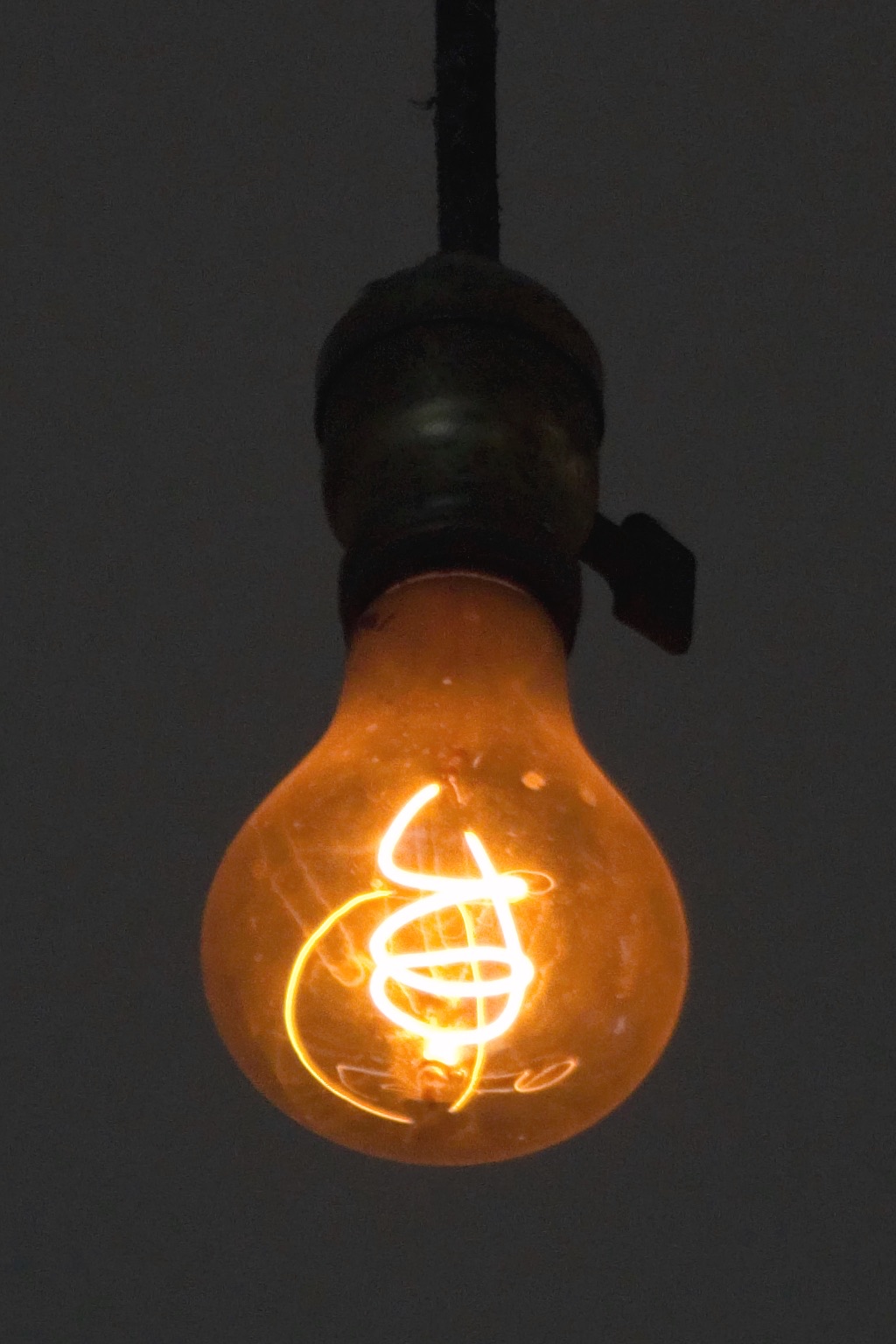
In a fire station in Livermore, California, a hand-blown carbon-filament bulb has been glowing since the early 1900s. Guinness World Records lists it as the longest-burning light bulb, installed in 1901, though Live Science says it probably switched on sometime between 1901 and 1905. Made by the Shelby Electric Company in the 1890s, it now runs at about 4 watts and is rarely switched off. It celebrated its 125th anniversary in June 2026.
What is still argued about
- Whether the 1,000-hour standard was mainly about profit or about efficiency.
- How far modern products are designed to wear out, a debate that the 2010 documentary The Light Bulb Conspiracy linked back to Phoebus.
No poll appears to have asked about the Phoebus cartel. In a 2013 Austrian survey, 55% of respondents said they believed manufacturers deliberately and systematically shorten the life of their products.
Sources
- Markus Krajewski, “The Great Lightbulb Conspiracy”, IEEE Spectrum (2014)
- United States v. General Electric Co., 82 F. Supp. 753 (D.N.J. 1949), via HallApproved
- vLex, United States v. General Electric Co. (1949)
- RP Photonics Encyclopedia, “Incandescent Lamps”
- NPR Planet Money, “Episode 902: The Phoebus Cartel” (2019)
- Guinness World Records, “Longest burning light bulb”
- Guinness World Records, “On the bright side, famous light bulb still shining after over 100 years in fire station” (2025)
- Live Science, “What’s the Longest Burning Light Bulb?” (2012)
- NBC Bay Area, “World’s longest-burning lightbulb celebrates 125th anniversary” (2026)
- Cosima Dannoritzer, The Light Bulb Conspiracy
- BEUC, position paper on durable goods (2015)