

The short version
The Men in Black of UFO lore are not the wise-cracking agents of the cinema. They are sinister figures in dark suits, usually three of them, who turn up at the homes of people who have seen something in the sky and tell them to say nothing. Believers take them for government agents or for aliens in disguise. Researchers have traced the legend to a handful of stories from 1947 to 1956, and have shown that the writer who did most to spread it made things up. Official records also show that military and intelligence officers took an interest in UFO witnesses and enthusiasts, and sometimes deceived them.
Where the story comes from
1947: Maury Island
In June 1947 two men from Tacoma, Washington, Harold Dahl and Fred Crisman, claimed that a doughnut-shaped flying disc had exploded near Maury Island in Puget Sound, and that they had recovered some of the debris. In the fuller version of the tale, a man in a black suit took Dahl to a diner the next morning and warned him not to talk.
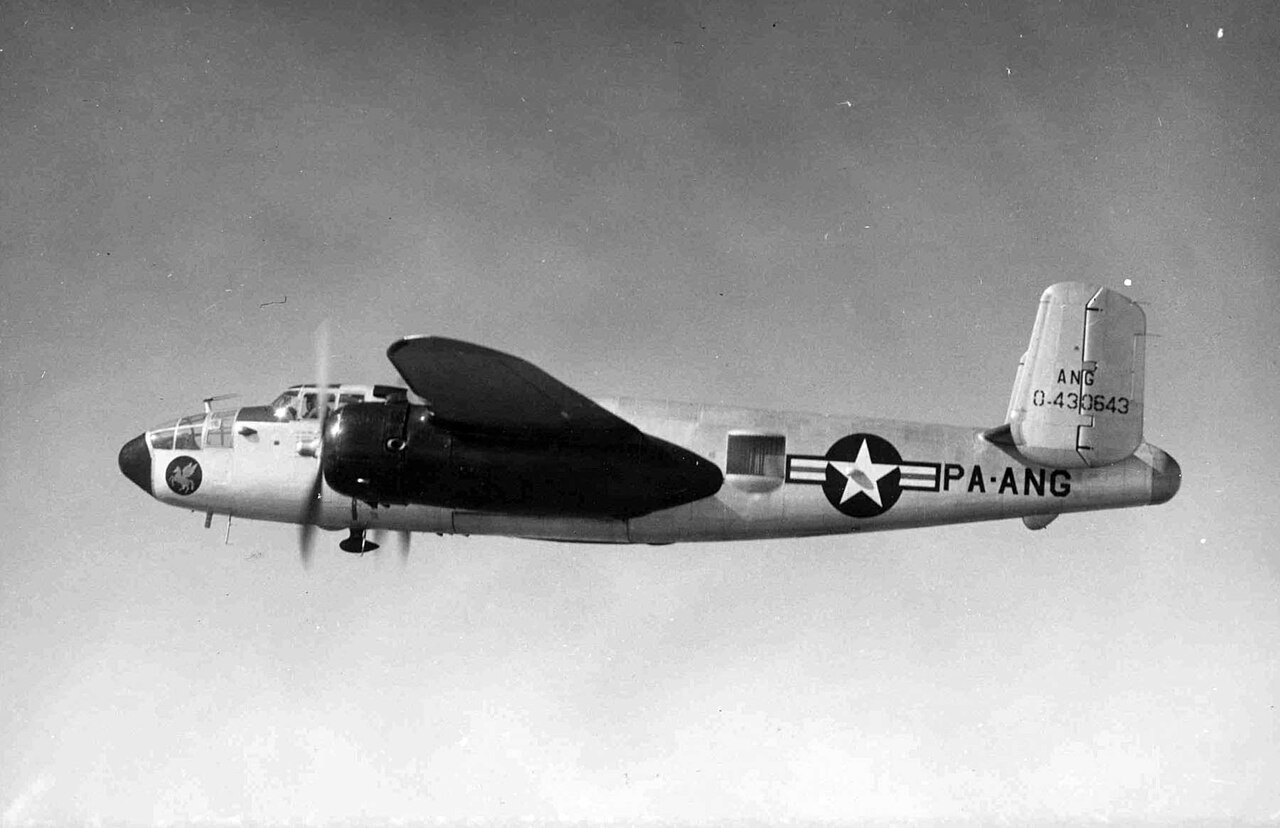
Two military intelligence officers, Frank Brown and William Davidson, flew to Tacoma to interview the pair and collect samples. On 1 August 1947 their B-25 caught fire after take-off and crashed near Kelso, Washington. Both men were killed. The official cause was an engine fire.
The FBI investigated. The usual account is that Dahl and Crisman admitted they had made the story up, and that the debris was scrap. The former head of the Air Force’s UFO project later called it “the dirtiest hoax in the UFO history”. A Seattle lawyer and film-maker who promotes the case disputes the confession. He points to an agent’s report that Dahl “did not admit” a hoax and said only that he would call it one if the authorities questioned him.
1953: the three visitors
Albert Bender of Bridgeport, Connecticut, founded the International Flying Saucer Bureau in 1952. It had about 600 members. In 1953 he shut it down. The last issue of its journal declared that the mystery of the flying saucers was solved, but that information was “being withheld by orders from a higher source”. Bender said three men had visited him: “All of them were dressed in black clothes. They looked like clergymen but wore hats similar to [the] Homburg style.”
A local newspaper reported that the men had shown credentials, and the reporter took them for government officials. Bender later called that article full of errors. In his 1962 book the visitors were not officials at all. They were connected to an alien base in Antarctica that he said he had found by astral projection.
Sceptics noted that Bender offered no evidence and that his magazine was losing money.
1956: the book
Gray Barker, a member of Bender’s bureau, told the story in They Knew Too Much About Flying Saucers. The book fixed the Men in Black in UFO lore.
The 1960s and 1970s: the strangers get stranger
The writer John Keel, author of The Mothman Prophecies, popularised the abbreviation “MIB”. In the later literature the visitors are less like officials and more like something uncanny: skin that is unnaturally pale, flat mechanical speech, brand-new clothes, old black Cadillacs with number plates that cannot be traced. A folklorist who studied the reports found that they peaked during the wave of UFO sightings in 1966 and 1967.
The arguments, point by point
Witnesses who do not know each other tell the same story
Believers say: people in different places and decades describe the same visitors, often before they have told anyone what they saw.
The response: by the 1960s the pattern was in print for anyone to read. The folklorist Peter Rojcewicz compared the visitors with the traditional figure of the Devil. The writer Benjamin Radford notes that menacing figures in black are common in folklore around the world. Rojcewicz did not dismiss the witnesses. He said he had met such a figure himself, and placed the experiences somewhere between real life and fantasy.
The government really did take an interest
Believers say: the record supports them, and this part is documented.
- The Air Force ran an investigation, Project Blue Book, until 1969. It logged 12,618 sightings, and its files include records of the Air Force Office of Special Investigations.
- A history written by the CIA’s own historian says that in 1953 a panel advised that private UFO groups “be monitored for subversive activities”. It also describes a CIA officer, in Air Force uniform, visiting a UFO researcher under cover, and says the Air Force made “misleading and deceptive statements to the public” to protect secret spy planes.
- In 1967 a senior Air Force general issued a memo about people who posed as Air Force officers, approached UFO witnesses and told them not to talk.
- In the 1980s an Air Force investigator, Richard Doty, passed false information about aliens to UFO enthusiasts, as he has admitted. In 2025 the Wall Street Journal reported that a Pentagon review had found other cases of the military spreading UFO stories to hide weapons programmes.
The response: the 1967 memo treated the visitors as impostors, not as Air Force personnel, and asked for them to be reported. Sceptics add that the witnesses interviewed by Blue Book staff did not report being threatened. The deceptions described by the CIA’s historian and by the newspaper were meant to hide secret aircraft and weapons, not alien visits.
The key author made things up
Sceptics say: in 1998 the journalist John Sherwood revealed that, as a teenager, he had written a piece of science fiction which Barker encouraged him to present as fact and then published. He quoted Barker’s letters. One said readers were accusing the magazine of making things up, “which we do occasionally of course”. Barker also co-wrote a hoax letter in 1957 that claimed to come from the US State Department, as his collaborator admitted in 1985.
The response: this shows how Barker worked in later years. It does not prove that every page of the 1956 book was invented. Sherwood himself allowed that the legend may have been inspired by “a grain (or several grains) of truth”.
If they silence people, how do we know?
Sceptics say: “If the Men in Black were real, and effective at suppressing encounters with extraterrestrials, we shouldn’t know about them at all,” the writer Benjamin Radford has argued. The threats are never carried out, and the witnesses evidently talked.
The footage
In 2012 a video spread online in which a Canadian hotel worker described two identical men in black suits who came asking for him after he reported a UFO. It included security-camera pictures of two men in dark clothes in a lobby. The website that publicised it allowed that it might be made up, or be marketing for that year’s Men in Black film.
How the films changed it
Lowell Cunningham turned the legend into a comic book after a friend remarked that a passing car looked like the kind the Men in Black would drive. The film based on it opened on 2 July 1997 and took more than $250 million in the United States. It turned the sinister silencers into comic heroes. Sherwood wrote that the film owed “a fair share of its style” to Barker’s book.
What is still argued about
- Whether Dahl ever confessed to a hoax.
- What, if anything, happened to Bender in 1953. His two versions do not match.
- Who the impostors in the 1967 memo were.
No poll appears to have asked about the Men in Black themselves. In a Gallup survey in July 2026, 78 per cent of Americans said the government knows more about UFOs than it is telling the public.

Sources
- Live Science, “Men in Black: The UFO Buff’s Bogeymen” (2012)
- HistoryLink, “Flying Saucers in Washington” (1999)
- Skeptoid, “Maury Island: The Government’s Alien Artifacts” (2022)
- GeekWire, “UFOs and ‘Men in Black’ stories become a cause for celebration” (2023)
- Bridgeport History Center, “Bridgeport’s UFO Legacy: Men in Black and the Albert K. Bender Story”
- Encyclopedia.com, “Bender, Albert K”
- John C. Sherwood, “Gray Barker: My Friend, the Myth-Maker”, Skeptical Inquirer (1998)
- American Heritage Center, University of Wyoming, “‘Straith letter’ to George Adamski, December 1957”
- Skeptoid, “Men in Black” (2013)
- Science Frontiers, “Men in black (mibs)” (1987)
- Associated Press via Deseret News, “‘Men in Black’ make visits in wake of UFOs” (1990)
- US National Archives, “Project BLUE BOOK - Unidentified Flying Objects”
- Gerald K. Haines, “A Die-Hard Issue: CIA’s Role in the Study of UFOs, 1947-90”, Studies in Intelligence (1997)
- US House Committee on Oversight, written testimony of Michael Shellenberger with timeline (2024)
- Den of Geek, “Why The Pentagon Needs to Address UFO Disinformation” (2025)
- The Wall Street Journal, “The Pentagon Disinformation That Fueled America’s UFO Mythology” (2025)
- Gizmodo, “Was this Canadian hotel worker visited by the real ‘Men in Black’?” (2012)
- History.com, “‘Men in Black’ premieres in theaters”
- Inverse, “The oral history of Men in Black” (2022)
- Gallup, UFO survey (August 2026)