
The short version
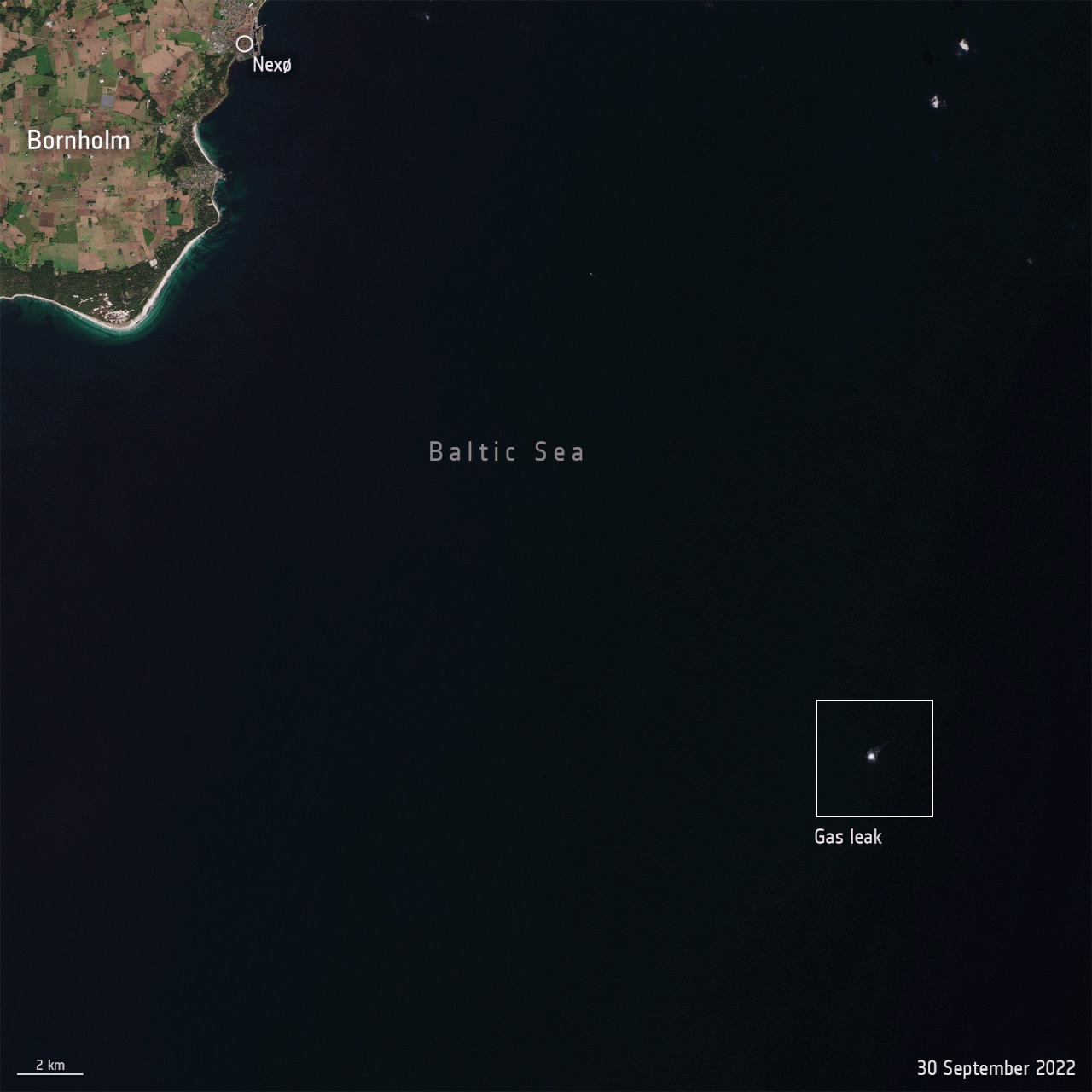
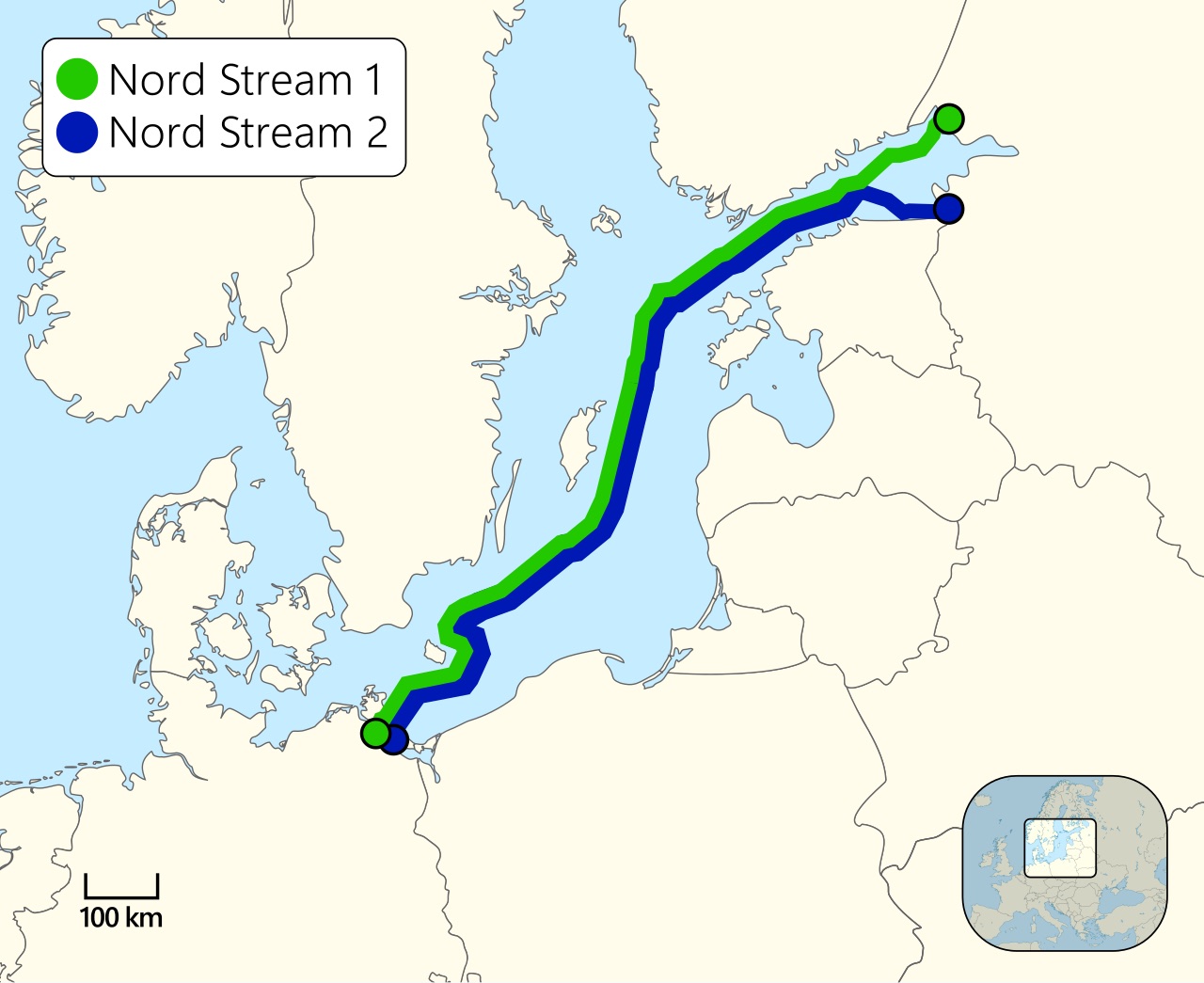
On 26 September 2022, seven months into Russia’s full-scale invasion of Ukraine, explosions ruptured three of the four Nord Stream gas pipelines on the floor of the Baltic Sea near the Danish island of Bornholm. The pipelines, built to carry Russian gas to Germany and majority-owned by Russia’s state-controlled Gazprom, were not delivering gas at the time but were full of it. Investigators in Sweden, Denmark and Germany agree it was sabotage. Who did it is still disputed. Western officials first suspected Russia, which denies it. The American journalist Seymour Hersh claimed the United States was behind it, which Washington denies. German prosecutors say a Ukrainian team carried it out, and a Ukrainian former officer has been on trial in Hamburg since October 2026. He denies any involvement, and Ukraine’s government denies taking part. No court has yet ruled.
The blasts
Swedish seismologists detected several explosions about 17 hours apart. Danish fighter jets found three leaks, two on Nord Stream 1 and one on Nord Stream 2, the largest churning the sea surface over a circle about a kilometre wide. The sites lie in the economic zones of Denmark and Sweden, which count as international waters. Up to 485,000 tonnes of methane escaped, in what observers believe could be the largest single release of methane caused by humans.
Before the war, Nord Stream 1 had supplied about half of Germany’s gas imports. Russia had cut off supplies at the end of August 2022. In a joint letter to the UN Security Council, Sweden, Denmark and Germany said the damage was caused by “powerful explosions due to sabotage”.
The suspects
Russia
Western officials initially accused Russia, but later backed away from that claim. The Kremlin spokesman, Dmitry Peskov, called the idea “predictably stupid”, saying Russia had lost a route for gas supplies to Europe. Russia’s defence ministry instead accused British navy specialists, which the UK dismissed as false. Some still suspect Russia. A Ukrainian energy analyst, Mykhailo Gonchar, has said the German prosecutors’ theory “does not stand up to scrutiny” and suggests Russian involvement.
The United States
On 8 February 2023, Seymour Hersh published an article on his Substack claiming that US Navy divers had planted the explosives under cover of a NATO exercise, BALTOPS 22, with help from Norway, and that a Norwegian plane had triggered them in September by dropping a sonar buoy. His account was based on a single unnamed source. Believers also point to President Joe Biden’s remark in February 2022: “If Russia invades … there will no longer be a Nord Stream 2. We will bring an end to it.” The White House called Hersh’s claim “false and complete fiction”, the CIA called it “completely and utterly false”, and Norway denied it too. Russia has repeatedly accused the US. In March 2023 its call for a UN investigation won only three votes, and the US deputy ambassador said: “The United States was not involved in any way. Period.”
A Ukrainian team
On 7 March 2023 the New York Times reported that US officials had seen intelligence pointing to a “pro-Ukrainian group”. The German newspaper Die Zeit described a team of six who had used a rented yacht. Reports say it set off from the German port of Rostock and that investigators found traces of explosives on board. The yacht, the Andromeda, has since featured in the Hamburg trial. In August 2024 the Wall Street Journal reported that the plan came from a group of Ukrainian officers and businessmen, that it was privately financed, and that President Volodymyr Zelensky approved it before ordering a halt. Ukraine’s former army chief Valerii Zaluzhnyi, named in the report, called the claim a “mere provocation”. A presidential aide called Ukrainian involvement “absolute nonsense”, and Zelensky has repeatedly denied that his country was behind it.
The investigations
Sweden closed its investigation in February 2024, finding that it had no jurisdiction, and passed its evidence to Germany. Denmark closed its own later that month, confirming deliberate sabotage but finding insufficient grounds for a criminal case in Denmark.
Germany’s federal prosecutors, who took over in October 2022, have issued arrest warrants for seven suspects. One, a Ukrainian man identified as Serhii K., was arrested in Italy in August 2025 and extradited to Germany in November 2025. Prosecutors say he coordinated the operation. A second suspect, Volodymyr Z., a diver, was arrested in Poland in September 2025, but a Warsaw court refused to extradite him, calling the attack a military action in a “just war”. He was arrested again in Croatia in 2026, where a court approved his extradition in September, a ruling he is appealing. One of the suspects is reported to have been killed fighting for Ukraine in December 2024.
The trial
Serhii K.’s trial opened in Hamburg on 14 October 2026. He is charged with a war crime for attacking civilian infrastructure, as well as causing an explosion and destroying a structure. According to a summary of the indictment, he and other military personnel developed the plan “on behalf of state authorities in Ukraine”. He denies any involvement and says he was in Ukraine at the time. His lawyers say prosecutors have not provided “any direct, conclusive evidence” against him, and argue that he would be immune if he had acted for his state. In November 2026, when it declined to rule on a civil claim by Nord Stream AG, the court said the evidence heard so far supported the assumption that Ukrainian state bodies had approved the operation. It noted that President Zelensky had said in August 2026 that Ukraine never officially took part in any such operation. This is not a verdict. He is presumed innocent until a final judgment.

What is still argued about
- Whether a Ukrainian team acted alone, on the orders of Ukraine’s state, or with the knowledge of its allies. Der Spiegel has reported that the CIA approved of Ukraine’s plans, which the CIA and the White House deny.
- Whether anyone else, including Russia or the United States, was involved.
In a survey by the Hungarian think tank Századvég, reported in November 2025, half of Europeans who gave an opinion blamed Russia, 21% the United States and 19% Ukraine.
Sources
- Al Jazeera, “Ukrainian ex-officer goes on trial in Germany over Nord Stream blasts” (2026)
- RFE/RL, “Germany Starts Nord Stream ‘War Crime’ Trial With Prosecutors Blaming Ukrainian ‘State Authorities’” (2026)
- Courthouse News Service, “Nord Stream sabotage trial opens against ex-Ukrainian officer” (2026)
- Legal Tribune Online, on the legal questions at the start of the Hamburg trial (2026)
- Legal Tribune Online, Nord Stream trial day 9 (2026)
- ZDFheute, “Anschlag auf Nord-Stream-Pipelines: Verdächtiger angeklagt” (2026)
- AP via Yahoo News, “Croatian court approves extradition of Nord Stream blast suspect to Germany” (2026)
- Al Jazeera, “Ukrainian man arrested in Italy over Nord Stream pipeline blasts” (2025)
- dpa via Yahoo News, “Suspected Nord Stream pipeline saboteur extradited to Germany” (2025)
- AP via PBS NewsHour, “Polish court blocks extradition and frees Ukrainian suspected in Nord Stream pipeline blasts” (2025)
- Al Jazeera, “Germany seeks arrest of Ukrainian diver for Nord Stream sabotage” (2024)
- Courthouse News Service / AFP, “Ukraine rejects as ‘nonsense’ alleged role in Nord Stream blasts” (2024)
- TheJournal.ie, on Zaluzhnyi’s denial (2024)
- Swedish Prosecution Authority, “The prosecutor closes the Swedish investigation concerning gross sabotage against Nord Stream” (2024)
- Copenhagen Police, “The joint investigation into the Nord Stream explosions has been concluded” (2024)
- Al Jazeera, “Denmark’s Nord Stream probe finds sabotage, not enough grounds for case” (2024)
- Al Jazeera, “UN Security Council turns down request for Nord Stream inquiry” (2023)
- Seymour Hersh, “How America Took Out The Nord Stream Pipeline” (2023)
- Kyiv Post, “‘The US and Norway Blew Up Nord Stream,’ Controversial Journalist Says” (2023)
- The Intercept, on the Nord Stream pipeline bombing (2023)
- The Moscow Times, “Kremlin Endorses Report on U.S. Involvement in Nord Stream Sabotage” (2023)
- Al Jazeera, “Russia accuses UK of ‘directing’ Nord Stream blasts” (2022)
- Offshore Engineer / Reuters, “Kremlin Dismisses ‘Stupid’ Claims Russia Attacked Nord Stream Pipelines” (2022)
- Danish Defence, “Gas leak in the Baltic Sea” (2022)
- Hungarian Conservative, on the Századvég survey (2025)