
The short version
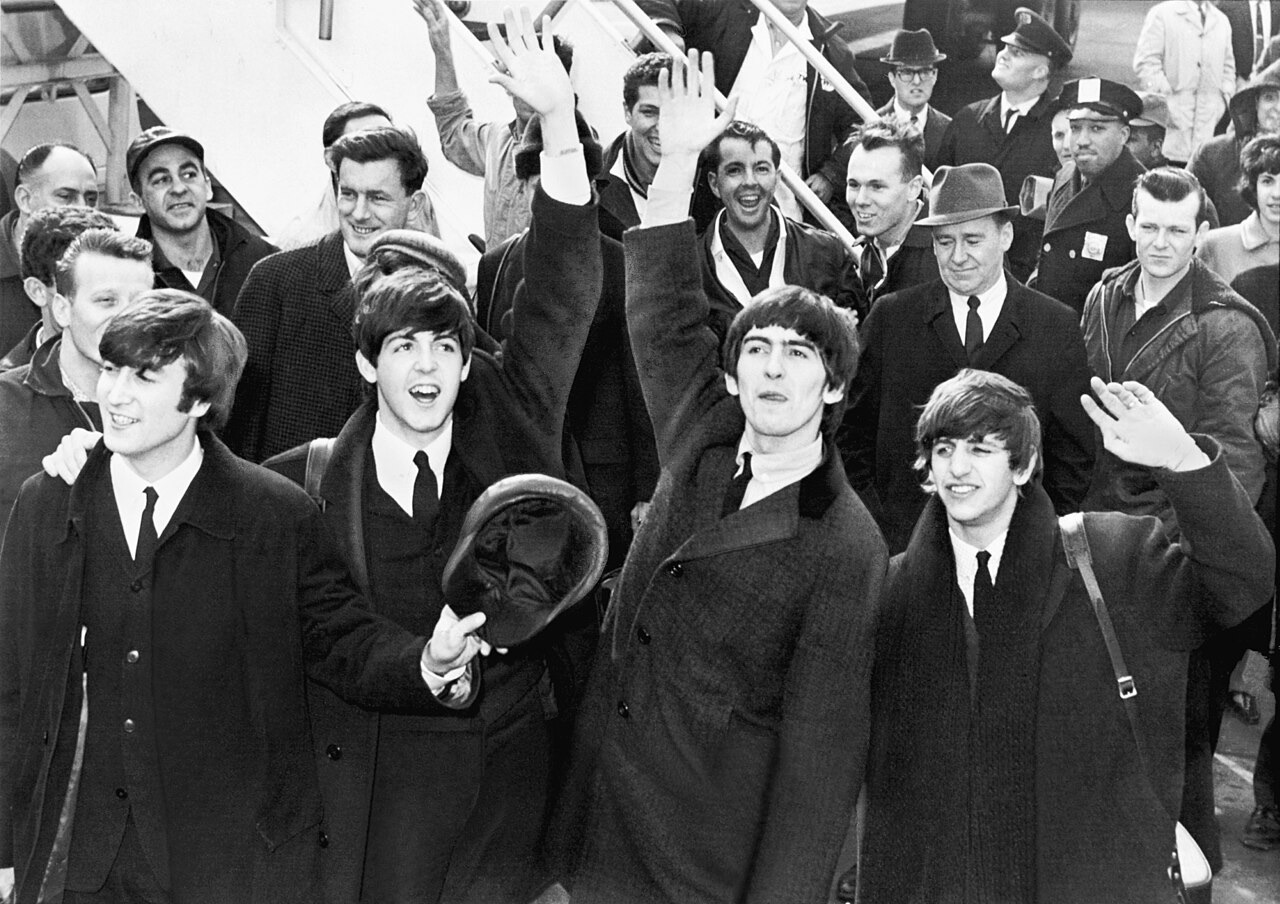
“Paul is dead” is one of the best-known celebrity conspiracy theories. It holds that Paul McCartney of the Beatles died in a car crash in November 1966 and was secretly replaced by a lookalike so that the band could carry on. The rumour broke out in American college newspapers and on Detroit-area radio in September and October 1969, and believers soon found “clues” on Beatles album covers and in their lyrics. McCartney, the other Beatles and their company Apple all denied it. One of the students who spread it later admitted he had invented his clues as a joke. McCartney has joked about it ever since, even naming a 1993 live album Paul Is Live.
The story
In the versions told by believers, McCartney stormed out of a recording session one night in November 1966, crashed his car and was killed. The other Beatles hid his death and found a double, in one early version through a lookalike contest in Scotland. Some versions call the replacement William Campbell or William Shears Campbell, and link him to “Billy Shears”, the character introduced on Sgt. Pepper’s Lonely Hearts Club Band in 1967. The band then supposedly left hints in their music and on their album covers.
In fact, between 6 and 19 November 1966 McCartney was on holiday in France and Kenya with his girlfriend Jane Asher. In January 1967 his Mini Cooper was written off in a crash on the M1 motorway, but someone else was driving it and McCartney was not in the car. Rumours that he had been killed began to circulate, and the official Beatles Book Monthly printed a paragraph headed “FALSE RUMOUR”.
How the rumour spread
Iowa, September 1969. On 17 September 1969 the student newspaper of Drake University in Des Moines, the Times-Delphic, ran an article headlined “Is Beatle Paul McCartney Dead?” Its author, a 19-year-old student named Tim Harper, had heard the rumour from a fellow editor. He later said he did not even own a Beatles record. Radio stations paid to interview him.
Detroit, 12 October 1969. A listener called the disc jockey Russ Gibb on WKNR-FM and told him to play the end of the song “Revolution 9” backwards, where the repeated words “number nine” seemed to say “turn me on, dead man”. The discussion went on for an hour, and according to the Associated Press it helped turn the rumour into a global phenomenon.
Michigan, 14 October 1969. Fred LaBour, a student at the University of Michigan who had been asked to review the new album Abbey Road, instead wrote a full-page article for the Michigan Daily headlined “McCartney dead; new evidence brought to light”. It listed more than two dozen clues. The paper sold out by mid-morning and was reprinted. LaBour has always admitted that he made most of his clues up on the spot, including the name William Campbell for the replacement. “I made the guy up,” he said later.
Within days the story was in newspapers from Chicago to both coasts, on network television and in Time and Life.
The clues
Believers found most of their evidence on three albums:
- Sgt. Pepper (1967). The front cover was read as a funeral, with flowers on what looked like a grave. In the photo inside, McCartney wears an arm patch said to read “O.P.D.”, for “Officially Pronounced Dead”. On the back cover he is the only Beatle with his back to the camera.
- The White Album (1968). Parts of “Revolution 9” played backwards, and the line “the walrus was Paul” in “Glass Onion”.
- Abbey Road (1969). On the cover the four Beatles walk across a zebra crossing like a funeral procession: John Lennon in white like a priest, Ringo Starr in black like an undertaker, George Harrison like a gravedigger, and McCartney barefoot, out of step and with his eyes closed. A Volkswagen Beetle in the background has the number plate “28IF”, read as the age McCartney would have been “if” he had lived.
Fans also heard “I buried Paul” at the end of “Strawberry Fields Forever”.
The arguments, point by point
The clues
Those who believe it say: there are too many hints across too many records to be a coincidence, and the Beatles were known for hiding meanings in their work.
The response: McCartney has explained many of them. He told Life magazine in 1969 that the arm patch was a police badge he had picked up in Canada, and that he was barefoot on Abbey Road because it was a hot day. “The Volkswagen just happened to be parked there,” he said. In 1974 he told Rolling Stone that the words at the end of “Strawberry Fields Forever” were not “I buried Paul” but John Lennon saying “cranberry sauce”. The “28IF” clue also does not add up: McCartney was 27 when Abbey Road came out. LaBour admitted inventing much of the original list.
The denials
Those who believe it say: of course the band would deny it, since keeping the secret was the whole point.
The response: the Beatles and their company dismissed the story at the time. Apple said in a statement attributed to McCartney that “the whole thing is too silly for words”. Ringo Starr told a reporter: “I can only say it’s not true.” McCartney gave interviews to the BBC and to Life from his farm in Scotland, and Life put him on its cover in November 1969 with his wife Linda and their children under the words “Paul is still with us”. He suggested the rumour had started because he had not been much in the press lately.
What is still argued about
- Who first started the rumour. Time magazine said in 1969 that no one really knew its source.
- Whether the Beatles welcomed the attention. McCartney told Rolling Stone in 1974 that when he heard the news, he decided to let people say it: “It’ll probably be the best publicity we’ve ever had and I won’t have to do a thing except stay alive.”
McCartney has never stopped joking about it. The cover of Paul Is Live (1993) shows him crossing Abbey Road again, this time wearing shoes. In 2025, in his book about his band Wings, he wrote that the rumours were “more accurate than one might have thought at the time”. “In so many ways, I was dead,” he wrote, describing himself as an about-to-become-ex-Beatle drowning in legal and personal rows. In a 2013 Public Policy Polling survey of American voters, 5% said they believed McCartney had died and been replaced, 80% did not and 14% were not sure.
Sources
- The Harvard Crimson, “Beatle Hoax Rumored: Paul Dead Since 1966” (1969)
- Michigan Today, “‘Paul is Dead!’ (said Fred)” (2009)
- The Times-Delphic, “Pop star’s death rumor begins at Drake” (2013)
- AP via KSL, “Russ Gibb, Detroit DJ, teacher and rock promoter, dies at 87” (2019)
- TIME, “Essay: Of Rumor, Myth and a Beatle” (1969)
- Beatles Bible, “The ‘Paul is dead’ myth”: https://www.beatlesbible.com/features/paul-is-dead/ and https://www.beatlesbible.com/features/paul-is-dead/2/
- The Paul McCartney Project, transcript of the Life magazine interview (1969)
- Rolling Stone, “Paul McCartney Is Not Dead (And Neither Is the Past)” (1974)
- PaulMcCartney.com, “Paul Is Live”
- TT via TV4, “McCartney om dödsryktet: Delvis sant” (2025)
- AOL, “Paul McCartney Reflects on 1969 Death Rumor: ‘In So Many Ways, I Was Dead’” (2025)
- Public Policy Polling, national conspiracy theories poll (2013)