
The short version
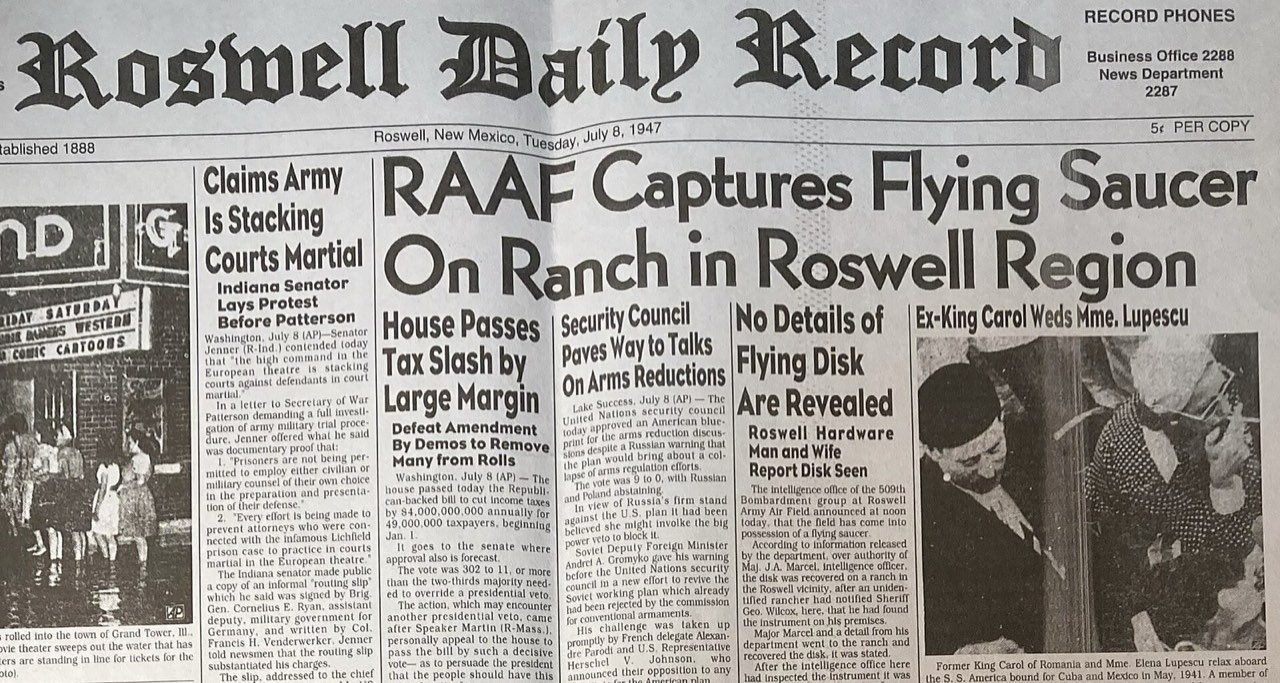
In July 1947, a rancher found strange debris on his land in New Mexico. The local army air base announced that it had recovered a “flying disc”. Within a day, senior officers said it was only a weather balloon. The story was forgotten for thirty years. When it returned, it had grown to include a crashed spacecraft, alien bodies and a cover-up. In 1994 the Air Force admitted the weather balloon story was false, and said the truth was a secret spy balloon.
What happened in 1947
In June and July 1947, America was in the middle of its first flying saucer craze. Rancher W. W. “Mac” Brazel found a field of debris on the property he managed north-west of Roswell: foil-like material, rubber, tape and light wooden sticks. He reported it to the sheriff, who called Roswell Army Air Field.
Intelligence officer Major Jesse Marcel collected the material. On 8 July the base issued a press release saying it had come into possession of a flying disc. Newspapers around the world ran the story.
The debris was flown to Fort Worth, Texas, where General Roger Ramey showed reporters pieces of a weather balloon and its radar reflector. The press accepted the correction and moved on.
How the legend grew
1978. UFO researcher Stanton Friedman interviewed Marcel, by then retired. Marcel said the material he handled was like nothing he had seen and that the balloon shown to reporters was a substitute.
1980. The book The Roswell Incident presented the case as a recovered alien craft and brought in new witnesses.
Late 1980s and 1990s. More people came forward with accounts of a second crash site, small bodies, threats from military officers and an autopsy at the base hospital. Some of these accounts were given decades after the event, and several contradicted each other.
1984. Documents surfaced describing a secret committee called “Majestic 12” set up to manage the recovered craft. The FBI examined them and declared them bogus.
1995. A film claiming to show an alien autopsy was broadcast around the world. Its producer admitted in 2006 that it had been staged, while insisting it recreated real footage he had seen.
What the official investigations found
The Air Force report (1994). Asked by a congressman to account for the incident, the Air Force searched its records and concluded that the debris came from Project Mogul, a top-secret programme that flew long trains of balloons carrying microphones to listen for Soviet nuclear tests. The weather balloon story had been a cover for it. Surviving scientists from the project identified the materials Brazel described.
The congressional audit (1995). Auditors found no records of a crashed craft. They also found that some of the base’s administrative records and outgoing messages from the period had been destroyed without documentation of who ordered it or why.
“Case Closed” (1997). A second Air Force report addressed the alien bodies. It suggested witnesses had seen crash-test dummies dropped from high-altitude balloons, and injured or dead airmen from unrelated accidents, and had merged those memories with the 1947 debris.
Versions of the theory
One craft, with bodies. A spacecraft crashed, and the wreckage and crew were taken to an air base in Ohio, and later to Area 51.
Two crash sites. Debris fell on the ranch, and the main craft came down some distance away.
A craft, but not alien. The object was a secret experimental aircraft, possibly based on captured German designs.
Something secret, nothing more. The military hid a classified project, and everything else was added later.
The arguments, point by point
The military changed its story
Believers say: officers at an elite bomber base would not mistake a balloon for a disc, and the Air Force has admitted that its first explanation was a lie.
The response: Mogul balloon trains were unlike ordinary weather balloons, hundreds of feet long with unusual reflectors, and the men at Roswell had not been told about the project. Admitting one cover story does not show there was a second.
The debris was extraordinary
Believers say: Marcel and others described metal that could not be dented or burned and that returned to its shape when crumpled.
The response: contemporary descriptions from 1947, including Brazel’s own newspaper interview, mention rubber, foil, paper, tape and sticks. The remarkable properties appear in accounts given more than thirty years later.
The bodies
Believers say: multiple witnesses described small humanoid bodies.
The response: the Air Force points to its dummy tests. Critics answer that those tests began in 1953, six years too late, and that the explanation asks people to believe witnesses confused different decades.
Missing records
Believers say: the destruction of base records is exactly what a cover-up would look like.
The response: auditors found that record-keeping failures of this kind were common at the time. The gap remains unexplained either way.

What is still argued about
- Whether the specific Mogul flight blamed for the debris was actually launched, since the project’s own records for that flight are incomplete.
- How much weight to give testimony collected decades after the event.
- What was in the destroyed records.
How many people believe it
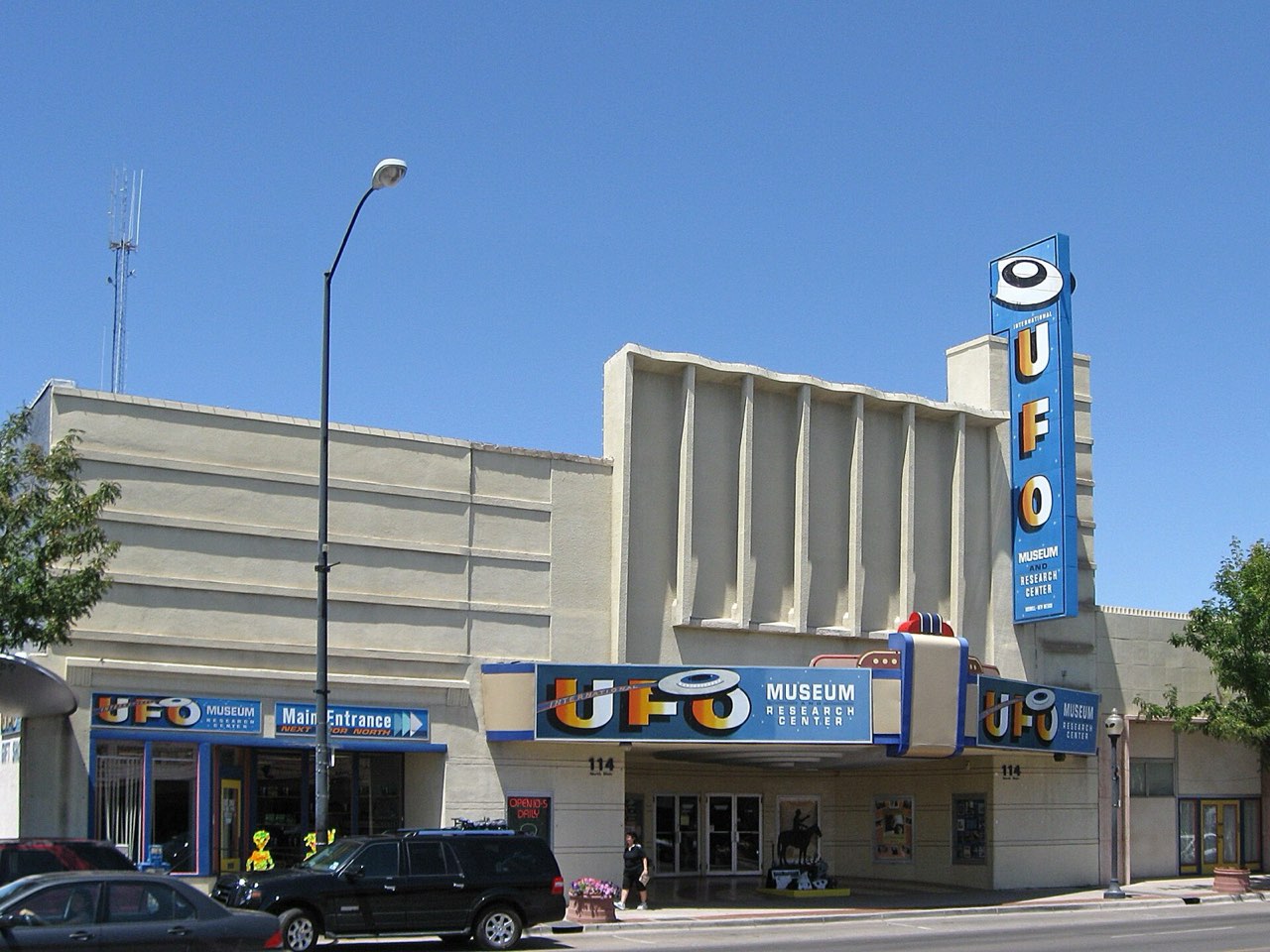
In a 2013 US survey, 21% of voters said they believed a UFO crashed at Roswell and the government covered it up. The town itself has embraced the story. It has a UFO museum, alien-shaped streetlights and an annual festival that draws thousands of visitors.
Sources
- US Air Force, “The Roswell Report: Case Closed” summary page
- US Air Force, Report of Air Force Research Regarding the “Roswell Incident” (July 1994), hosted by the NSA
- James McAndrew, The Roswell Report: Case Closed (US Air Force, 1997), Project Gutenberg edition
- Encyclopaedia Britannica, “Roswell incident”
- National Geographic, summary of 2013 Public Policy Polling survey
- US General Accounting Office, “Results of a Search for Records Concerning the 1947 Crash Near Roswell, New Mexico” (1995)
- Charles Berlitz and William Moore, The Roswell Incident (1980)