
The short version
On 2 August 1964 North Vietnamese torpedo boats attacked the American destroyer USS Maddox in the Gulf of Tonkin. Two nights later, the Maddox and a second destroyer reported another attack. President Lyndon B. Johnson ordered air strikes on North Vietnam, and Congress passed a resolution giving him broad power to use force, which became the legal basis for the Vietnam War. Today the US Navy’s own historians say the second attack did not happen. The question is whether it was an honest mistake made in confusion, or whether officials knowingly used doubtful reports to get the war they wanted.
The background
In 1964 the United States was secretly backing South Vietnamese raids on North Vietnam. Under a covert programme called OPLAN 34A, designed and directed by American officials, South Vietnamese boats shelled radar stations on the North Vietnamese coast and landed commandos. At the same time, US destroyers on so-called DESOTO patrols gathered intelligence off the coast, staying in international waters. On the night of 30-31 July, South Vietnamese commandos attacked two North Vietnamese islands near where the Maddox was patrolling. According to the US National Archives, the Maddox was eavesdropping to assist the raids, though that was not publicly known at the time.
2 August: the first attack
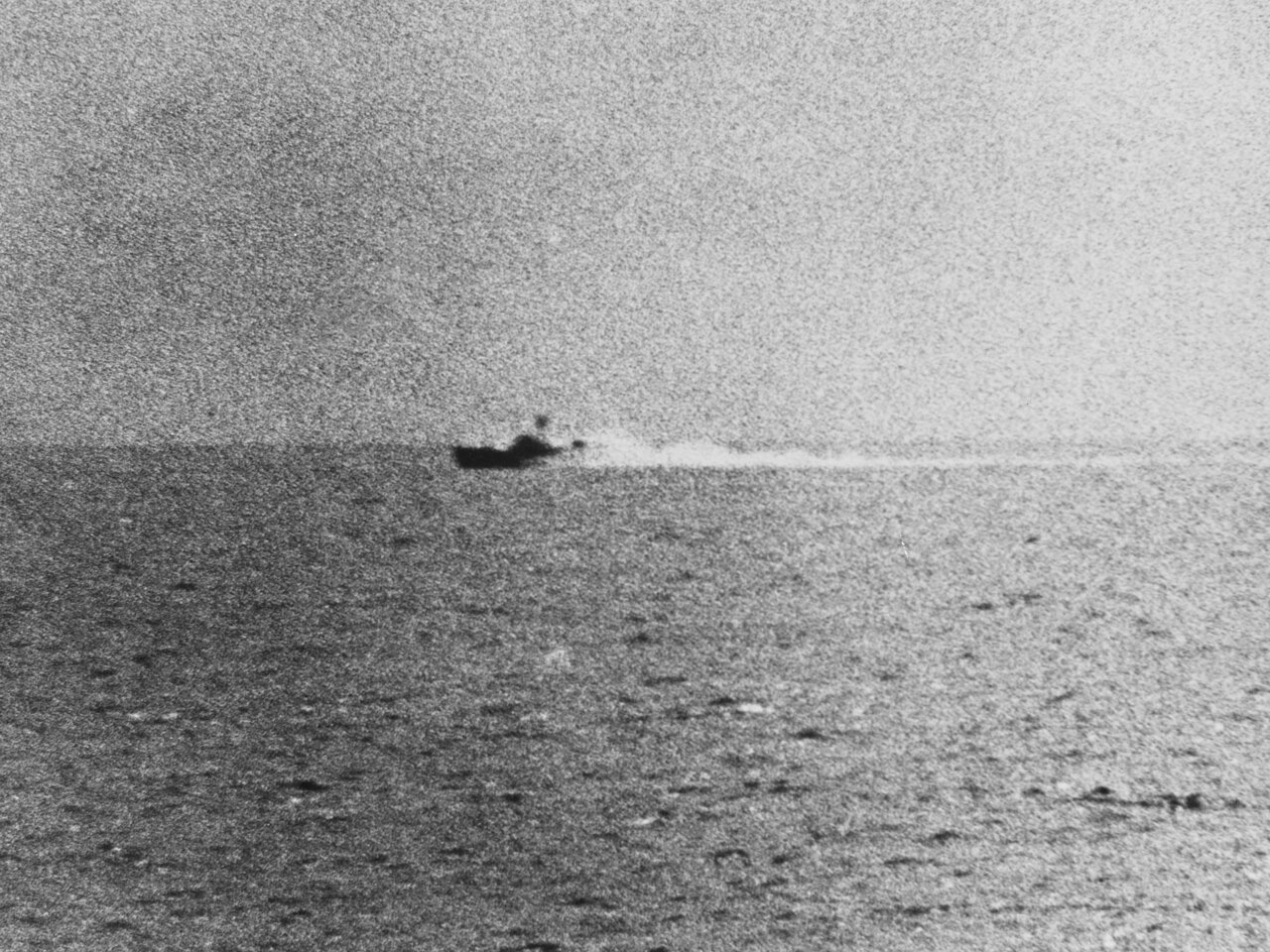
On the afternoon of 2 August, three Soviet-built North Vietnamese torpedo boats attacked the Maddox. Their torpedoes missed, and a single round from their deck guns lodged in the destroyer. Fighter jets from the carrier USS Ticonderoga strafed the boats. Four North Vietnamese sailors were killed. No Americans were hurt. Vietnamese officials later said the attack had been ordered by a local naval command, not by the leadership in Hanoi.
The United States did not retaliate. Instead, Johnson sent a second destroyer, USS Turner Joy, to join the Maddox and ordered the patrol to continue.
4 August: the attack that wasn’t
On the night of 4 August the two destroyers reported radar contacts and an attack by fast boats. They reported more than 20 torpedoes and fired hundreds of shells. James Stockdale, a Navy pilot flying overhead, saw “no boats… no boat wakes, no ricochets off boats, no boat impacts, no torpedo wakes - nothing but black sea and American firepower.”
Within hours the on-site commander, Captain John Herrick, cabled his doubts: “Review of action makes many reported contacts and torpedoes fired appear doubtful. Freak weather effects on radar and overeager sonarmen may have accounted for many reports. No actual visual sightings by MADDOX. Suggest complete evaluation before any further action taken.” About 90 minutes later he sent another message: “Certain that original ambush was bonafide. Details of action following present a confusing picture.”

War powers
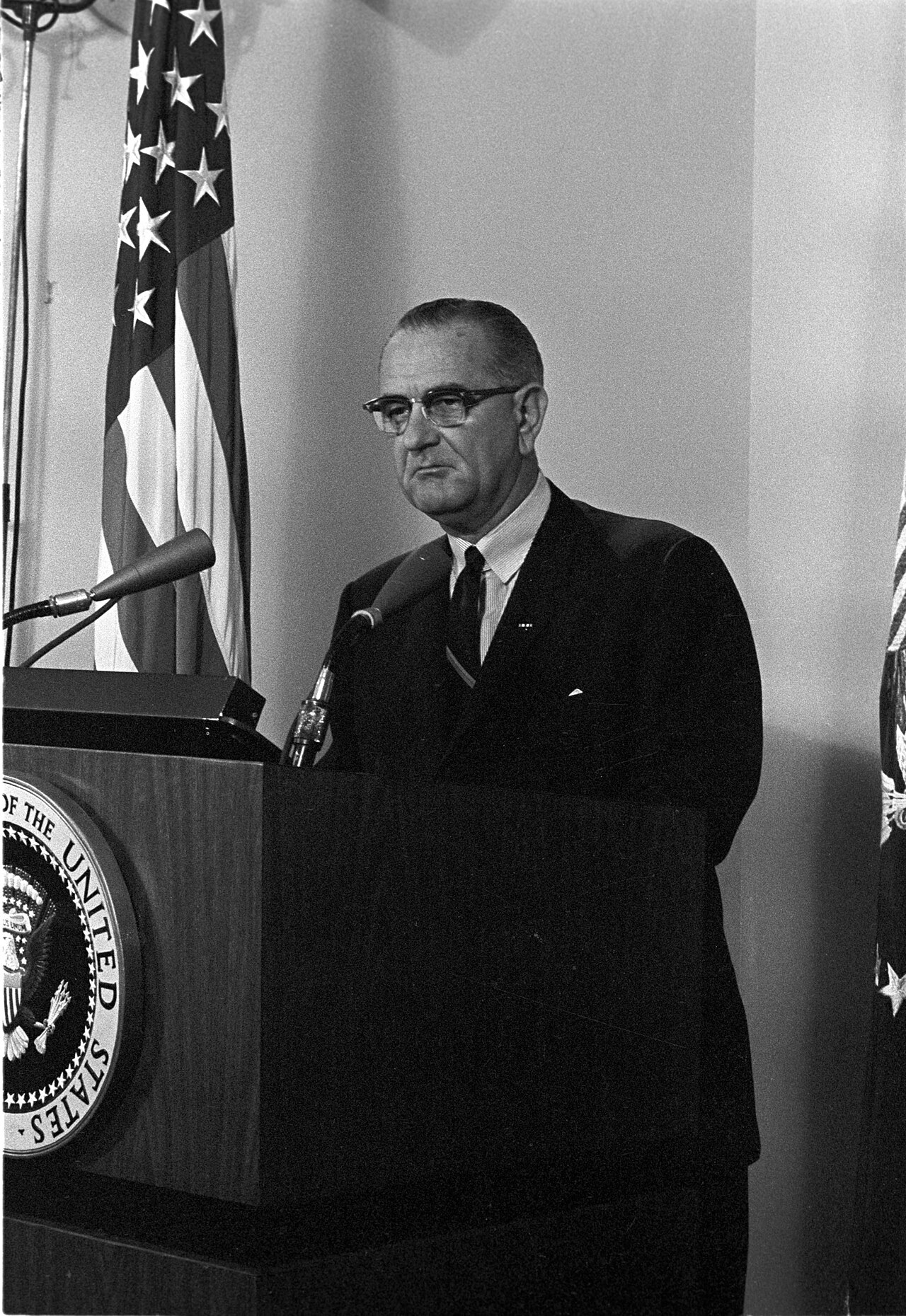
At 11.36 pm on 4 August Johnson went on television and radio to announce that air strikes were under way against North Vietnam. “We still seek no wider war,” he said. The next day 64 attack sorties hit North Vietnamese boats and an oil storage depot. One American pilot was killed, and another, Lt. Everett Alvarez, was shot down and captured.
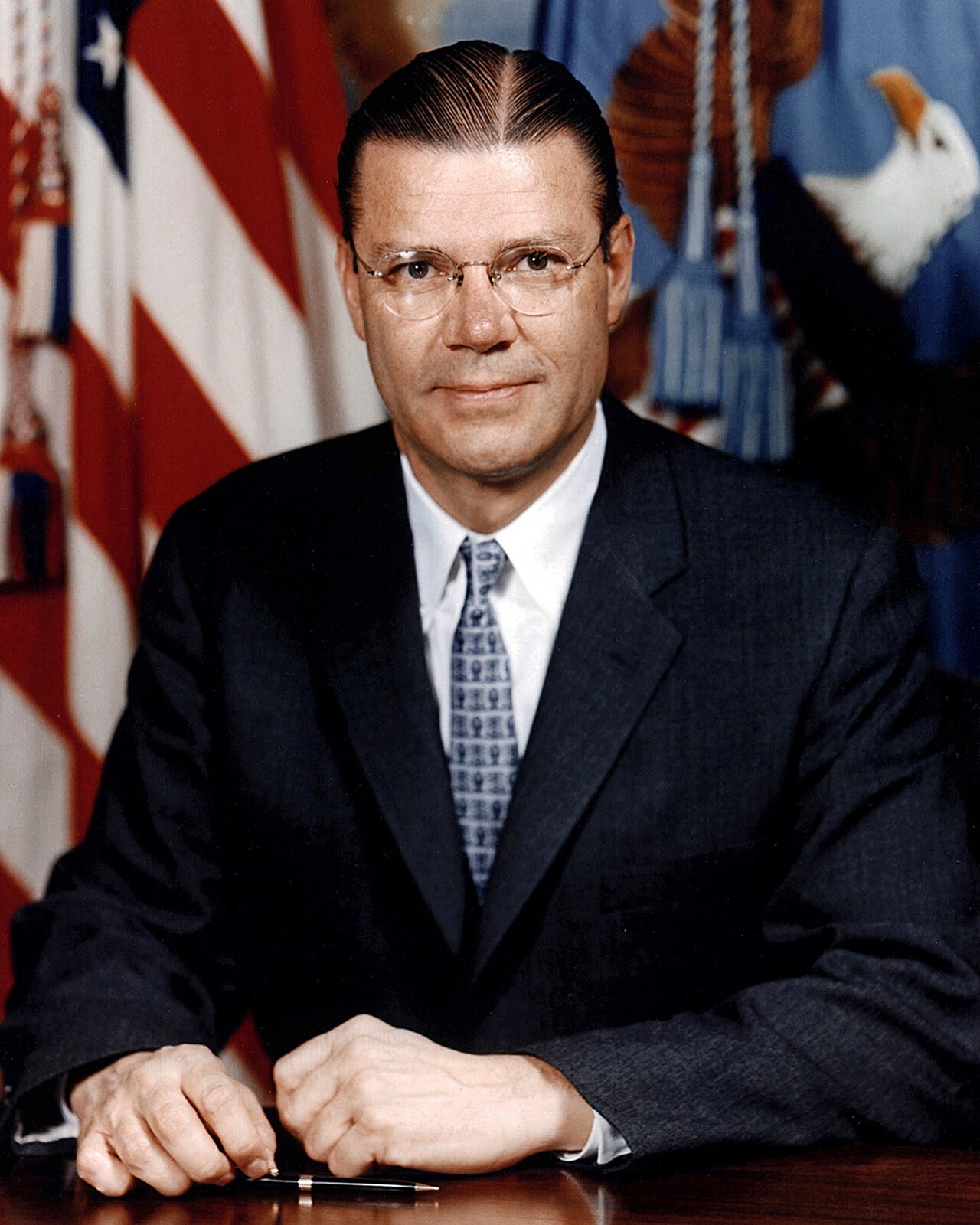
Defence Secretary Robert McNamara told the Senate that the attacks were “unprovoked” and that the Maddox had been on a routine patrol. On 7 August Congress passed the Gulf of Tonkin Resolution, approving “all necessary measures to repel any armed attack against the forces of the United States and to prevent further aggression”. It passed unanimously in the House and by 88 votes to 2 in the Senate, where only the Democrats Wayne Morse and Ernest Gruening voted against. A Harris poll that week found 85% of Americans supported the retaliation. According to the Council on Foreign Relations, the resolution had been drafted months earlier, and Johnson said it was “like grandmother’s nightshirt. It covers everything.”
The resolution became the legal basis for the war. Bombing of the North began in earnest in February 1965, and over the following years more than 58,000 American troops died. Congress repealed the resolution in January 1971.
The doubts become official
Johnson himself had doubts. Shortly after the resolution passed, he is reported to have said privately: “Hell, those damn, stupid sailors were just shooting at flying fish.”
In 1968 McNamara told the Senate Foreign Relations Committee that suggestions the government had induced the incident were “monstrous”. But in 1995, in Hanoi, he asked North Vietnam’s wartime defence minister, General Vo Nguyen Giap, what had happened on 4 August. “There was absolutely nothing,” Giap replied. In the 2003 documentary The Fog of War, McNamara said of the second attack: “It didn’t happen.”
In 2005 the National Security Agency declassified a study by its historian Robert Hanyok. It concluded that the 4 August attack did not happen, and that the intercepted North Vietnamese messages officials relied on actually described the battle of 2 August. Hanyok found that NSA staff had “deliberately skewed” their reporting “to support the notion that there had been an attack”, while leaving out the bulk of the intercepts, which would have told the story that no attack occurred.

The arguments, point by point
It was fabricated
Those who say so argue: the administration wanted a reason to escalate and had a resolution ready. Daniel Ellsberg, who later leaked the Pentagon Papers, says nearly every statement in Johnson’s televised address was inaccurate, and argues that officials later became “increasingly ready to provoke an excuse for attack if necessary”. The National Archives says McNamara did not pass Herrick’s doubts on to Johnson. (In The Fog of War, McNamara said the commander’s uncertainty was reported to Washington during the day.) The patrols were linked to raids the public was not told about, and McNamara told the President privately that the raids had a bearing on the 2 August attack while telling the Senate they were unprovoked.
The response: Hanyok, whose study is the strongest evidence of skewed intelligence, wrote that the mishandling “was not done in a manner that can be construed as conspiratorial, that is, with manufactured evidence and collusion at all levels”. He found no “smoking gun” proving a cover-up.
It was an honest mistake
Those who say so argue: on a dark night, as Herrick suggested, freak weather effects on radar and overeager sonar operators produced reports of an enemy that was not there. Even Herrick, who doubted the details, believed an attack had taken place. McNamara said it was “just confusion”. The Navy’s historians say leaders were persuaded by intelligence and reports from the ships.
The response: critics say that by the time the resolution passed, officials had reasons to doubt the attack and pressed ahead anyway. The National Security Archive concludes that Johnson and his top aides “chose to believe” the attack had happened.
In between
Both sides agree that North Vietnam attacked the Maddox on 2 August, and the US Navy’s and the NSA’s historians conclude that the 4 August attack did not happen. Where they differ is on intent. James Lindsay of the Council on Foreign Relations says whether Johnson believed at the time that the crew had imagined the second attack “is impossible to say”, but that McNamara “clearly misrepresented the facts” about the covert raids.
What is still argued about
- Whether officials knew, before Congress voted, that the second attack probably did not happen.
- Why key evidence, including the original decrypted Vietnamese messages, is missing from the NSA’s archives.
No modern poll appears to have asked whether people think the incident was fabricated.
Sources
- Naval History and Heritage Command, “Tonkin Gulf Crisis, August 1964 - Summary”
- Robert J. Hanyok, “Skunks, Bogies, Silent Hounds, and the Flying Fish: The Gulf of Tonkin Mystery, 2-4 August 1964”, Cryptologic Quarterly (2001), via NHHC
- Naval History and Heritage Command, “Gulf of Tonkin, The 1964 Incidents” (Senate Foreign Relations Committee hearing, 1968)
- Naval History and Heritage Command, formerly classified documents on the incidents of 2-4 August 1964
- US National Archives, “Tonkin Gulf Resolution (1964)”
- Office of the Historian, US Department of State, “U.S. Involvement in the Vietnam War: the Gulf of Tonkin and Escalation, 1964”
- Office of the Historian, Foreign Relations of the United States 1964-68, vol. I, Editorial Note 286
- National Security Archive, “The Gulf of Tonkin Incident, 40 Years Later” (2004)
- National Security Archive, “Tonkin Gulf Intelligence ‘Skewed’ According to Official History and Intercepts” (2005)
- John Prados, essay, National Security Archive (2004)
- National Security Archive, “LBJ Tapes on the Gulf of Tonkin Incident”
- James M. Lindsay, “TWE Remembers: The Gulf of Tonkin Incident”, Council on Foreign Relations (2014)
- James M. Lindsay, “The 1964 Gulf of Tonkin Resolution”, Council on Foreign Relations
- The Seattle Times (AP), “McNamara Asks For Truth About Gulf Of Tonkin – Giap: There Was No Attack” (1995)
- The Spokesman-Review (AP), “McNamara Question Answered: Second Tonkin Gulf Attack Didn’t Happen, Giap Insists” (1995)
- Errol Morris, The Fog of War, transcript
- Daniel Ellsberg, “How LBJ Manipulated Events to Bring on War”, History News Network (2002)
- American Heritage, “1964: Twenty-Five Years Ago”
- HISTORY.com, “Congress passes Gulf of Tonkin Resolution”