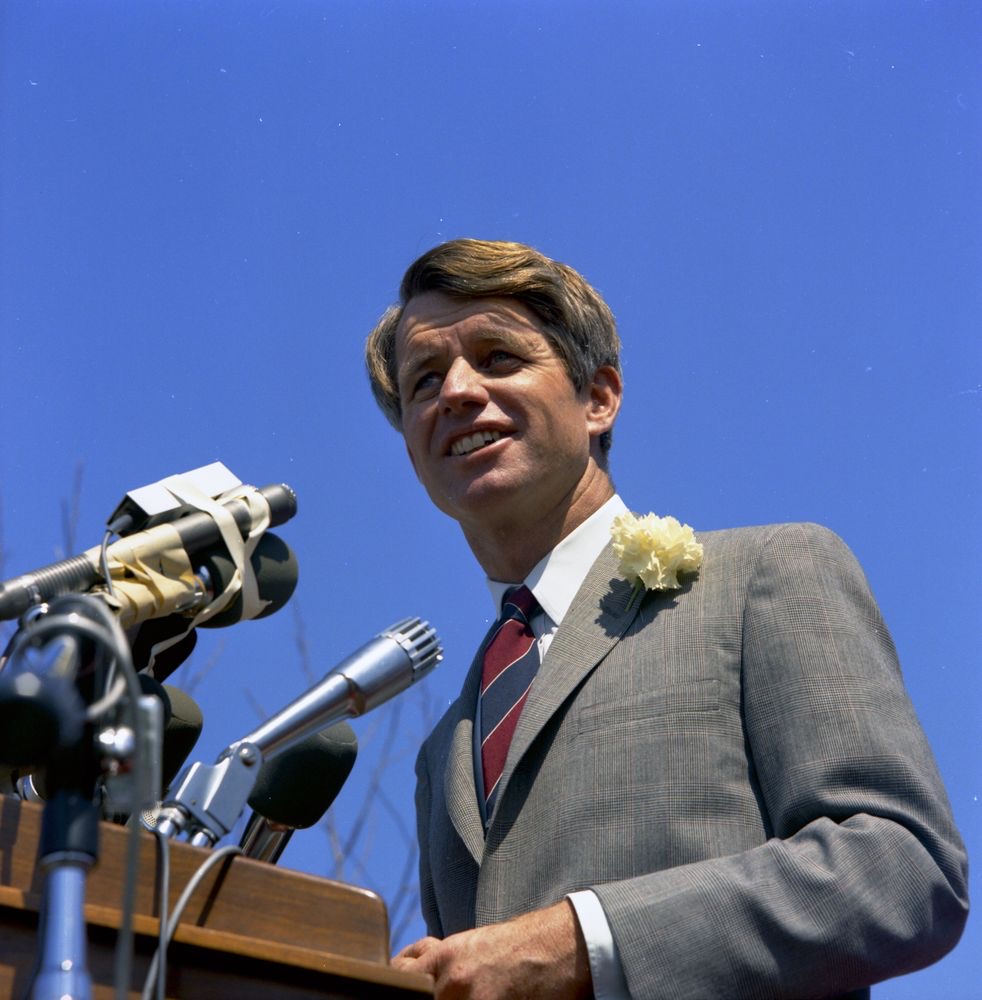

The short version
Minutes after his victory speech in the California Democratic primary, Kennedy walked through a hotel kitchen pantry, where Sirhan Sirhan, a 24-year-old Palestinian with Jordanian citizenship, opened fire with a .22 revolver. Bystanders wrestled Sirhan to the ground. He was convicted of murder in 1969, and every court since has upheld the verdict. But the coroner found that the fatal shot was fired from behind Kennedy’s right ear at a range of about an inch, while witnesses placed Sirhan in front of him. An audio recording has been said to contain more shots than Sirhan’s eight-shot gun could fire. Other experts say it does not. Sirhan, who says he does not remember the shooting, was last denied parole in August 2024 and remains in prison as far as public records show.
What happened
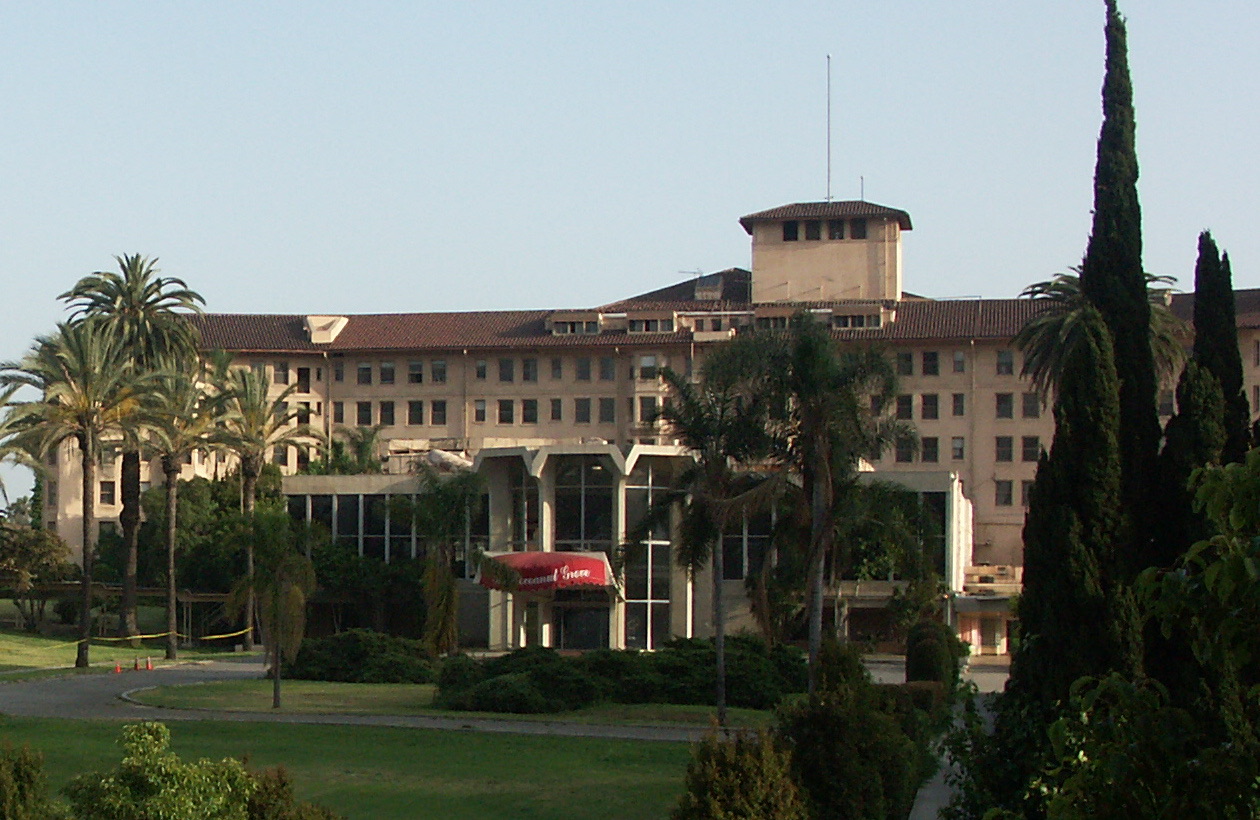
Kennedy won the California primary on 4 June 1968 with 46% of the vote. Shortly after midnight he gave his victory speech in the Embassy Ballroom of the Ambassador Hotel, then left through a serving area known as the pantry. He was shaking hands with Juan Romero, a 17-year-old busboy, when Sirhan stepped from behind a dish rack and began firing an eight-shot .22 Iver-Johnson revolver at about 12.15 am.
Kennedy was hit by three bullets: one grazed his forehead, one went into his neck, and the fatal shot entered behind his right ear. Five others were wounded, among them Paul Schrade, a United Auto Workers official, who suffered a fractured skull. Several men, including the Olympic decathlon champion Rafer Johnson, grabbed Sirhan. Kennedy was pronounced dead at Good Samaritan Hospital at 1.44 am on 6 June.
The case against Sirhan
Sirhan had been at target practice that day and carried the gun into the hotel. He had been seen at the Ambassador two days earlier, and witnesses said he waited in the pantry for about 30 minutes, asking whether Kennedy would be coming through. At his home, police found notebooks in which he had written “RFK must die”. He said he did not remember writing them.
The judge refused Sirhan’s offer to plead guilty, and the trial began in February 1969. His lawyer, Grant Cooper, did not contest that Sirhan fired the shots. Instead he argued that Sirhan had diminished mental capacity, to save him from the death penalty. On the witness stand Sirhan said he had killed Kennedy “with 20 years of malice aforethought”. He was convicted on 17 April 1969 and sentenced to death. In 1972 the sentence was changed to life imprisonment when California’s Supreme Court struck down the death penalty.
In a 1989 interview with David Frost, Sirhan said he had felt betrayed by Kennedy’s support for Israel. In later years he said he had no memory of the shooting, which he put down to drink. His trial lawyer was widely criticised for conceding guilt without investigating the case.
The doubts
Where the shots came from. The Los Angeles coroner, Thomas Noguchi, found powder burns on Kennedy’s jacket and hair, showing that shots had been fired at contact range, from behind. A 2005 Los Angeles Times report cited by The Week says Noguchi testified that the fatal shot was fired from 1 to 1.5 inches away. Witnesses put Sirhan in front of Kennedy, and at least a foot and a half away. The autopsy report reached the defence only midway through the trial.
The bullets. A police criminalist testified that the bullets matched Sirhan’s gun. In 1975 a Los Angeles judge convened a panel of seven firearms experts, who test-fired the gun. They found that the bullets appeared to come from the same gun, but could not be matched to Sirhan’s revolver.
The door frames. Witnesses said there were bullet holes in the pantry door frames, and an FBI crime-scene report listed four. Police said the holes were not bullet holes. The door frames were destroyed after the trial, and the police and prosecutors kept their files closed until 1988.
The tape. A Polish journalist, Stanislaw Pruszynski, accidentally recorded the shooting on audiotape. In 2005, according to the Washington Post, the audio engineer Philip Van Praag said the tape showed about 13 shots, “certainly more than the eight” Sirhan’s gun could hold. In a 2008 book he and the forensic scientist Robert Joling concluded that two guns had been fired.
The woman in the polka-dot dress. Witnesses spoke of a woman running from the hotel shouting “We shot Kennedy”. She was never identified.
Hypnosis. In 2011 Sirhan’s lawyers said a Harvard expert on memory and hypnosis had interviewed him for 60 hours, and that under hypnosis Sirhan had described going into “range mode” on a cue from a girl, as though he were at a firing range. They argued that he had been manipulated in a mind-control plot and that his bullets did not kill Kennedy.
The responses
The angle. Supporters of the verdict, including the investigative reporter Dan Moldea and the British author Mel Ayton, argue that Kennedy turned away as Sirhan rushed him, so the gun could reach his back. They note that no witness saw the actual shots that hit Kennedy. A 2018 study of Kennedy’s injuries in the Journal of Neurosurgery describes “a lone assassin” who shot him three times at point-blank range, and explains the angle by witness accounts that Kennedy’s head was turned to his left.
The bullets. Moldea, who first believed in a second gunman before concluding that Sirhan acted alone, says crime lab staff told him they had fired Sirhan’s gun hundreds of times after the trial, which he says would have altered the marks its barrel leaves.
The tape. Other experts say the recording shows only eight shots. According to Boston.com, a group of five experts who studied it after Van Praag’s claim found no more than eight. When the 2008 book appeared, ABC News reported that other forensic scientists called its analysis wrong.
A second gunman? A security guard who stood behind Kennedy drew his own gun during the shooting. Theories have focused on him, but he was never charged, always denied firing, and passed a polygraph test. He died in 2019.
The courts. A federal magistrate judge, Andrew Wistrich, rejected Sirhan’s petition to overturn his conviction, finding that the idea of an unseen second gunman who escaped the crowded room unnoticed “lacks any evidentiary support”. He also dismissed the hypnosis claims. Even if a second shooter had fired the fatal bullet, he noted, Sirhan would still be guilty as an accomplice. A federal appeals court upheld the ruling in 2016.

The family and the parole hearings
In December 2017 Robert F. Kennedy Jr. spent about three hours with Sirhan in prison and came to believe that someone else killed his father. “You can’t fire 13 shots out of an eight-shot gun,” he said. His sister Kathleen Kennedy Townsend agreed. Other siblings opposed reopening the case. Paul Schrade, who was wounded that night, argued for more than five decades that Sirhan did not act alone. He died in 2022.
In August 2021 a parole panel recommended Sirhan’s release, with the support of two of Kennedy’s sons. Kennedy’s widow Ethel and six of their children opposed it. In January 2022 Governor Gavin Newsom overturned the decision, writing that Sirhan lacked insight and pointing to his “shifting narrative” about the killing. Parole was denied again in 2023 and in August 2024, when Sirhan was 80.
In 2025, on the order of President Trump, the US National Archives released more than 84,000 pages of federal records on the assassination. CBS News reported that many of the details were already known.
What is still argued about
- How many shots were fired, and from how many guns.
- How a contact shot from behind fits with witnesses who placed Sirhan in front.
- Why the bullets could not be matched to Sirhan’s gun in 1975.
- What the door-frame holes were, and who the woman in the polka-dot dress was.
In a 1978 Harris poll, 55% of Americans said the killing was part of a broader plot or conspiracy, and 34% said one man was responsible.
Sources
- California Secretary of State, State Archives, “Remembering Robert F. Kennedy”
- The White House, “RFK Files” (2025)
- ABC News, “50 years after shots rang out at the Ambassador Hotel, controversy still surrounds RFK’s assassination” (2018)
- The Washington Post (Tom Jackman), “Who killed Bobby Kennedy? His son RFK Jr. doesn’t believe it was Sirhan Sirhan.” (2018), republished by Anchorage Daily News
- Boston.com, “Bobby Kennedy’s son thinks he was killed by a second shooter. Is there anything to it?” (2018)
- The Week, “Who assassinated Robert F. Kennedy? Five conspiracy theories” (2018)
- ABC News, “Two Guns Used in RFK Assassination, Experts Say” (2008)
- Christian Science Monitor (AP), “Sirhan Sirhan: Lawyers for RFK assassin allege new forensic evidence” (2011)
- CBS News (AP), “Convicted RFK assassin says girl manipulated him” (2011)
- NBC News, “Key figures associated with RFK’s assassination” (2008)
- Portland Press Herald, “Paul Schrade, union leader wounded in RFK slaying, dies at 97” (2022)
- Komisarow et al., “The assassination of Robert F. Kennedy: an analysis of the senator’s injuries and neurosurgical care”, Journal of Neurosurgery (2018)
- Gizmodo, “New Medical Analysis Shows What Really Happened on the Night Robert F. Kennedy Was Assassinated” (2018)
- CBS Los Angeles, “Sirhan Sirhan Granted Parole On 16th Attempt, But Release Not Guaranteed” (2021)
- NPR (AP), “California governor denies RFK assassin Sirhan Sirhan parole” (2022)
- PBS NewsHour (AP), “Robert F. Kennedy assassin Sirhan Sirhan returns to 16th parole hearing” (2023)
- NBC 7 San Diego, “Robert Kennedy assassin Sirhan Sirhan, inmate at Donovan prison, rejected for parole” (2024)
- CBS News, “RFK assassination files released by Trump administration. Here’s what they say.” (2025)
- National Archives, “Records Related to the Assassination of Senator Robert F. Kennedy”
- Pew Research Center, “Polling flashback: Remembering RFK” (2013)