
The short version
The idea that the Earth is hollow, with openings at the poles and perhaps another world inside, has a surprisingly respectable history. In 1692 the astronomer Edmond Halley proposed that the Earth was made of concentric shells to explain the behaviour of compasses. In 1818 an American army captain, John Cleves Symmes Jr., declared that the planet was “hollow, and habitable within” and open at the poles. In the 20th century the theory was revived with stories of hidden civilisations, secret polar flights and flying saucers emerging from inside the planet. Scientists say measurements of the Earth’s mass and of earthquake waves show that it is rock and metal all the way down, not hollow, with a molten outer core and a solid inner core.
Halley’s shells
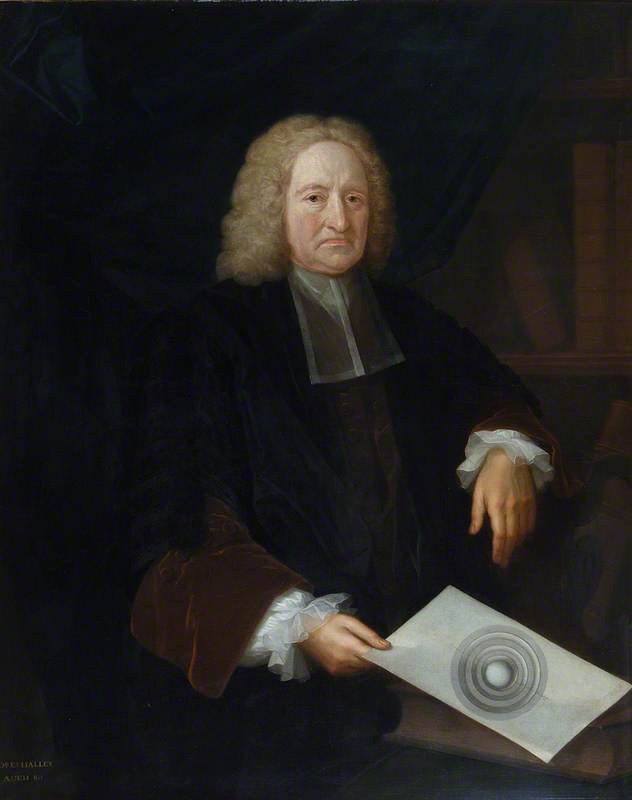
Edmond Halley, best known for predicting the return of the comet that bears his name, presented a paper to the Royal Society in 1691, published in 1692. He was trying to explain why the direction of magnetic north slowly changes. His answer was that the Earth consists of a shell about 500 miles thick, with smaller spheres inside it; the outer shell and the inner core each had their own magnetic poles. “We have adventured to make the Earth hollow and to place another Globe within it,” he wrote. He even suggested that the inner shells might be inhabited and lit by luminous air. In a portrait painted in 1736, he holds a diagram from that paper.
Symmes and the holes at the poles
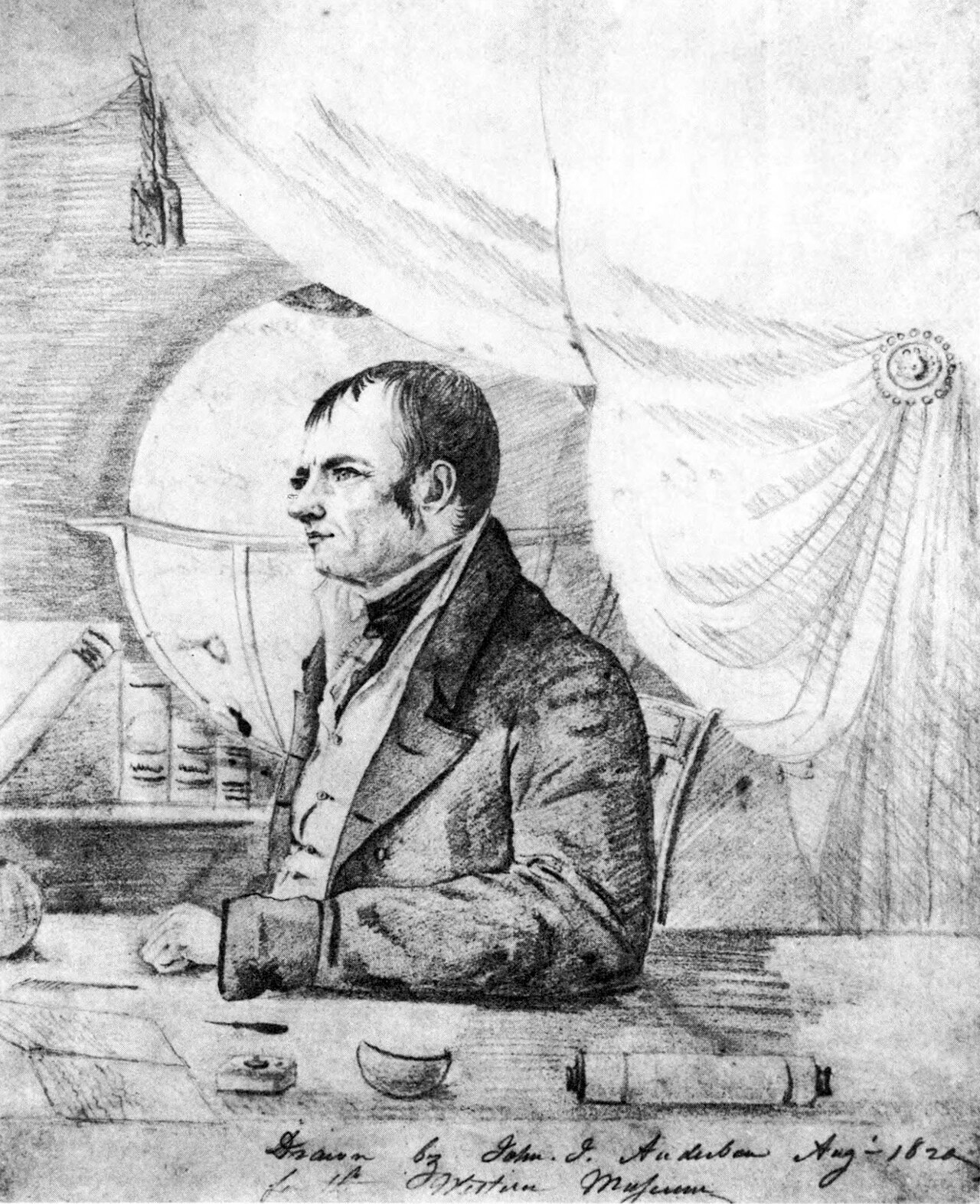
On 10 April 1818, John Cleves Symmes Jr., a former army captain from Ohio, mailed 500 copies of a circular from St Louis, addressed “TO ALL THE WORLD!” It read: “I declare the earth is hollow, and habitable within; containing a number of solid concentrick spheres, one within the other, and that it is open at the poles 12 or 16 degrees; I pledge my life in support of this truth, and am ready to explore the hollow, if the world will support and aid me in the undertaking.”
Symmes lectured widely. A young editor, Jeremiah Reynolds, joined him on tour, and later became a leading promoter of the United States Exploring Expedition of 1838 to 1842, which charted large parts of the Antarctic coast. Symmes died in 1829 and was buried in Hamilton, Ohio, under a monument topped by a hollow globe open at the poles.
Living on the inside
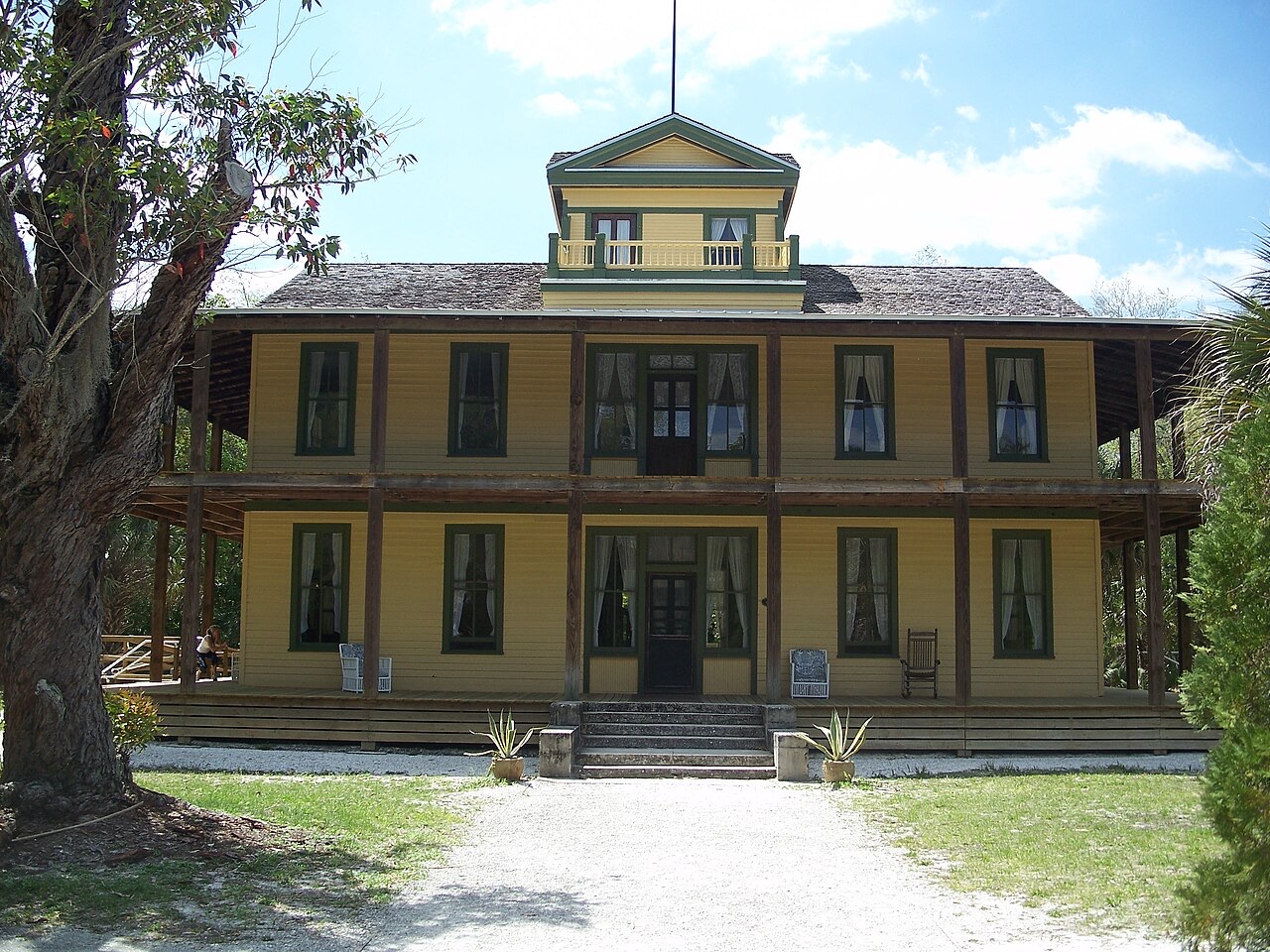
In 1869 Cyrus Teed, a physician, had a vision; he later renamed himself “Koresh”. He taught the opposite of Symmes: that we live on the inside of a hollow sphere. His followers’ motto was “We live inside.” In 1894 he founded a community on about 300 acres near the Estero River in Florida. After his death in 1908 the community dwindled, and in 1961 its last members gave the land to the state. It is now the Koreshan State Historic Site.

Inner worlds in fiction
Writers seized on the idea. Edgar Allan Poe, who had praised Reynolds’s call for an exploring expedition, wrote The Narrative of Arthur Gordon Pym (1838). Jules Verne’s Journey to the Centre of the Earth (1864) sends its heroes down an Icelandic volcano into a vast underground world. Edgar Rice Burroughs’ Pellucidar novels, beginning with At the Earth’s Core (1922), describe a world inside the Earth.
Modern claims
In the 1960s Raymond Bernard, whose real name was Walter Siegmeister, published The Hollow Earth, claiming that the shell is about 800 miles thick, the polar openings are 1,400 miles across, and flying saucers come from a wise race living inside. He cited a line attributed to the polar explorer Admiral Richard Byrd: “I’d like to see that land beyond the Pole.” A “secret diary” circulating online claims that Byrd flew into the inner Earth in 1947 and met its inhabitants. Other legends speak of Agartha, a kingdom at the Earth’s centre, and of Nazi leaders escaping through an opening at the South Pole. A 2022 social media post claimed that elites hide the polar entrances by manipulating satellite images.

The arguments, point by point
The polar holes
Believers say: there are openings at the poles, and satellite images have shown them.
The response: Byrd never mentioned an opening, and the Ohio State University archive that holds his papers says they contain no evidence that he flew into one. The origin of the “secret diary” is unknown. A disputed 1967 weather-satellite image of a dark spot at the pole was stitched together from many images and was reportedly taken when the pole was in darkness. A NASA scientist has explained that many satellites simply do not pass directly over the poles because of their orbits.
The weight of the Earth
Believers say: the shell is solid, but the inside is open space.
The response: in 1798 Henry Cavendish measured the density of the Earth at 5.48 times that of water, close to today’s value of about 5.5. Surface rocks are only about 2.7. “If our planet were hollow, its density would be lower, not greater, than the density of its crust,” says the geophysicist Andrew Campbell of the University of Chicago.
Earthquake waves
Believers say: no one has ever been inside, so no one can know.
The response: earthquake waves act as an X-ray of the planet. Some kinds of wave cannot pass through liquid, and the “shadow zones” where they fail to arrive revealed a liquid outer core. In 1936 the Danish seismologist Inge Lehmann used faint waves that did arrive to show that there is a solid inner core. The deepest hole ever drilled, the Kola Superdeep Borehole in Russia, reached about 12 km, a tiny fraction of the distance to the centre, where temperatures at the bottom were about 180 °C.
Hidden water
Believers say: scientists have admitted there is an ocean inside the Earth.
The response: in 2014 a tiny diamond from Brazil was found to contain a mineral called ringwoodite holding about 1.5% water, suggesting that rock deep in the mantle may contain as much water as all the oceans. But that water is locked inside the crystals, “not as a liquid but as hydroxide ions”, and is not an underground sea.
What is still argued about
Among geophysicists, the picture of a solid planet with a molten outer core and a solid inner core is, as Discover puts it, the expert consensus, grounded in seismic data. Among believers, debate continues over polar images and expeditions. One voyage to the North Pole to look for the opening, planned for 2007, was cancelled after its organiser died, and another believer has since tried to revive it. No poll appears to have asked how many people think the Earth is hollow.
Sources
- Royal Society blog, “Magnetic Halley” (2023)
- Peter W. Sinnema, “10 April 1818: John Cleves Symmes’s ‘No. 1 Circular’”, BRANCH
- Peter Fitting, “Stories of a Hollow Earth”, The Public Domain Review (2011)
- The Cultural Landscape Foundation, “Koreshan State Historic Site”
- Mental Floss, “Failed Utopia: Koreshan Unity Settlement” (2010)
- Edgar Allan Poe Society of Baltimore, The Narrative of Arthur Gordon Pym (1838)
- Encyclopædia Universalis, “Voyage au centre de la Terre”
- The Skeptic’s Dictionary, “hollow Earth”
- Geophysical Institute, University of Alaska Fairbanks, “The Hollow Earth Theory” (1985)
- Discover, “Hollow Earth: A Journey Through 3 Centuries of Conspiracy Theory” (2023)
- Explorersweb, “Exploration Mysteries: Agartha” (2024)
- Ohio State University Archives, “Frozen Fridays: ‘Q’ is for Questionable Theories!” (2017)
- Beyond Penguins and Polar Bears (Ohio State), “The Hole in the Pole Gang”
- PolitiFact, “Fact-checking the ‘hollow earth’ conspiracy theory” (2022)
- APS News, “June 1798: Cavendish weighs the world” (2008)
- NASA, “Earth Fact Sheet”
- USGS, “Shadow zone”
- APS News, “September 1936: Seismologist Inge Lehmann Concludes That Earth Has an Inner Core” (2023)
- Scientific American, “How Deep Is the Deepest Hole in the World?” (2020)
- Scientific American, “Rare Diamond Confirms That Earth’s Mantle Holds an Ocean’s Worth of Water” (2014)