
The short version
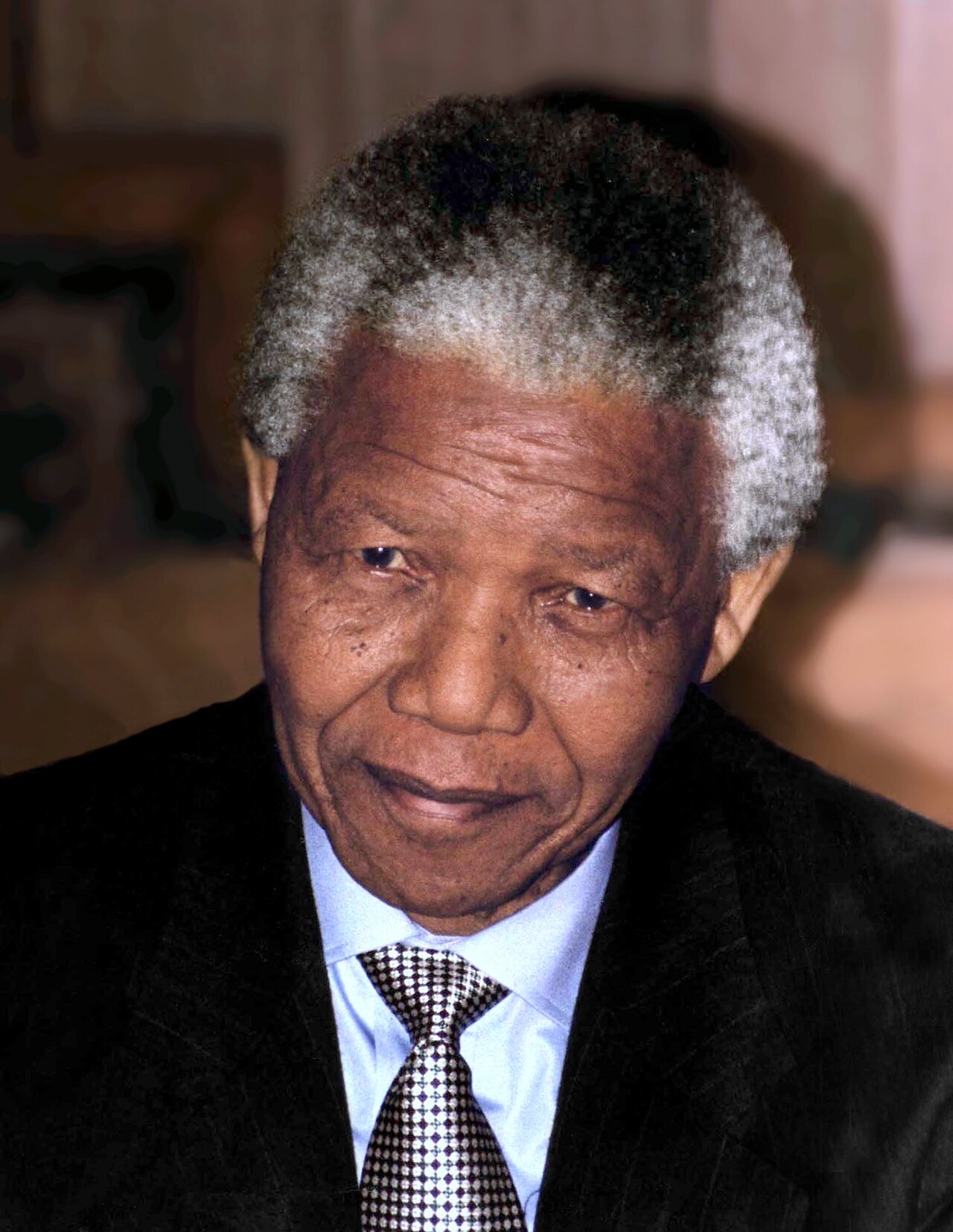
The Mandela effect is the name for a false memory shared by many people. The classic example is the belief that Nelson Mandela died in prison in the 1980s. He was released in 1990, became president of South Africa, and died in 2013. Some people think shared false memories are traces of an alternate reality. Psychologists think they show that memory is reconstructed and that human minds make similar mistakes.
Where the name comes from
The term was coined around 2009 by Fiona Broome, a writer on the paranormal. At a convention, she discovered that she and several other people remembered news coverage of Mandela’s death in prison, including his funeral. She set up a website to collect similar cases, and thousands of people wrote in with their own.
Famous examples
- A children’s book series about a family of bears. Many people are sure the family name ended in “-stein”. It has always been “-stain”.
- A board-game mascot in a top hat. Widely remembered with a monocle. He has never worn one.
- A yellow cartoon creature with a lightning-shaped tail. Often remembered with a black tip on the tail. There is none.
- A clothing brand’s fruit logo. Many people recall a horn of plenty behind the fruit. The company says there never was one.
- A golden film robot. Most people picture him gold from head to foot. One lower leg was silver.
- A 1990s film starring a comedian as a genie. People describe the cover and plot in detail. No such film was made, though a different genie film with a basketball star came out in 1996.
- A famous line from a space saga that almost everyone quotes with the hero’s name at the start. The name is not in the line.
Versions of the theory
Parallel universes. People with the “wrong” memory have slid over from a nearly identical timeline in which their version was true.
The particle accelerator. Experiments at CERN’s Large Hadron Collider, which began operating in 2008, damaged or shifted reality.
A glitch in the simulation. If the world is a computer program, an update changed some details and left old memories in place.
Time travel. Someone altered the past, and a few people remember the original.
Memory. The mainstream view: these are ordinary false memories that happen to be common.
The arguments, point by point
Thousands of people share the same wrong detail
Believers say: random errors would be scattered. Everyone making the identical mistake points to a real event they all experienced.
The response: minds work in similar ways, so they err in similar ways. A top-hatted tycoon fits a mental template that includes a monocle. The “-stein” ending is far more common in surnames than “-stain”. Memory fills gaps with what is typical.
The memories are vivid and detailed
Believers say: people remember where they were when they heard Mandela had died, and what the film cover looked like.
The response: decades of experiments show that confidence and detail are poor guides to accuracy. Researchers have planted entirely false childhood events in volunteers’ minds, and subjects went on to describe them richly.
People held these memories before they heard of the effect
Believers say: it cannot be suggestion if they remembered it independently.
The response: most people discover their “memory” at the moment someone shows them the two versions and asks which is right. That question is itself a suggestion. Online communities then reinforce the answer.
There is “residue”
Believers say: old newspaper clippings, parodies and merchandise sometimes show the remembered version, which proves it once existed.
The response: those are other people making the same mistake at the time, which is what the memory explanation predicts.
Why would the universe change a logo?
Sceptics say: if realities merged, we would expect differences in geography, history or family members. The reported changes are almost all spellings, logos and film quotes, the kind of detail people only half notice.
Believers reply: large changes may exist too, and people dismiss them.
What the research shows
In 2022, psychologists at the University of Chicago published the first controlled study of the visual version of the effect. They showed volunteers the correct image of forty well-known icons alongside altered ones. For seven of them, people chose the same wrong version significantly more often than the right one, and did so confidently. The findings held up when another team repeated the study.
The surprising part was what did not explain it. People had seen the real images many times. Eye-tracking showed they looked at the relevant part of the picture. In several cases the false version had rarely or never appeared anywhere. The researchers concluded that no single cause accounts for every example, and that some images seem to be misremembered for reasons science has not yet pinned down.
Older research supplies the general mechanism. Memories are not stored like recordings. They are rebuilt each time from fragments, expectations and whatever has been learned since. People readily “remember” a word that was never on a list if the list was full of related words, and details suggested after an event become part of the memory of it.

What is still argued about
- Why these particular images and not others. Researchers can predict some cases from mental templates, but not all.
- Whether there is anything a believer would accept as a test, since any evidence for the “old” version can be read as residue and its absence as proof of the change.
- What the effect means for eyewitness testimony in court.
Why it fascinates
Almost everyone has at least one. Finding that a memory you would have sworn to is wrong, and that millions share it, is unsettling. Whether you take that as a lesson about the brain or a hint about the universe is the question.
Sources
- University of Chicago, “New Research Shows Consistency in What We Misremember” (2022)
- Association for Psychological Science, “Visual Memory Distortions Paint a Picture of the Past That Never Was”
- Transparent Replications, replication report on Prasad and Bainbridge (2022)
- Prasad and Bainbridge in PsyPost, “Scientists are closer to understanding the Mandela Effect” (2022)
- Prasad and Bainbridge, “The Visual Mandela Effect as Evidence for Shared and Specific False Memories Across People”, Psychological Science 33(12), 2022
- Elizabeth Loftus, research on the misinformation effect and false memories