
The short version
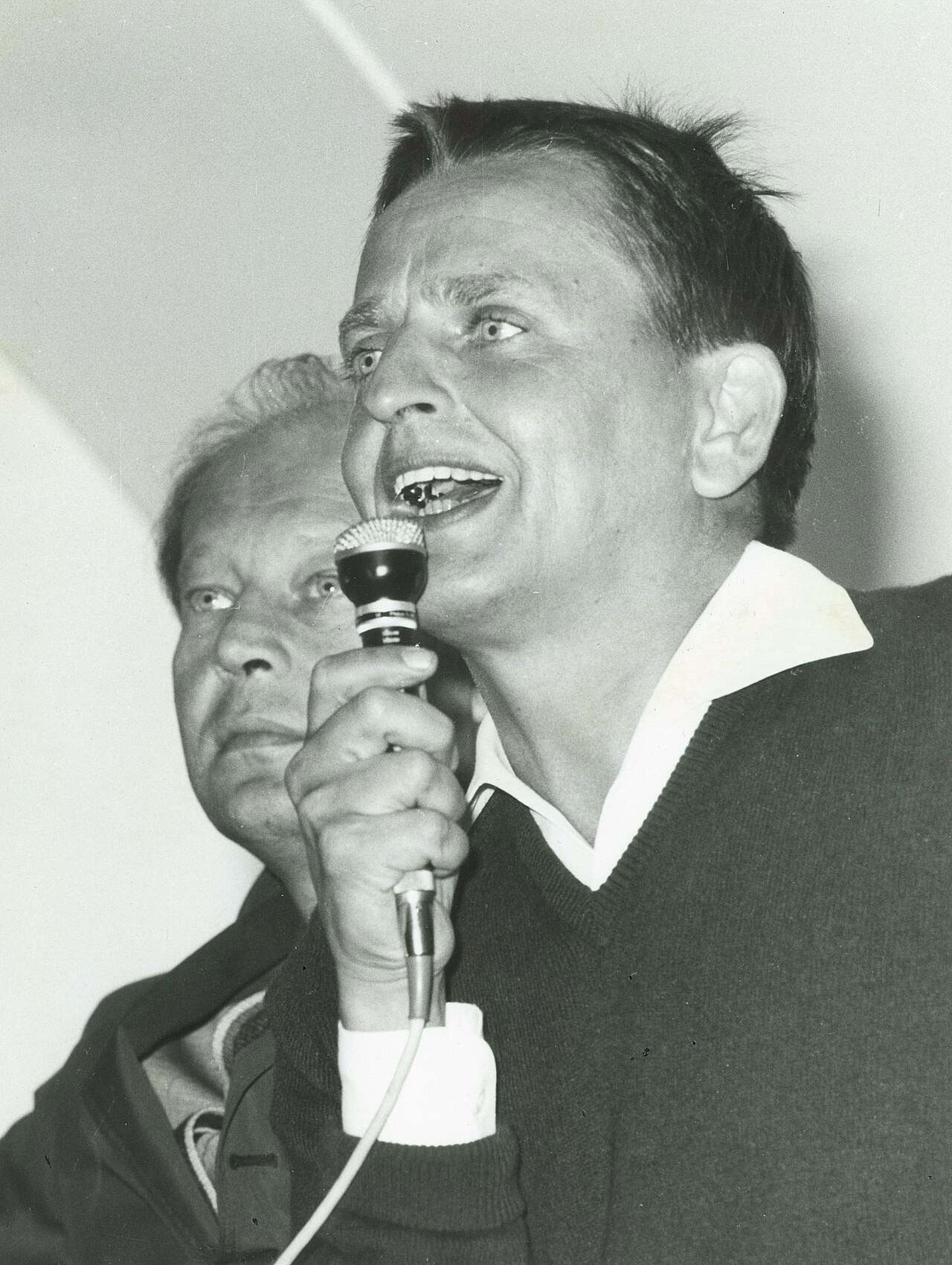
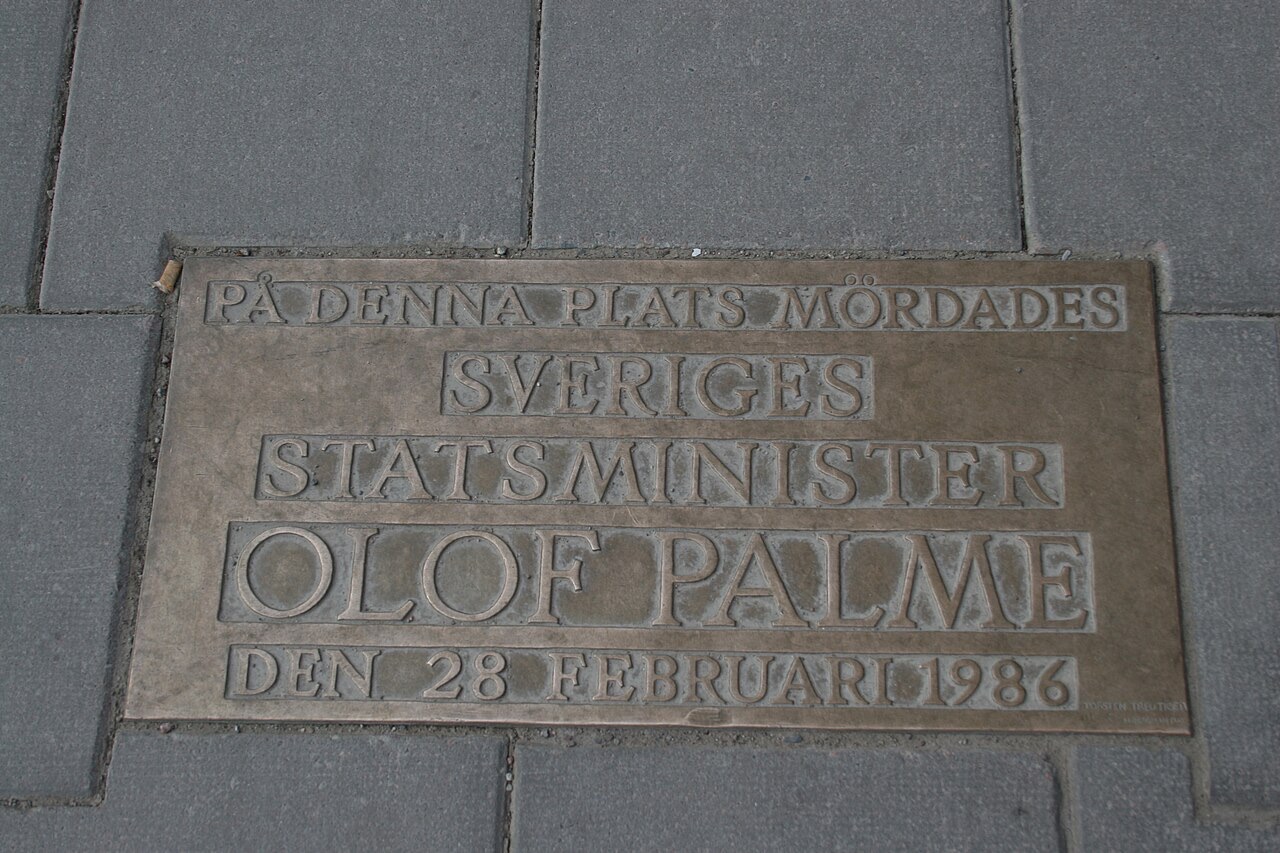
At 23.21 on Friday 28 February 1986, Sweden’s prime minister Olof Palme was shot dead on Sveavägen in central Stockholm as he walked from the cinema with his wife, Lisbeth. The gunman fled and has never been identified. It became Sweden’s largest criminal investigation. In 1989 Christer Pettersson, a man known to the police for drug abuse and violence, was convicted of the murder and then acquitted on appeal. In 2020 the chief prosecutor named a different man, Stig Engström, as the prime suspect and closed the case because he was dead. In December 2025 a senior prosecutor found that the evidence against Engström was not enough to point him out. The case remains closed and unsolved.
The murder
Palme had led the Social Democrats since 1969 and was prime minister from 1969 to 1976 and again from 1982. He was much loved and also hated. Earlier that day he had dismissed his security detail, and he and Lisbeth went to the Grand cinema with their son and his girlfriend. Afterwards the couple walked along Sveavägen. At the corner of Tunnelgatan a man came up behind them and fired two shots. One killed Olof Palme. The other wounded Lisbeth Palme slightly. Witnesses saw the gunman run up Tunnelgatan.
The bullets came from a .357 Magnum revolver. The weapon has never been found. Over the years the police have test-fired 788 different weapon models, and forensic experts have said the damaged bullets carry so few marks that it may never be possible to link them to a gun.
A troubled investigation
The hunt was first led by Stockholm’s police chief, Hans Holmér, who pursued the theory that the Kurdish guerrilla group PKK was behind the killing. Twenty Kurds were questioned in 1987, but nothing concrete came of it. Holmér left the investigation in March 1987. Critics, including the investigation’s later forensic lead Sonny Björk, believe a series of mistakes was made in those first months, and that the case might have been solved had it been run as an ordinary murder inquiry.
The scale of the work is huge. The investigation registered more than 22,000 items, interviewed more than 10,000 people, and 134 people confessed to the murder, 29 of them directly to the police. Since a change in the law in 2010, the murder has no statute of limitations.
The suspects
Christer Pettersson. Lisbeth Palme identified Pettersson, a man known to the police for drug abuse and violence, as the man she had seen at the scene. In 1989 a divided district court sentenced him to life imprisonment. Later the same year a unanimous appeal court acquitted him, after the police failed to produce any technical evidence. In 1997 the Prosecutor-General asked the Supreme Court for a new trial, but the request was rejected. Pettersson died in 2004.
Stig Engström. Engström worked at the Skandia insurance company on Sveavägen, close to the scene, and said he had arrived just after the shooting. None of the many other witnesses or police officers at the scene could remember him, and the first investigators classified him as an unreliable witness of no interest. In 2018 the journalist Thomas Pettersson argued in the magazine Filter and in a book that he was the killer. On 10 June 2020 the chief prosecutor, Krister Petersson, named Engström, who had died in 2000, as the prime suspect and closed the investigation. “The evidence strongly suggests he was at the crime scene, but in a completely different role than the one he wished to present,” he said.
There was no murder weapon and no technical evidence. Leif GW Persson, a criminologist, called the case against Engström “för tunt” (too thin). In 2021 the Parliamentary Ombudsman found that the prosecutor’s press conference had violated the presumption of innocence, because Engström had been presented as guilty without a court’s verdict.
December 2025. A senior prosecutor, Lennart Guné, reviewed the case after a request to reopen it. He did not reopen it, but he changed the reason for closing it: on the evidence now available, it is not possible to prove who the killer is. Engström is no longer pointed out as the killer. Among Guné’s reasons: Lisbeth Palme’s identification of Pettersson has support, “and Pettersson and Engström are not at all alike”, and witness accounts place the gunman at the corner before Engström could have left his office.
The theories
A lone gunman
Those who hold this view argue: the killing was the act of one man acting alone. The 2020 prosecutor concluded that the killer acted alone.
The response: neither man was found guilty in a final judgment, and no weapon or technical evidence ties anyone to the scene.
South Africa
Those who hold this view argue: Palme was a leading opponent of apartheid, and South Africa’s security services had a motive. In 1996 Eugene de Kock, a former police colonel who led an apartheid-era hit squad, told a court in Pretoria that the murder was one of the projects of a former spy, Craig Williamson. The writer Jan Stocklassa is among those who believe in a South African link.
The response: Williamson denied it, calling the claim “crazy”. No one from South Africa has been charged, and the police list it as one of the main lines of inquiry.
A conspiracy inside Sweden
Those who hold this view argue: the killer had help from people within Sweden, perhaps police officers or soldiers who hated Palme. According to the journalist Gunnar Wall, a review commission in the late 1990s found that the so-called “police track”, tips that officers were involved, was never investigated as a line of its own. In 2026, on the 40th anniversary, a TV4 documentary used artificial intelligence on released case files and pointed towards a small group of Swedish elite soldiers. The man it focused on denied involvement in every police interview and is dead.
The response: in 2016 the investigation’s head said that there is no such thing as “the police track”, only loosely connected tips about individual officers. The documentary’s claim is a media claim, not an official finding.
Over the years, other theories have pointed at the CIA, Kurdish separatists and Chilean fascists, among others.

What is still argued about
- Who fired the shots, and whether anyone helped.
- Whether Lisbeth Palme’s identification of Pettersson was right.
- Where the revolver went.
A survey reported by SVT in 2021 found that only 19% of Swedes believed Engström was the murderer.
Sources
- Polisen, “Palmeutredningen - polisens arbete”
- Åklagarmyndigheten, “Decision in the investigation into the murder of former Swedish prime minister Olof Palme” (2020)
- NPR, “Prosecutors In Sweden Finally Close Case On 1986 Assassination Of Olof Palme” (2020)
- Al Jazeera, “Sweden drops probe into unsolved 1986 murder of PM Olof Palme” (2020)
- SVT, “Palmeutredaren: Inte möjligt att koppla ett vapen till mordplatsen” (2020)
- SVT, “Mer än 400 vapen har provskjutits i jakten på mordvapnet” (2020)
- SVT, “Kritiken: Frågan om vem gärningsmannen är står helt obesvarad” (2020)
- SVT, live blog on the 2020 decision
- lagen.nu, JO decision dnr 6673-2020 (2021)
- TV4, “Leif GW: Det ska till ett mirakel för att lösa Palmemordet” (2021)
- SVT, “Robert Gustafsson om Palmemordet” (2021)
- SVT, “Nya beslutet: Palmeutredningen återupptas inte” (2025)
- SVT, “Överåklagaren: Därför räcker inte bevisningen kring Skandiamannen” (2025)
- TT/TV4, “Revolvermannen och PKK – spåren i Palmeutredningen” (2025)
- TV4, “Dolda spåret i Palmemordet – avslöjas med hjälp av AI-teknik” (2026)
- Sveriges Radio, “Gunnar Wall: Motivet kan vara Palmes nedrustningspolitik” (2016)
- The Irish Times, “SA link in Palme killing, court told” (1996)
- The Irish Times, “Former spy denies role in Palme killing” (1996)