
The short version
On the day before Thanksgiving in 1971, a man hijacked a flight from Portland to Seattle by claiming to have a bomb. He swapped the passengers for cash and parachutes, ordered the plane back into the air, and jumped from the rear stairs somewhere over the forests of Washington state. Despite one of the longest investigations in FBI history, nobody knows who he was or whether he lived.
What happened
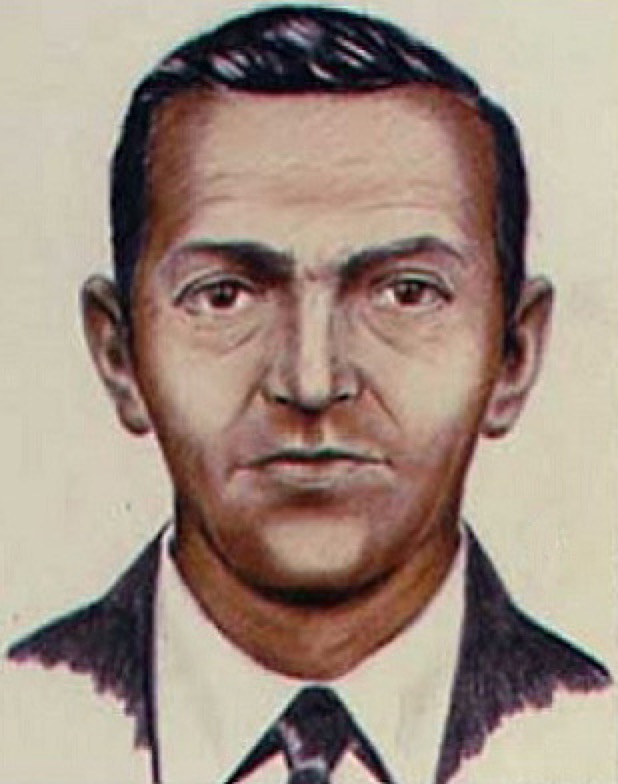
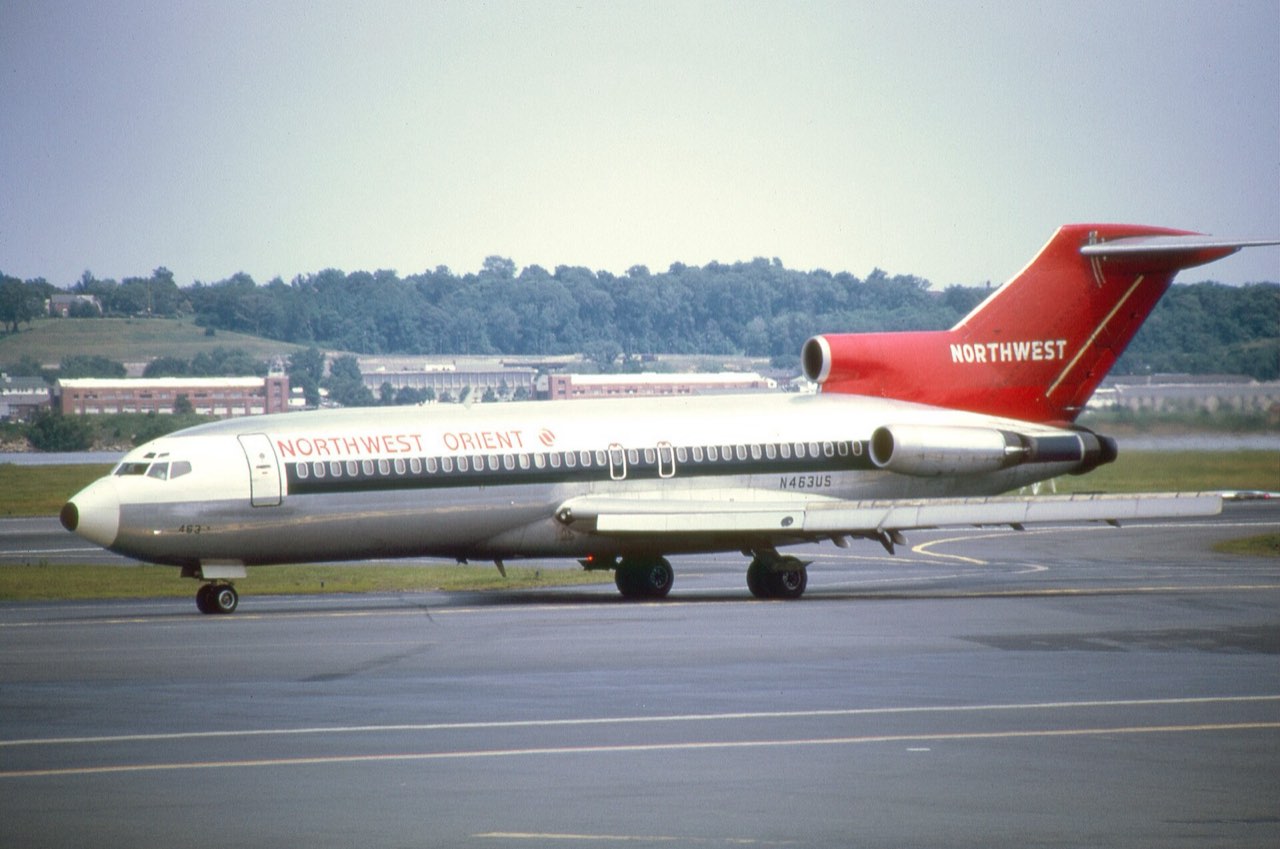
A man in his mid-forties bought a one-way ticket on Northwest Orient flight 305 using the name Dan Cooper. He wore a dark suit, white shirt and a thin black tie. After take-off he handed a flight attendant a note saying he had a bomb, and showed her a briefcase with wires and red cylinders.
His demands were $200,000 in twenty-dollar bills and four parachutes. The plane circled until the money was ready, then landed in Seattle, where he released the 36 passengers. He kept the pilots and one flight attendant.
He told the crew to fly towards Mexico City, slowly and low, with the landing gear down and the cabin unpressurised. Shortly after eight in the evening, a warning light showed that the rear stairs had been lowered. When the plane landed in Reno to refuel, he was gone. He left behind two of the parachutes and his tie.
The name “D.B. Cooper” came from a reporter’s mistake in the first days of the case, and it stuck.
The evidence
The tie. A clip-on tie left on his seat. Later analysis found particles of rare metals on it, including pure titanium, which suggests he may have worked in aerospace or a specialist metals plant.
The money. The FBI had recorded every serial number. None of the bills was ever spent. In 1980, an eight-year-old boy digging on a bank of the Columbia River found three rotting bundles totalling $5,800. The serial numbers matched. The rest has never surfaced.
The parachutes. He was given two main parachutes and two reserves. He chose the older, harder-to-steer main parachute and took a reserve that had been sewn shut for classroom use and could not open.
No body. Extensive searches of the suspected drop zone found no remains, parachute or briefcase.
Did he survive?
The case that he died
- He jumped at night into heavy rain and freezing wind, wearing a suit, a raincoat and slip-on shoes.
- The terrain below was mountainous forest with rivers and lakes.
- His choice of equipment suggests he was not an expert. An experienced jumper would have spotted the dummy reserve.
- None of the money was ever spent, and nobody was reported missing who matched him.
FBI agents who worked the case generally believed he did not survive.
The case that he lived
- He knew details of the Boeing 727 that some of its crew did not, including that the rear stairs could be lowered in flight and what settings would let him jump safely.
- He was calm throughout and gave precise instructions.
- Copycat hijackers who jumped from 727s in 1972 all survived their landings.
- If he died, searchers might be expected to have found the bright canopy, the body or the remaining cash in more than fifty years.
- The bundles found by the river were several kilometres from the calculated drop zone, and nobody has explained convincingly how they got there.
The suspects
The FBI considered more than 800 suspects in the first five years alone. None was charged. Those most often discussed include:
Richard McCoy. A former soldier and skydiver who carried out a very similar hijacking five months later and was caught. He was killed in 1974 after escaping from prison. The FBI ruled him out at the time, mainly because of his age and because witnesses did not think he matched. In 2024 his children handed over a modified parachute found on family property, saying they believed their father was Cooper. The FBI examined it and returned it at the end of 2025 without public comment.
Robert Rackstraw. A former army pilot with parachute training, promoted by a team of volunteer investigators. He denied it and died in 2019.
Duane Weber. His widow said he told her “I’m Dan Cooper” shortly before he died in 1995. DNA from the tie did not match.
Kenneth Christiansen. A former paratrooper who worked for the airline. His brother came to suspect him.
The partial DNA profile recovered from the tie may not be the hijacker’s, which limits how firmly anyone can be excluded.
The investigation today
The FBI announced in 2016 that it was closing the active investigation and would look only at new physical evidence, specifically the parachutes or the money. In 2025 it released hundreds of pages of previously unpublished files. They show how many leads agents chased over the decades and name suspects the public had not heard of. They do not identify the hijacker.
Amateur investigators continue to work on the case, and a convention of enthusiasts meets each year in the Pacific Northwest.

What changed because of him
Aircraft with rear stairs were fitted with a simple latch, known as a Cooper vane, that stops the stairs being lowered in flight. Passenger screening at US airports became mandatory in 1973.
Why people care
Nobody was physically hurt, he was polite to the crew, and he appeared to beat the system and vanish. That has made him a folk hero to some. The crew members who spent hours believing there was a bomb on board remember it differently.
Sources
- Biography.com / Popular Mechanics, report on newly released FBI files (2025)
- People via AOL, “From a Wheelchair Suspect to Titanium on a Tie, FBI Files Reveal New Clues” (2025)
- Cowboy State Daily, “FBI’s ‘One-In-A-Billion’ Parachute Returns” (February 2026)
- History.com, “Who Was the Mysterious Hijacker D.B. Cooper?”
- FBI, “D.B. Cooper Hijacking” case history
- FBI Records: The Vault, “D.B. Cooper” files