
The short version
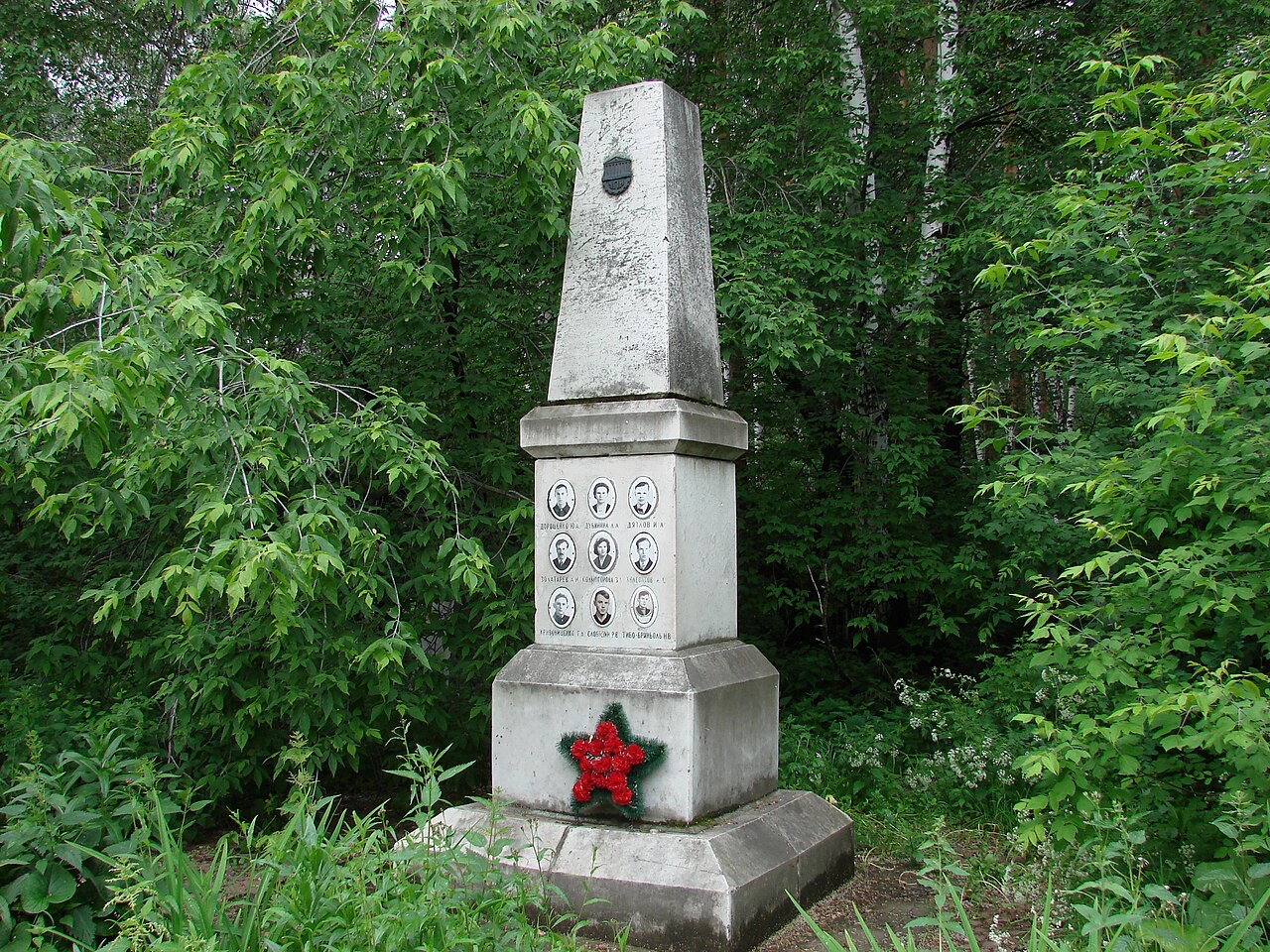
On the night of 1-2 February 1959, nine experienced hikers camped on the slope of a mountain in the northern Urals. Something made them cut their way out of their tent and flee into the dark, most of them without shoes, at a temperature below -25 °C. All nine died. Most died of the cold, but three or four had severe skull or chest injuries. Soviet investigators closed the case, saying the deaths were caused by “a compelling natural force”. The files stayed secret for decades, and more than 70 theories have been put forward since, from avalanches and military tests to the Yeti. In 2020 Russian prosecutors concluded that an avalanche was to blame, and a 2021 study proposed how a small slab avalanche could have happened. The families reject that conclusion and want a new criminal investigation.
The group
The party set out from Sverdlovsk, now Yekaterinburg, in January 1959. There were ten of them, eight men and two women: students and recent graduates of the Ural Polytechnic Institute, and a 38-year-old sports instructor and Second World War veteran, Semyon Zolotaryov. Their leader was Igor Dyatlov, 23, a fifth-year radio engineering student. They planned to ski about 300 km and climb two peaks, a route in the hardest category for hikes. On 28 January one of them, Yuri Yudin, turned back because of illness. He was the only one to survive. He died in 2013.
What the searchers found
When the group failed to return, their families raised the alarm. On 26 February searchers found the tent on the slope of Kholat Syakhl, a mountain whose name in the local Mansi language is usually given as “Dead Mountain”. It was partly buried in snow and had been cut open from the inside with a knife. The hikers’ belongings were still inside. Footprints of eight or nine people, in socks, a single boot or barefoot, led down towards the forest, more than a kilometre away.
The next day the first bodies were found under a cedar tree, beside the remains of a fire, dressed only in underwear. Igor Dyatlov and Zinaida Kolmogorova were found between the cedar and the tent, and Rustem Slobodin, with a fractured skull, was found on 5 March. The last four were not found until May, after the thaw, in a ravine under about four metres of snow.
Six of the hikers died of hypothermia. Three or four had serious injuries, including skull fractures and broken ribs. Two of the bodies found in the ravine were missing their eyes, and one was missing her tongue. Some have attributed this to wild animals, since the bodies lay in the ravine for months. Tests also found traces of radioactivity on some of the clothing.
The investigations
1959. The Soviet prosecutor closed the case on 28 May 1959, concluding that the hikers had died because of “a compelling natural force”. The case files were classified, and the story became widely known only in the 1990s. In 1990 the lead investigator, Lev Ivanov, said he had received reports of balls of fire in the sky that night but had been ordered to classify his findings. Investigators first suspected the Mansi, local reindeer herders, but found no evidence against them.
2019-2020. At the request of the relatives, Russia’s Prosecutor General’s Office reopened the case in 2019, looking only at natural causes. In July 2020 it announced that an avalanche had killed the group. The hikers, prosecutors said, left the tent in an orderly way, lost sight of it in poor visibility and lit a fire at the cedar. “It was a heroic struggle. There was no panic. But, in those circumstances, they had no chance of escape,” said Andrei Kuryakov, the official who presented the findings.
The 2021 study. In January 2021 the scientists Johan Gaume of EPFL and Alexander Puzrin of ETH Zurich published a study in Communications Earth & Environment. They showed how a cut made in the slope for the tent, combined with snow blown in by strong winds, could have set off a small slab of snow hours later. Using computer models, including data from car-crash tests and snow animation developed for the film Frozen, they found that such a slab could cause severe but non-lethal chest and skull injuries. In January 2022 guides observed traces of two fresh slab avalanches on a slope less than 3 km from the tent site.
The arguments, point by point
An avalanche
Those who doubt it say: the slope is too gentle for avalanches, there was little snow, and searchers saw no signs of one. Vladislav Karelin, one of the 1959 searchers, has said stones were sticking out of the slope. The Swedish archaeologist Richard Holmgren, who recreated the trek in 2019, argues that even a slab “doesn’t explain everything”.
The response: the 2021 study found that the slope above the tent was locally steeper, at about 28 degrees, and a later drone survey found many slopes steeper than 30 degrees. A small slab on a gentle slope, the authors say, would have left few traces behind. One outside avalanche expert, Jordy Hendrikx, called the study “perfectly robust”, though another, Jim McElwaine of Durham University, found it surprising that such a small avalanche could cause such violent injuries.
A military test
The families say: the deaths were linked to the military, possibly a rocket launch gone wrong. In 2023 a group of researchers, with relatives’ support, argued that a failed missile launch had covered the area with nitric acid fog. The lawyer for the relatives says chemical and tissue analyses are missing from the autopsy files.
The response: the 2020 prosecutors said they examined 75 theories and rejected nuclear and missile explanations, saying missile launches were not visible from the pass. The radiation on the clothing has been put down to thorium in camping lanterns or to earlier contamination in the region. The 2020 prosecutors said no traces of radiation were found on the hikers’ belongings.
Something stranger
Others say: the orange spheres reported in the sky that night, the missing eyes and tongue and the radiation point to a secret weapon, the KGB, a Yeti or aliens.
The response: the writer Evgeny Buyanov, cited by Snopes, says he found no verifiable reports of unidentified flying objects in the region on those dates. The “Yeti” photograph promoted by a 2014 television documentary, Snopes says, looks like an ordinary man.

What is still argued about
The 2021 study’s authors themselves say they do not explain everything, including the radioactivity and the hikers’ behaviour after they left the tent. “We do not claim to have solved the Dyatlov Pass mystery, as no one survived to tell the story,” said Gaume. Gaume has said that for the relatives the avalanche theory is hard to accept because it suggests the experienced hikers were somehow to blame. Puzrin calls it “a story of courage and friendship”.
In June 2026 the relatives, through their lawyer, said the causes of the deaths have still not been established and asked for a new criminal case. No report of a new case being opened had been found by November 2026. No poll appears to have asked how many people think the case has been explained.
Sources
- Johan Gaume and Alexander Puzrin, “Mechanisms of slab avalanche release and impact in the Dyatlov Pass incident in 1959”, Communications Earth & Environment (2021)
- Johan Gaume and Alexander Puzrin, “Post-publication careers: follow-up expeditions reveal avalanches at Dyatlov Pass”, Communications Earth & Environment (2022)
- EPFL, “Intense press coverage prompts new expeditions to Dyatlov Pass” (2022)
- EurekAlert (EPFL press release) on the 2021 study
- BBC News, Lucy Ash, “Dyatlov Pass” (2019)
- TASS, “Prosecutors say avalanche killed Dyatlov group in Urals in 1959” (2020)
- RFE/RL, “Russian Officials Reportedly Close Investigation Into Mysterious 1959 Hiking Disaster” (2020)
- Russia Beyond, “Official cause of death of the Dyatlov group revealed” (2020)
- National Geographic, “Has science solved one of history’s greatest adventure mysteries?” (2021)
- Live Science, “Russia’s ‘Dyatlov Pass’ conspiracy theory may finally be solved 60 years later” (2021)
- Discover, “The Dyatlov Pass Incident: Can Science Explain What Happened to the Hikers?” (2021)
- The Moscow Times, “Russian Investigators Are Reopening the Dyatlov Pass Case. But What Is It?” (2019)
- Snopes, “The Dyatlov Pass Incident” (2017)
- Popular Mechanics, “How Did 9 Hikers Die in the Dyatlov Pass Incident? New Evidence Teases the Truth” (2023), via AOL
- Profile.ru, “Гибель «группы Дятлова» в 1959 году, возможно, будет заново расследована” (2026)
- E1.ru, “«Гадают на кофейной гуще». Наследники дятловцев потребовали запретить рассказывать о катастрофе на телевидении” (2026)
- 360.ru, “Родные погибших из группы Дятлова потребовали расследования, как по делу царской семьи” (2026)