
The short version
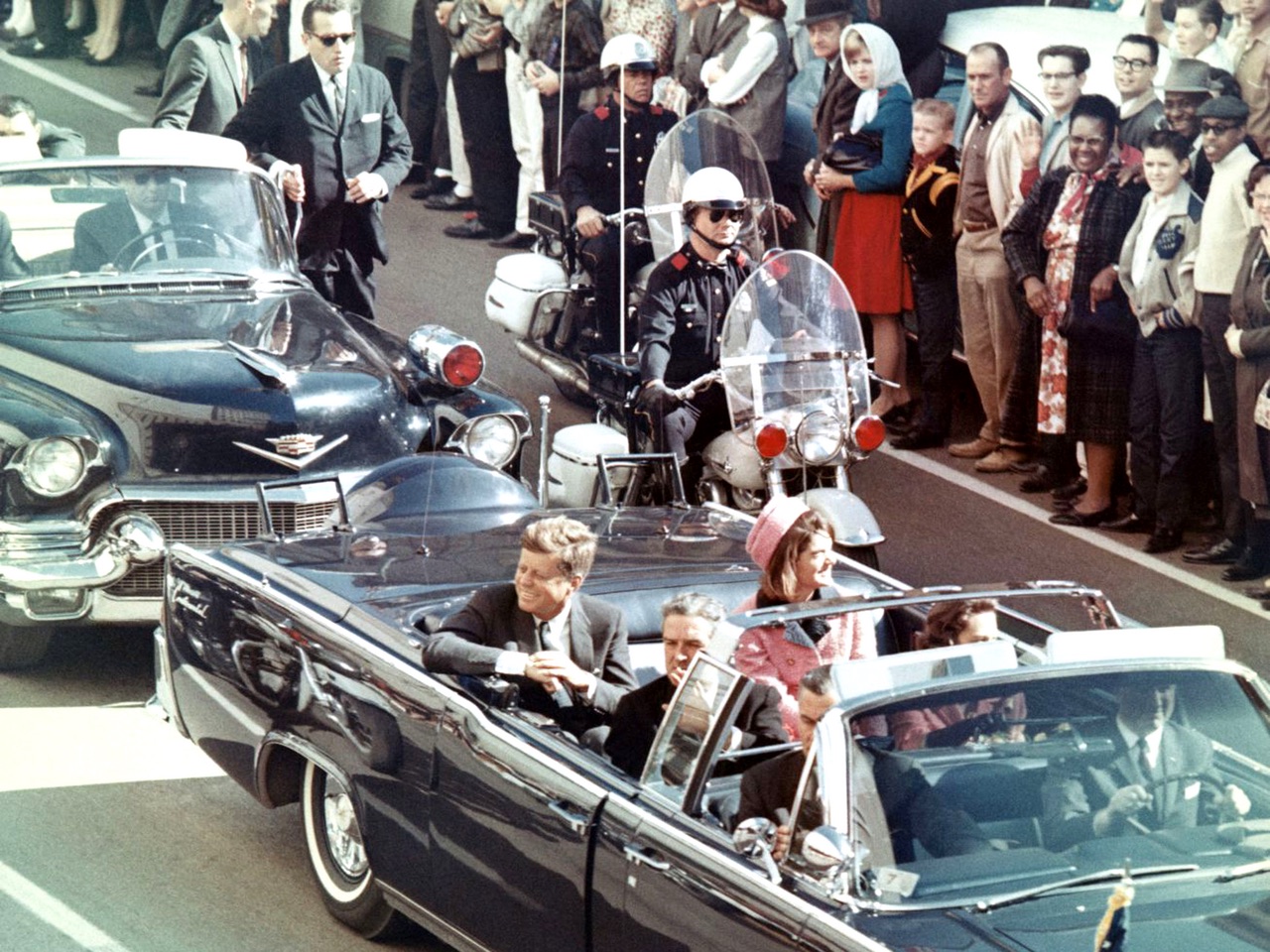
President John F. Kennedy was shot in Dallas on 22 November 1963. Lee Harvey Oswald was arrested the same day and was himself shot dead two days later, before any trial. The first official inquiry said Oswald acted alone. A later one said there was probably a conspiracy. The argument has never ended.
What happened
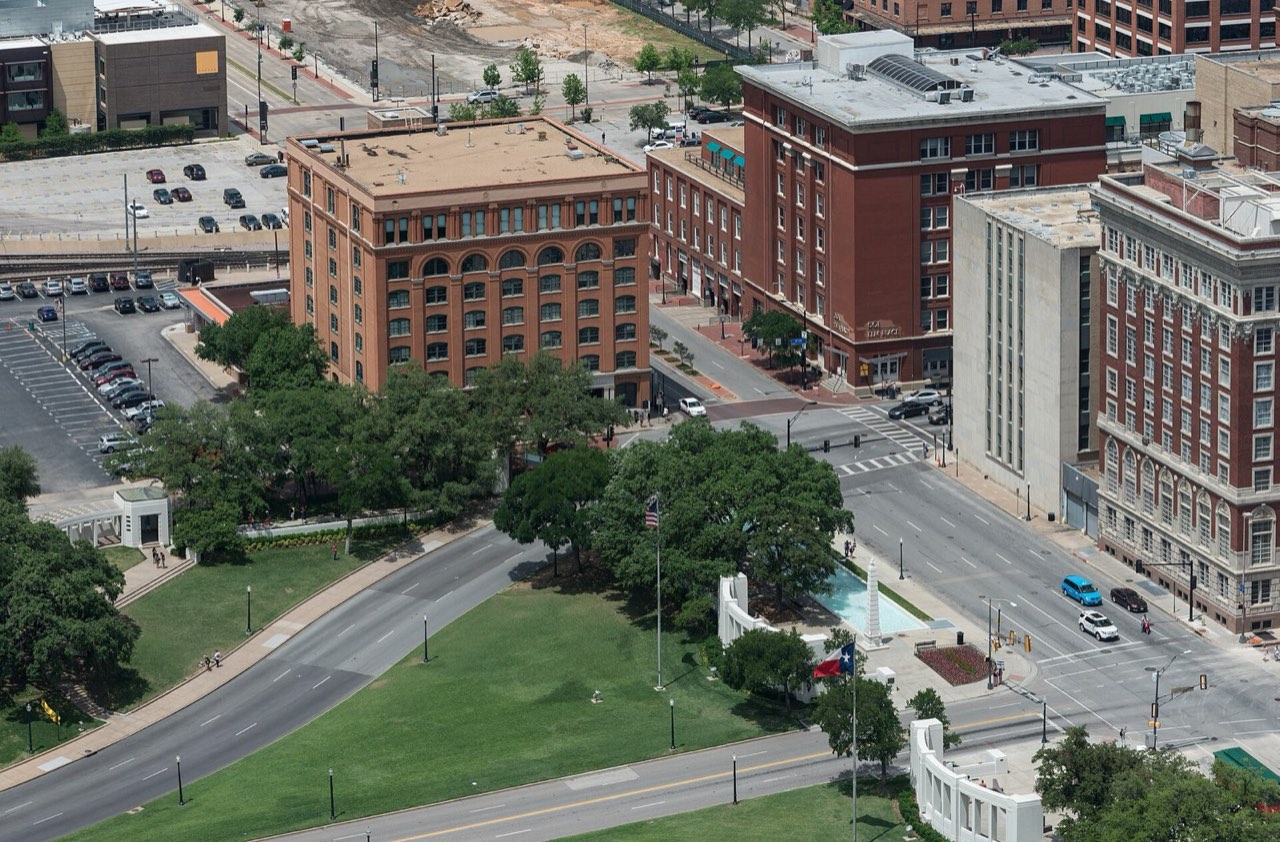
Kennedy was riding in an open car through Dealey Plaza when shots were fired at 12:30 pm. He was pronounced dead half an hour later. Texas Governor John Connally, sitting in front of him, was wounded.
Police found a rifle and spent cartridges on the sixth floor of the Texas School Book Depository, where Oswald worked. Oswald left the building, and about 45 minutes later Dallas police officer J. D. Tippit was shot dead in another part of the city. Oswald was arrested in a cinema shortly after. He denied both killings and told reporters he was “a patsy”.
On 24 November, as Oswald was being moved through the basement of police headquarters, nightclub owner Jack Ruby shot him on live television.
What the official investigations found
The Warren Commission (1964) concluded that Oswald fired three shots from the sixth-floor window, that he acted alone, and that Ruby also acted alone.
The House Select Committee on Assassinations (1979) agreed that Oswald fired the shots that hit Kennedy, but concluded that the president was “probably assassinated as a result of a conspiracy”. That finding rested largely on a police radio recording that acoustic experts said captured a fourth shot from a second location.
A National Academy of Sciences panel (1982) reviewed the recording and concluded that the sounds were recorded about a minute after the shooting and did not show a second gunman. The committee’s conspiracy finding has been disputed ever since.
The main theories
The CIA. Kennedy had clashed with the agency after the failed Bay of Pigs invasion of Cuba. Supporters of this theory point to how much the CIA knew about Oswald before the assassination and how slowly it has released its files.
Organised crime. The Mafia had been targeted by Attorney General Robert Kennedy, and Jack Ruby had connections to mob figures. The House committee thought individual mobsters may have been involved, without proving it.
Cuba or the Soviet Union. Oswald defected to the Soviet Union in 1959, returned in 1962, and visited the Cuban and Soviet embassies in Mexico City weeks before the shooting.
Anti-Castro Cuban exiles. Some blamed Kennedy for abandoning them at the Bay of Pigs.
Lyndon Johnson. The vice president gained the presidency. This theory has the least documentary support.
A second gunman. Not a suspect but a mechanism: the idea that at least one shot came from the “grassy knoll” in front of the car.
The arguments, point by point
The single bullet
Sceptics say: the Warren Commission needed one bullet to pass through Kennedy’s neck and cause all of Connally’s wounds, and to emerge almost intact. They call it the “magic bullet”.
The response: Connally sat lower and further inboard than Kennedy, on a jump seat. Reconstructions that use the real seating positions produce a straight path.
The head movement
Sceptics say: the home movie shot by Abraham Zapruder shows Kennedy’s head moving back and to the left, as if hit from the front.
The response: forensic panels attributed the movement to a neuromuscular reaction and the physics of the wound, and found the medical evidence consistent with shots from behind.
The shooting
Sceptics say: three shots with a bolt-action rifle in the available time is too difficult.
The response: Oswald was a former Marine who had qualified as a sharpshooter, and tests have repeated the timing. Critics reply that the tests did not always match the conditions.
Ruby
Sceptics say: Oswald was silenced before he could talk.
The response: Ruby said he acted on impulse out of grief, and investigators found that his arrival at the basement depended on a last-minute change in the transfer schedule.
The files
A 1992 law required all assassination records to be released within 25 years, unless a president postponed it. Releases were delayed several times. In March 2025 the National Archives published roughly 80,000 pages with earlier redactions removed. Historians who reviewed them reported more detail about CIA operations and sources during the Cold War, and nothing that overturned the conclusion that Oswald was the gunman. Researchers note that some records, including tax files, remain withheld.

What is still argued about
- How closely the CIA and FBI were watching Oswald before November 1963, and why that was not shared.
- What happened during Oswald’s visit to Mexico City.
- Whether the autopsy, carried out in haste at a military hospital, was handled properly.
- Why intelligence agencies resisted full disclosure for six decades if they had nothing to hide.
How many people believe it
Doubt has been the majority view since the week of the shooting. Gallup found 52% of Americans suspecting a conspiracy in November 1963, 81% by 1976, and 65% in 2023, when 29% said Oswald acted alone.
Sources
- Gallup, “Decades Later, Most Americans Doubt Lone Gunman Killed JFK” (2023)
- Gallup, “Majority in U.S. Still Believe JFK Killed in a Conspiracy” (2013)
- NPR, “Last of the classified JFK assassination files released” (March 2025)
- CBS News, “JFK files related to assassination released by Trump administration” (2025)
- Report of the President’s Commission on the Assassination of President Kennedy (Warren Report, 1964), US National Archives
- Report of the Select Committee on Assassinations, US House of Representatives (1979), US National Archives
- National Research Council, Report of the Committee on Ballistic Acoustics (1982)