
The short version
According to a legend told around the city of Wałbrzych in southwest Poland, a German train loaded with gold and valuables left Breslau (today’s Wrocław) at the end of the war, as the Soviet army advanced, and disappeared into a tunnel. The story has been told for decades, and Poland’s communist authorities searched for the train without success in the 1980s. In August 2015 two men said they had found it with ground-penetrating radar, and the story went round the world. A survey by Polish university scientists found no train, and a privately funded dig in 2016 found neither train nor tunnel. Historians say the train’s existence has never been proven.
The tunnels
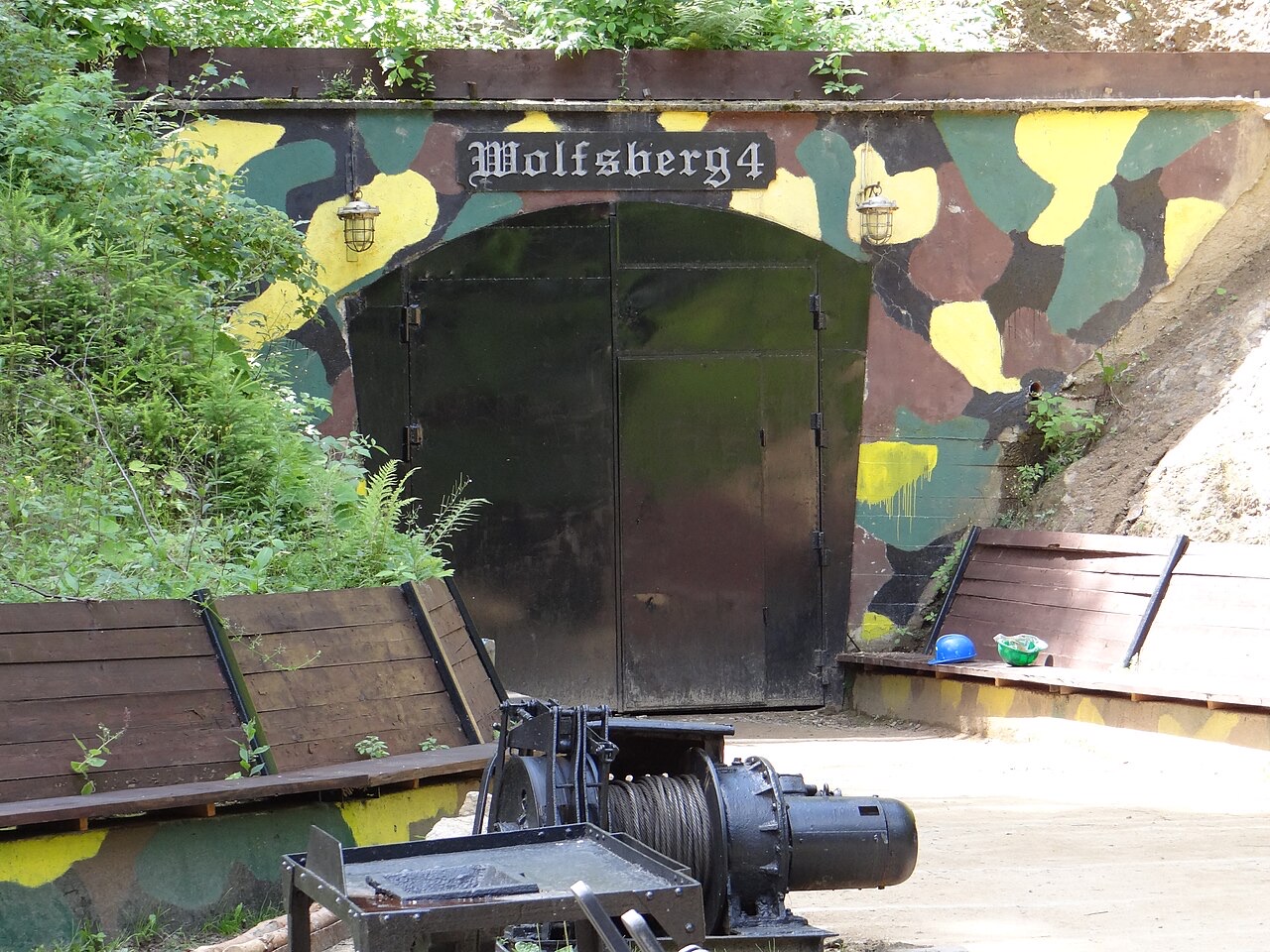
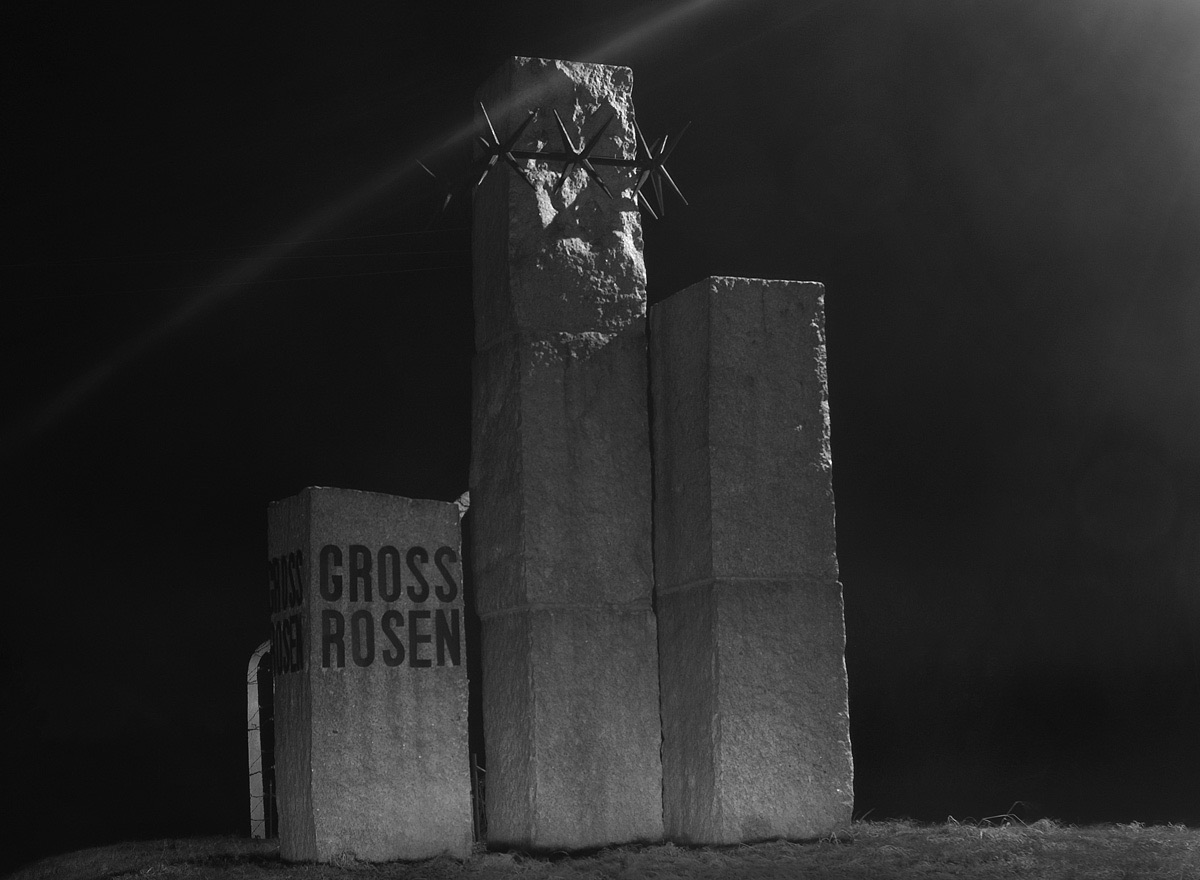
From 1943 Nazi Germany built a vast system of tunnels in the Owl Mountains near Wałbrzych, code-named Riese, “Giant”. Concentration camp prisoners were forced to blast miles of tunnels through the rock. Tunnels were also dug beneath Książ Castle nearby. The purpose of the complex is still not certain. One theory is that it was meant as a headquarters to replace Hitler’s headquarters compound known as the Wolfsschanze. That uncertainty is fertile ground for legends.
The legend
In the usual version, a German armoured train carrying gold, gems, art and bank deposits from Breslau set off in late 1944 or early 1945 and never reached Waldenburg, today’s Wałbrzych. A local journalist, Joanna Lamparska, has counted 19 different “gold train” legends in Lower Silesia. The story has been fuelled by two alleged deathbed confessions. A historian said in 2025 that there is still no credible document. A retired miner, Tadeusz Słowikowski, spent decades looking for it after hearing about it from a German man who sheltered him during the war. A German veterinarian questioned in 1950 said that the valuables of Breslau had left the city by truck in December 1944.
The claim of 2015
In August 2015 two men, the Polish businessman Piotr Koper and a German, Andreas Richter, said through lawyers that they had found a train at about kilometre 65 of the railway between Wrocław and Wałbrzych. They asked for a reward of 10 per cent of its value. Poland’s deputy culture minister, Piotr Żuchowski, said he had seen a blurred radar image and was “more than 99 percent certain that this train exists”, adding that he would only be 100 per cent sure when it was found. He warned that it might be booby-trapped. Soldiers checked the site for explosives and other dangers and found nothing dangerous.
Not every official agreed. The governor of Lower Silesia said there was no new evidence that the train was where the searchers said. Officials said that anything found would belong to the Polish state unless someone could prove ownership.
The survey and the dig
The scientists. In December 2015 a team from the AGH University of Science and Technology in Kraków, led by Professor Janusz Madej, examined the site with magnetic and gravity instruments. “There might be a tunnel there but there is no train there,” Madej said. Koper questioned their methods and maintained that the train existed.
The dig. In mid-August 2016 Koper and Richter began a privately funded excavation with a team of more than 60 people, including engineers, geologists and a military demolitions expert. Trenches about seven metres deep found no structures. After about a week their spokesman said they had found “no train, no tunnel”. The pits were filled in. Later drilling found cavities that were never shown to be a tunnel. Richter gave up the search in 2018. Koper has continued to hope.
The arguments, point by point
The radar image
Believers say: the finders’ radar showed anomalies that might be a train, and a minister was nearly certain it was real.
The response: the university survey found no sign of a train, and a geological researcher called the finders’ equipment amateurish. Madej allowed a small possibility that geology could be wrong. The dig did not find even the tunnel.
The witnesses
Believers say: deathbed confessions describe the train.
The response: the confessions are alleged and unconfirmed. Historians point out that there is no documentation of the train’s locomotive. The one account found from someone questioned at the time says the valuables of Breslau left by truck.
The tunnels are real
Believers say: the Nazis built enormous secret tunnels here, and nobody knows what they were for.
The response: this part is true. It does not show that a train was hidden in them. The editor of a Polish treasure-hunting magazine said simply: “We don’t have any evidence.”
The searches since
In 2025 a new group calling itself “Złoty Pociąg 2025” (“Gold Train 2025”) said it had located three freight wagons in a buried tunnel, using surveying and dowsing. Scientists described dowsing as pseudoscience. The forestry authorities at first allowed only metal detectors and digging to 50 centimetres, because the area is protected woodland. In early 2026 the group said the regional heritage conservator had approved ground surveys including drilling. No result had been published at the time of writing.

The effect on Wałbrzych
The story has been good for tourism. In 2015 the manager of Książ Castle spoke of a “Loch Ness Monster effect” and planned “Gold Train” T-shirts. A tunnel tour operator said 70,000 visitors came that year. An underground route beneath the castle opened in 2018, and the castle remembers the prisoners who dug the tunnels.
A similar legend
The legend is sometimes linked with the Amber Room, the panelled room of amber taken by German forces from the Catherine Palace in Russia in 1941 and shipped to Königsberg. It disappeared by 1945. Most historians believe it was destroyed in bombing raids. A reconstruction was completed in 2003.
What is still argued about
- Whether any train carrying valuables left Breslau at all.
- What the Riese tunnels were for.
No poll appears to have asked how many people believe the train exists.
Sources
- JewishGen, “Riese and Gross Rosen Prisoners and Transports”
- 45 Aid Society, “Riese”
- Gross-Rosen Museum, “Historia KL Gross-Rosen”
- United States Holocaust Memorial Museum, “Gross-Rosen”
- Subterranea Britannica, “Osówka Underground City (Project Riese)”
- Książ Castle, “Underground Tourist Route”
- In Your Pocket, “Wałbrzych”
- Notes from Poland, “Search for legendary ‘Nazi gold train’ set to resume in Poland” (2025)
- BuzzFeed News, “The Hunt For Poland’s Buried Nazi Gold Trains” (2016)
- AP via MPR News, “Men claim to find Nazi train loaded with treasure in Poland” (2015)
- CBS News (AP), “Nazi ‘gold train’ detected by radar in Poland?” (2015)
- City of Wrocław, “No confirmation that gold train has been found” (2015)
- Forsal, “Złoty pociąg dla Skarbu Państwa” (2015)
- PAP via dzieje.pl, “Specjaliści z AGH: tunel może jest, ale pociągu z czasów II wojny św. nie ma” (2015)
- CBS News (AP), “Polish geology experts weigh in on hidden Nazi train” (2015)
- TIME, “Scientists Say the Nazi Gold Train Doesn’t Exist After All” (2015)
- The Irish Times, “Optimistic explorers undertake dig for Nazi gold train in Poland” (2016)
- PAP via dzieje.pl, “Poszukiwania ‘złotego pociągu’” (2016)
- RMF24, “Do głębokości 7 metrów ‘złotego pociągu’ nie ma” (2016)
- CBS News (AP), “Big dig for legendary Nazi ‘gold train’ in Poland a bust, explorers say” (2016)
- ExplorersWeb, “Exploration Mysteries: The Nazi Gold Train” (2023)
- AFP via Artdaily, “Polish ‘gold train’ city of Walbrzych basks in Loch Ness Monster effect” (2015)
- National Geographic Polska, “Skarb, który rozpala emocje od lat” (2025)
- Interia Geekweek, “Zapadła decyzja w sprawie złotego pociągu” (2026)
- GIA Gems & Gemology, “The History and Reconstruction of the Amber Room” (2018)
- NBC News, “Nazi Treasure Train Hunt: Significant Find Confirmed in Poland” (2015)