
The short version
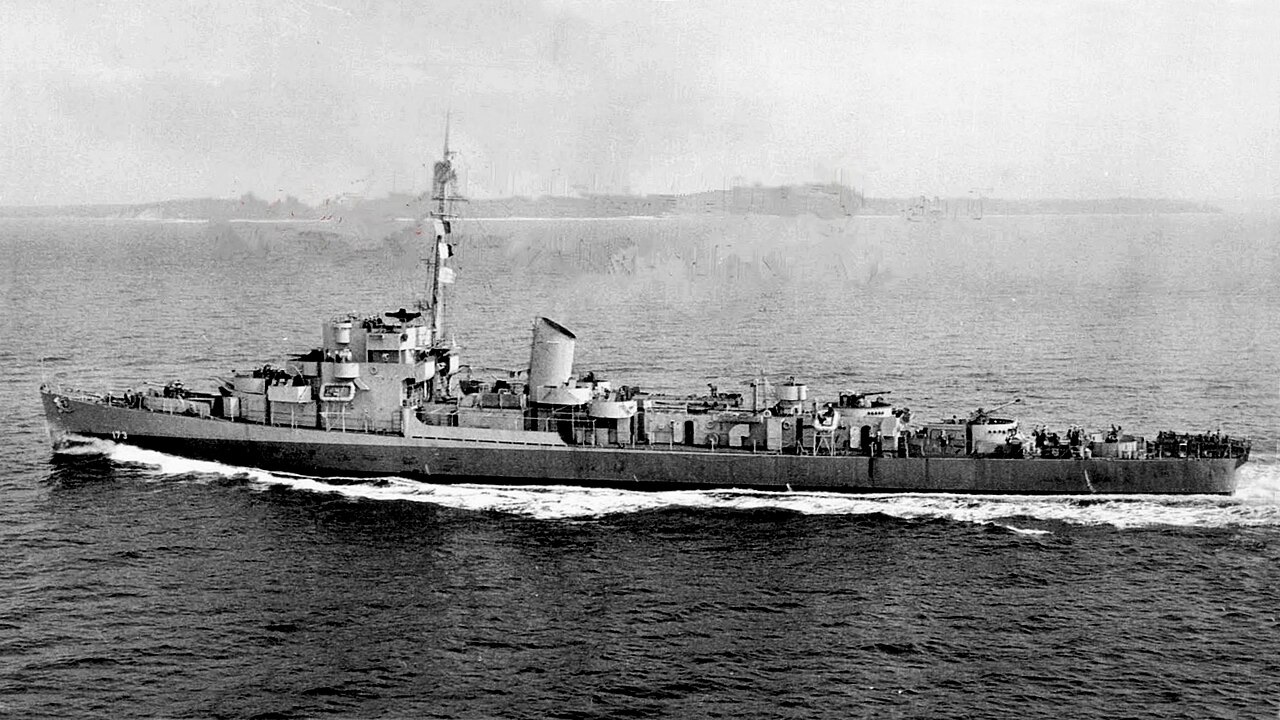
According to the legend known as the Philadelphia Experiment, in the autumn of 1943 the US Navy used a secret technology to make a warship invisible at the Philadelphia Navy Yard and to teleport it to Norfolk, Virginia, and back. In the best-known version the ship is the destroyer escort USS Eldridge, and sailors were fused into the metal of the hull, driven mad or vanished. The story can be traced to letters sent in the 1950s by a man who called himself Carlos Allende. The US Navy says it has found no record of any such experiment, and that the Eldridge’s own logs show it was never in Philadelphia during that time.
How the story began
The book. In 1955 Morris K. Jessup, a UFO writer and amateur astronomer, published The Case for the UFO. Soon afterwards he began receiving letters from a “Carlos Miguel Allende” of New Kensington, Pennsylvania. Allende said he had watched the experiment from another ship, the merchant vessel SS Andrew Furuseth, on which he said he served as a deck hand in 1943. According to the Navy’s summary of his letters, he described a ship made invisible and moved to and from Norfolk “in a few minutes, with some terrible after-effects for crew members”, supposedly by applying Albert Einstein’s “unified field” theory. He said a Philadelphia newspaper had reported it. That newspaper has never been identified.
The annotated copy. In 1956 someone mailed a copy of Jessup’s book anonymously to the Navy’s Office of Naval Research. Its margins were filled with handwritten comments about UFOs and their occupants, apparently in three colours of ink, as if by three writers. Jessup concluded that the annotations were by the man who had written to him. Two officers personally had the book retyped and copied, and the Varo Corporation, a military contractor, produced an edition with the annotations and the letters. The Navy says 25 typewritten copies were made. Another account says Varo printed 127.
The letter writer. Allende’s real name was Carl Allen. In 1969 he told the director of a UFO research organisation that his annotations and letters had been a hoax. He later took that confession back.
Jessup. Morris Jessup died by suicide in 1959.
How it grew
Writers retold the story in books in 1965 and 1977. In 1979 William Moore and Charles Berlitz published The Philadelphia Experiment: Project Invisibility, which became the basis for a 1984 film. In the film, a device meant to hide warships from radar throws a destroyer forward in time, and two sailors land in 1984.
In the 1990s new claims were added. Al Bielek said he had been aboard the Eldridge during the experiment and had travelled in time from 1943 to 1983. A 1992 book, The Montauk Project, described later secret time-travel experiments at a former air force station on Long Island. Its own introduction says it “can also be read as pure science fiction”. Sceptical researchers found that neither Bielek nor another man who claimed to have been a sailor on the Eldridge had any connection with the real ship.
The arguments, point by point
The ship was in Philadelphia
Believers say: the Eldridge was the ship used in the experiment at Philadelphia in the autumn of 1943.
The response: the Navy’s historical command reviewed the Eldridge’s deck log and war diary from its commissioning on 27 August 1943, at the New York Navy Yard, to the end of that year. The ship stayed around New York until mid-September, trained near Bermuda until mid-October, then escorted a convoy back to New York and stayed in the harbour until 1 November. It escorted a convoy to Norfolk, arriving on 2 November, and left the next day for Casablanca. “During this time frame, Eldridge was never in Philadelphia,” the command concluded.
The witnesses on the Andrew Furuseth
Believers say: the crew of the merchant ship saw the Eldridge appear at Norfolk out of nowhere.
The response: the Andrew Furuseth’s movement records show that it left Norfolk on 25 October with a convoy bound for Oran in North Africa. “Eldridge and Andrew Furuseth were not even in Norfolk at the same time,” the Navy says. The merchant ship’s master in 1943 wrote that neither he nor his crew saw anything unusual.
Einstein
Believers say: Einstein worked for the Navy during the war, and the experiment applied his theories.
The response: Einstein was a part-time consultant to the Navy’s Bureau of Ordnance from 1943 to 1944, working on the theory of explosives and explosions. The Navy says there is no sign he worked on anything to do with invisibility or teleportation. His unified field theory was never completed.
Project Rainbow
Believers say: the experiment was known as Project Rainbow.
The response: the Navy’s archives found no teleportation project of that name. RAINBOW was the code name for the US war plans against the Axis powers.
Invisible to what?
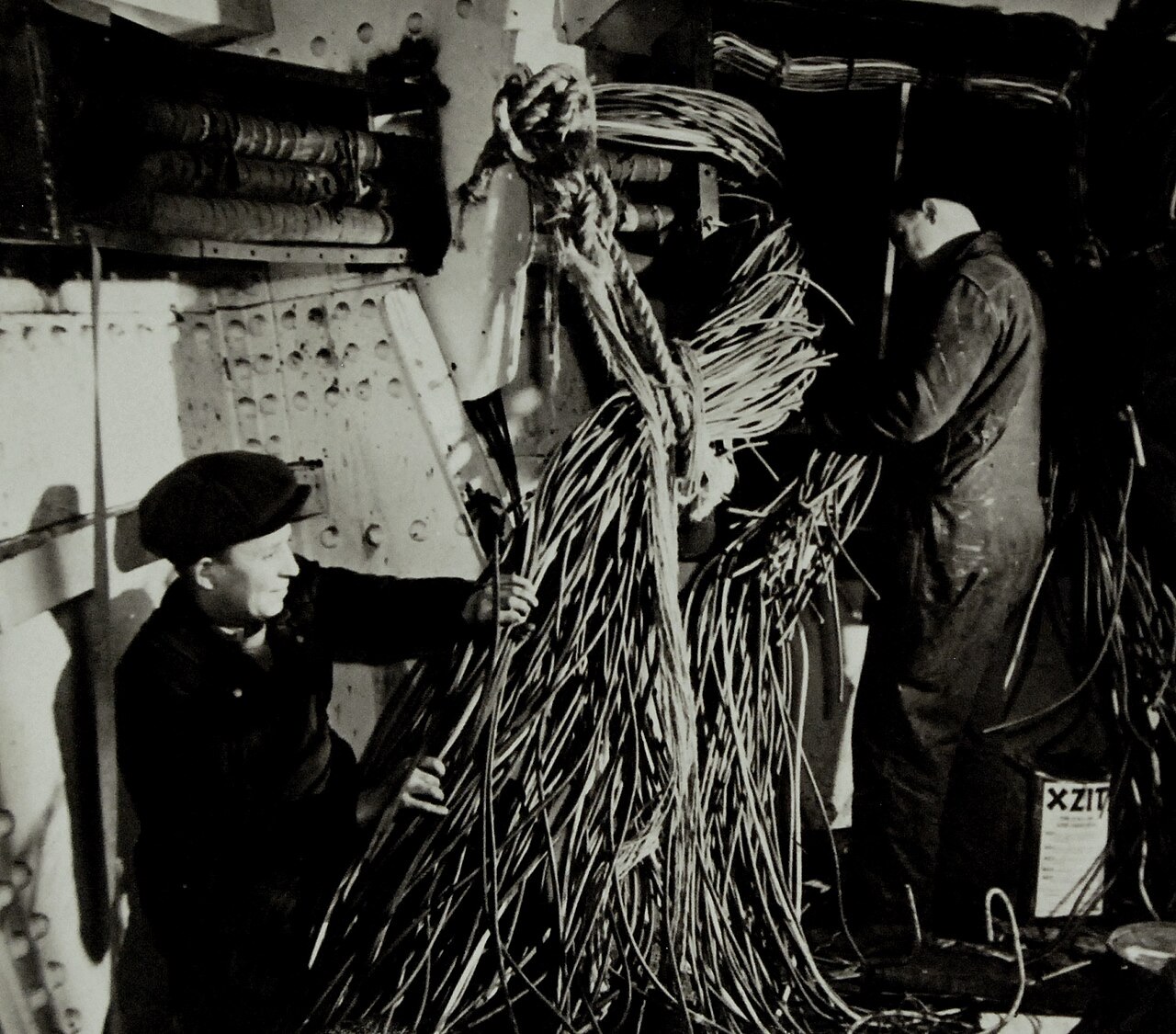
The response: the Navy suggests that the story grew out of real wartime work. Ships were “degaussed”: electric cables were wrapped around the hull to cancel its magnetic field, making it “invisible” to magnetic mines. The ship stayed visible to the eye, to radar and to underwater listening devices. A sailor named Edward Dudgeon told the UFO researcher Jacques Vallée that he had seen ships wrapped in cables carrying high voltages, and that sailors were sent ashore while it was done. The Office of Naval Research also mentions a 1950s test on another destroyer with an electrical generator that produced glowing discharges, in which no crew member was harmed.
The denials themselves
Believers say: the Navy’s denials are what a cover-up would look like, and its explanation has changed over the years.
The response: the Navy says the Office of Naval Research has never investigated invisibility, “either in 1943 or at any other time”, and that it was founded only in 1946. At a reunion in 1999, crew members of the Eldridge laughed off the legend. One of them said simply: “It never happened.” None of them could explain why writers had picked their ship.
The real Eldridge
The Eldridge was a Cannon-class destroyer escort, launched in New Jersey in July 1943 and named after a naval officer killed in the Solomon Islands. Between January 1944 and May 1945 it made nine convoy voyages to North Africa, served in the Pacific in 1945 and was decommissioned in 1946. In 1951 it was transferred to the Greek navy as the Leon, and it was scrapped in the late 1990s.

What is still argued about
- Who wrote all of the annotations in the Varo edition, and whether Allen worked alone.
- Which of Allen’s statements to believe, since he both confessed to a hoax and took it back.
No poll appears to have asked how many people believe the story.
Sources
- Naval History and Heritage Command, “Philadelphia Experiment” (2000), archived copy
- Office of Naval Research, “Information Sheet: Philadelphia Experiment” (1996), archived copy
- Naval History and Heritage Command, Dictionary of American Naval Fighting Ships, “Eldridge (DE-173)”, archived copy
- NavSource Online, “USS Eldridge (DE-173)”, archived copy
- The Philadelphia Inquirer, “Ship’s myth keeps reappearing” (1999), copy
- The Skeptic’s Dictionary, “Philadelphia experiment”
- Encyclopedia.com, “The Philadelphia Experiment”
- The Skeptic, “What really happened in the case of the Philadelphia Experiment?” (2023)
- Military.com, “This Is the Truth Behind WWII’s Creepy Philadelphia Experiment” (2020)
- The Encyclopedia of Science Fiction, “Philadelphia Experiment, The”
- Skeptoid, episode 757 (the Montauk Project)
- Dan’s Papers, “Camp Hero and the Montauk Project Mystery” (2014)