
The short version
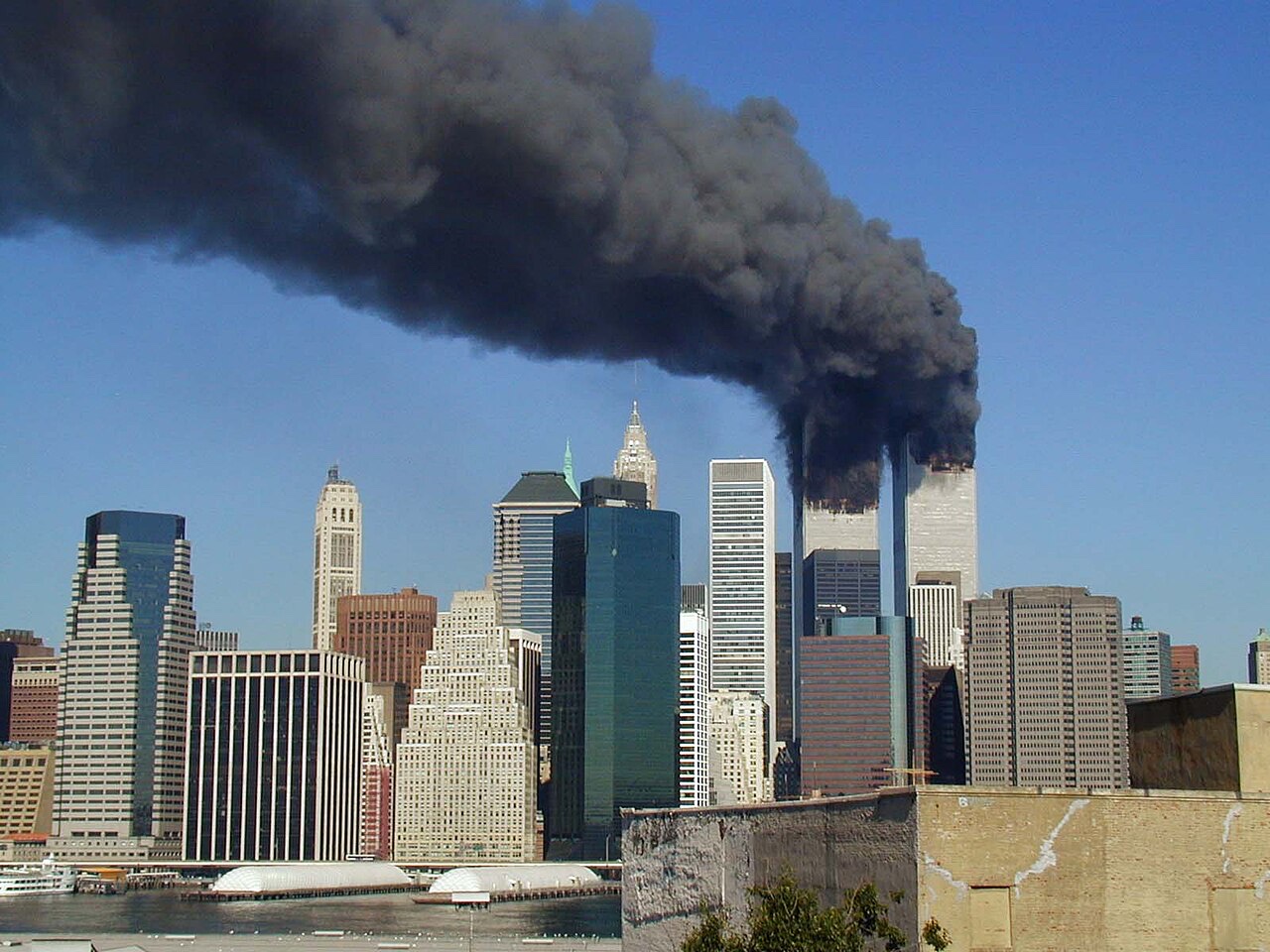
On 11 September 2001, nineteen hijackers took control of four airliners. Two hit the Twin Towers in New York, one hit the Pentagon, and one crashed in a field in Pennsylvania after passengers fought back. The official account blames the terrorist network al-Qaeda, whose leader Osama bin Laden later claimed responsibility. “Truthers” argue that the US government either allowed the attacks or carried them out.
What the official investigations found
The 9/11 Commission (2004) was a bipartisan panel created by Congress. It concluded that al-Qaeda planned and executed the attacks, and that US agencies missed chances to stop them because they failed to share information. It described a “failure of imagination”.
The National Institute of Standards and Technology (NIST) studied the building collapses. Its 2005 report found that aircraft impact stripped fireproofing from the towers’ steel, and that the fires then weakened the structure until the upper floors fell onto those below. Its 2008 report on Building 7 found that fire was the primary cause there too.
Versions of the theory
They let it happen. Officials had warnings and chose not to act, because an attack would justify wars and new powers.
They made it happen. Elements of the government planned the attacks, and the buildings were brought down with explosives planted in advance.
Foreign state involvement was covered up. The hijackers had help from officials of another country, and Washington hid it to protect an ally.
No planes. A fringe view holds that the Pentagon was hit by a missile, or that no aircraft were involved at all.
The arguments, point by point
Building 7
Doubters say: World Trade Center 7, a 47-storey tower, was not hit by a plane and still collapsed at 5:20 pm. It fell straight down, and for about two seconds at free-fall speed. To many people it looks like a controlled demolition.
The response: NIST found that debris from the North Tower started fires on several floors, and that the water main feeding the sprinklers had been cut. Heat made floor beams expand and push a girder off its seat, a key column buckled, and the failure spread through the building. NIST accepted that the exterior fell at free-fall for about 2.25 seconds and said that fits its model, because the interior had already given way. It called this the first known case of a tall building collapsing mainly because of fire.
Still disputed: a 2020 engineering study at the University of Alaska Fairbanks, funded by a group that questions the official account, concluded that fire could not have caused the collapse. NIST has stood by its findings.
The Twin Towers fell too fast and too neatly
Doubters say: steel does not melt at the temperature of burning jet fuel, and the towers came down in seconds.
The response: NIST’s finding was that the steel did not need to melt. It loses much of its strength at temperatures well below melting, and the collapse began at the impact floors and moved downward, unlike a demolition, which starts at the base.
Thermite
Doubters say: a 2009 paper reported particles of a high-tech incendiary in the dust.
The response: other analysts say the particles match ordinary primer paint, and NIST found no evidence of explosives or of the sound that demolition charges would have produced.
The Pentagon
Doubters say: the hole looked too small for an airliner and little wreckage was visible.
The response: aircraft parts, the flight recorder and the remains of passengers and crew were recovered inside the building, and more than a hundred people saw the plane.
Warnings were ignored
Doubters say: a presidential briefing on 6 August 2001 was headed “Bin Ladin Determined to Strike in US”.
The response: the Commission confirmed the briefing and criticised the response. It found no specific warning of the date, targets or method.
Unusual stock trades
Doubters say: someone bet against the airlines days before the attacks.
The response: the Commission and financial regulators traced the trades and reported that each had an explanation unrelated to terrorism.
“Pull it”
Doubters say: the owner of Building 7 said on television that the decision was made to “pull it”.
The response: he said he meant pulling firefighters out of the area. The fire department had evacuated its people hours before the collapse.
What turned out to be real
Some suspicions were later supported by documents. Twenty-eight pages of a congressional inquiry, kept secret until 2016, described contacts between some hijackers and people connected to the Saudi government. The FBI released more material from 2021 onwards. Saudi Arabia denies any role, and the Commission found no evidence that the Saudi government as an institution funded al-Qaeda. Families of victims have pursued the question in court for years.
The Commission also found that some early official statements about the military’s response that morning were inaccurate.

What is still argued about
- How much foreign officials knew, and why those files were classified for so long.
- Whether the Commission, which its own chairmen said was underfunded and obstructed, could get to the bottom of everything.
- Building 7, which remains the centre of the technical dispute.
Sources
- NIST, Questions and Answers about the WTC 7 Investigation
- NIST, Questions and Answers about the WTC Towers Investigation
- NIST, Final Report on the Collapse of World Trade Center Building 7 (NCSTAR 1A, 2008)
- National Commission on Terrorist Attacks Upon the United States, The 9/11 Commission Report (2004)
- Joint Congressional Inquiry, declassified “28 pages” (released 2016)
- University of Alaska Fairbanks, structural re-evaluation of the collapse of WTC 7 (2020)