
The short version
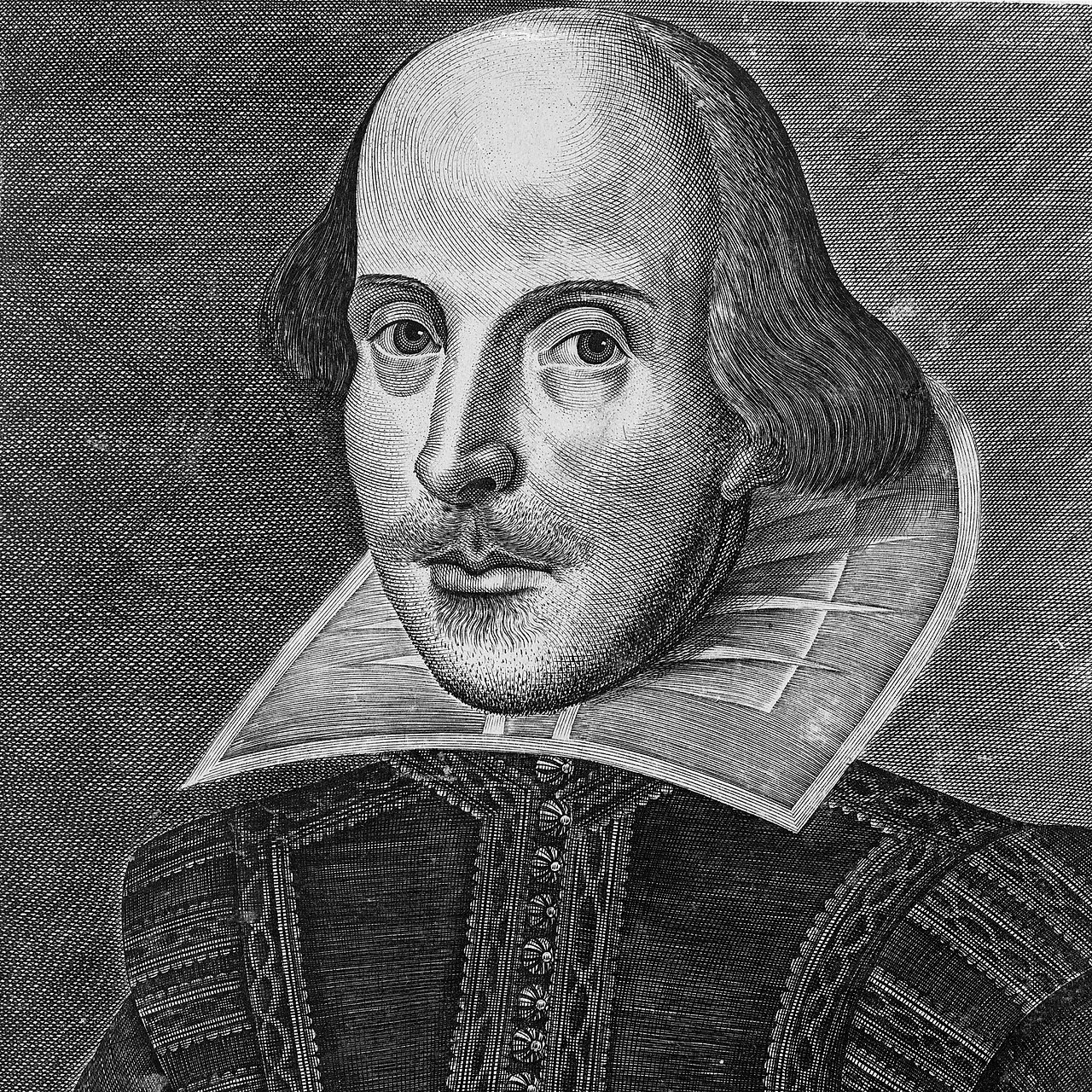
The plays and poems were published under the name William Shakespeare, and the man of that name from Stratford-upon-Avon was an actor and partner in a London theatre company, the Lord Chamberlain’s Men. Nobody questioned that he wrote them until the 1850s. Since then dozens of other candidates have been proposed, most often the Earl of Oxford. The doubters, who include famous writers, actors and judges, argue that the surviving records of the Stratford man do not fit the author of the plays. Scholars of the period answer that the records of the time, the books themselves and his fellow writers all point to him.
What is known about the man from Stratford
Life. He was baptised in Stratford-upon-Avon on 26 April 1564. In 1582, at 18, he married Anne Hathaway, who was 26. Twins, Judith and Hamnet, were born in 1585, and Hamnet died in 1596 at the age of 11. Almost nothing is known of the following years. In 1592 he is first mentioned as an established actor and playwright in London.
Work. He was an actor, playwright and business partner in the Lord Chamberlain’s Men, the company that became the King’s Men in 1603.
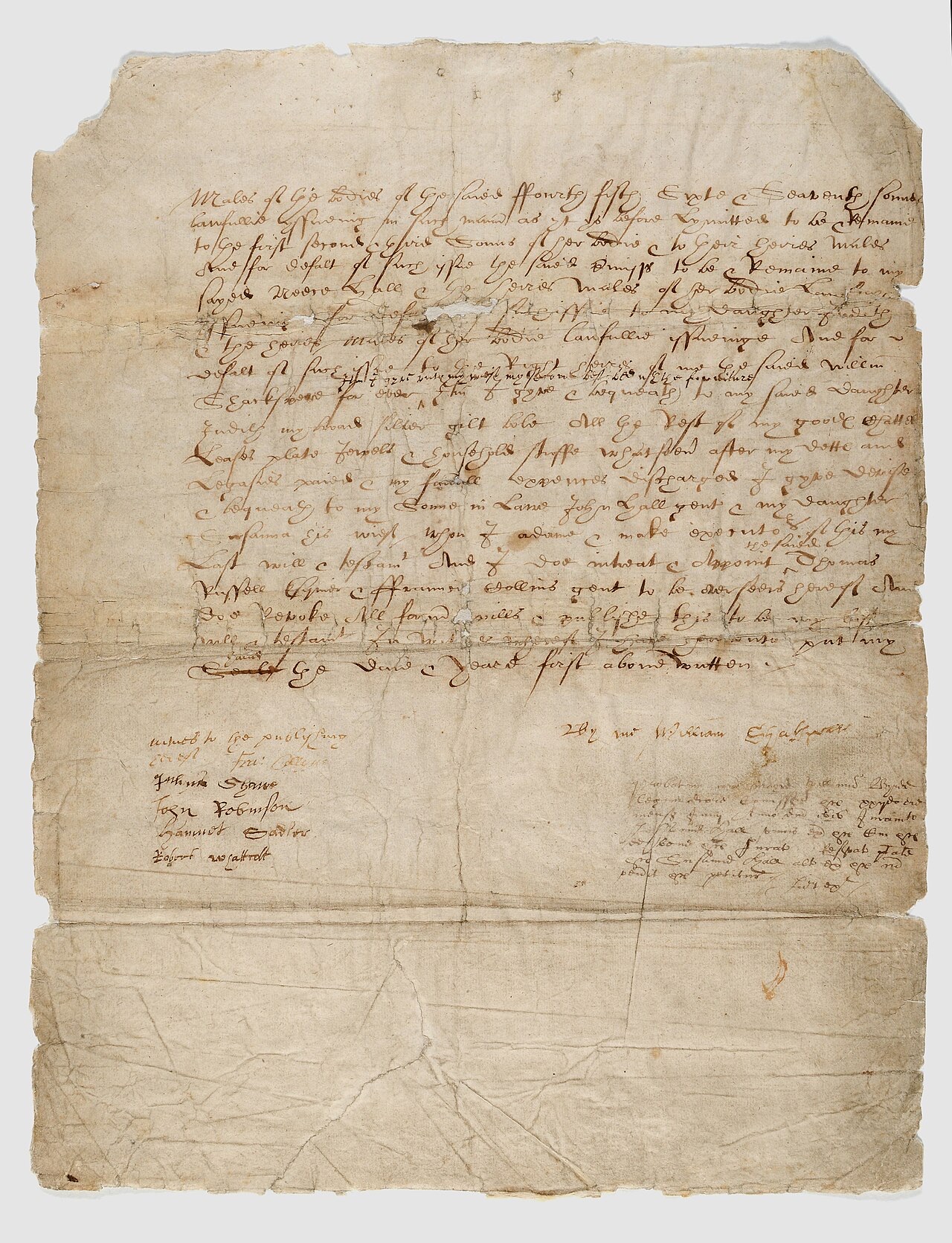
Death and will. He died on 23 April 1616. His will leaves his wife “my second best bed with the furniture”, and leaves money for memorial rings to three actors of his company: John Heminge, Richard Burbage and Henry Condell. It names money, clothing, property, a sword and silver, but no books or manuscripts. Six signatures survive, three of them on the will, and they differ slightly from each other.
The evidence for him
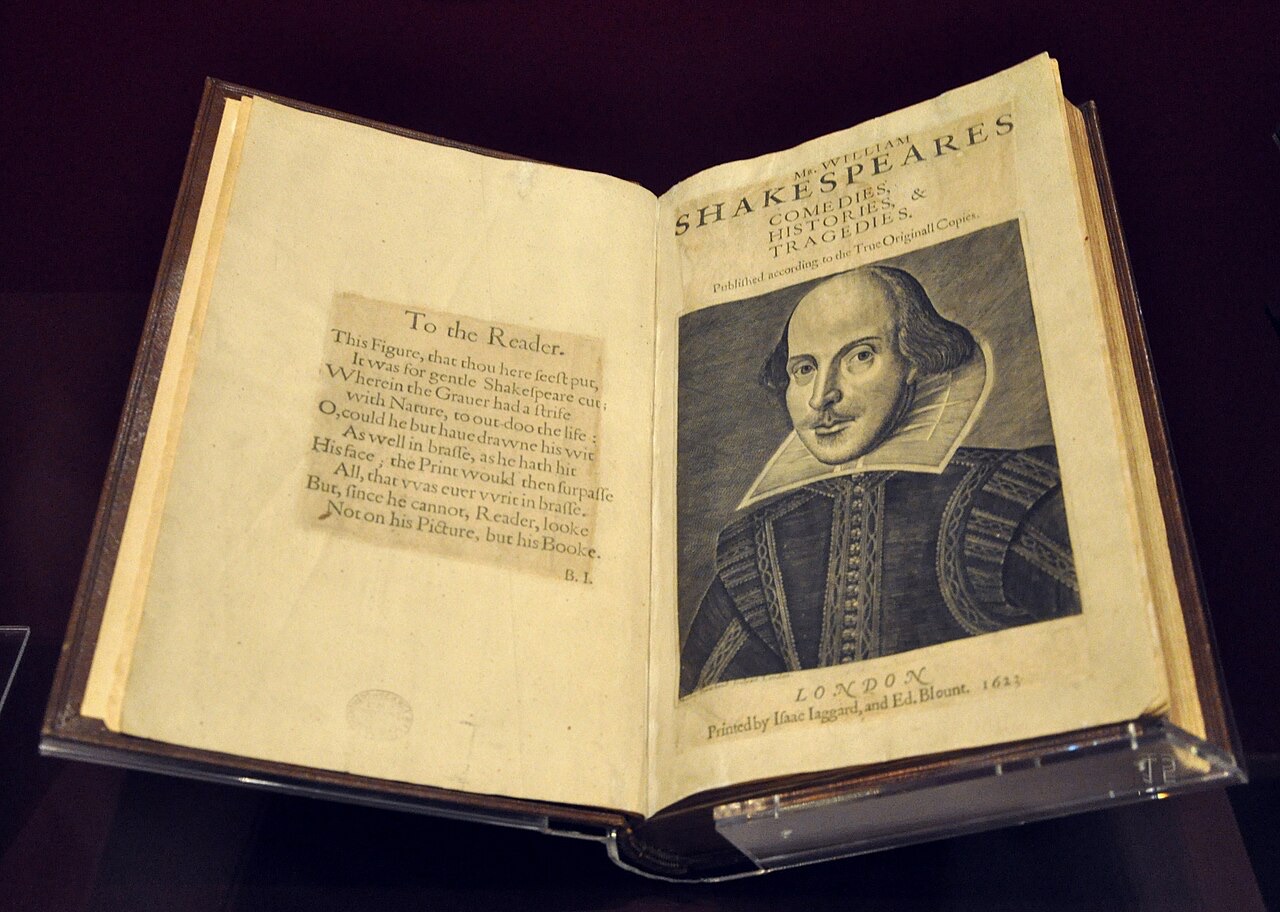
The First Folio. In 1623, seven years after his death, two of the actors remembered in his will, Heminge and Condell, published 36 of his plays in one volume, half of them for the first time. In the same book the playwright Ben Jonson called him the “Sweet Swan of Avon”, and the poet Leonard Digges mentioned his monument at Stratford. About 235 copies survive.
The monument. A memorial bust in Holy Trinity Church, Stratford, put up between 1616 and 1623, compares him with Socrates and Virgil and honours him as a writer.
Contemporaries. In 1598 the writer Francis Meres named Shakespeare among the leading English writers, and listed Marlowe, Bacon and Oxford separately.
The texts. Students at the Claremont Colleges in California, advised by Ward Elliott and Robert Valenza, compared Shakespeare’s verse by computer with the writing of 37 claimants between 1987 and 1994. According to the project’s own report, none matched. Studies of style have also found that Shakespeare wrote some plays with other playwrights. In 2016 the New Oxford Shakespeare, based on research by 23 academics, credited Christopher Marlowe as co-author of the three Henry VI plays and judged 17 of 44 plays to be collaborations.
When the doubts began
The Shakespeare Birthplace Trust says that for more than 200 years after his death nobody questioned his authorship. In 1857 the American writer Delia Bacon published a book arguing that the plays had been written by a group of courtiers, including Francis Bacon and Walter Raleigh. A manuscript claiming that a clergyman had doubted Shakespeare as early as the 1780s has been argued by the scholar James Shapiro to be a later forgery, probably from the early 20th century.

The candidates
Those who doubt Shakespeare have proposed more than 60 people or groups.
Edward de Vere, 17th Earl of Oxford. Proposed in 1920 by J. Thomas Looney, he is now the favourite of most doubters. Supporters say he was praised in his time as a playwright and poet, that the plays reflect an aristocrat’s life, and that their case is strong though mainly circumstantial. The main objection is that he died in 1604, about a decade before Shakespeare’s career ended and too early, according to the Shakespeare scholar Alan Nelson, for plays such as Macbeth, King Lear and The Tempest. Oxfordians reply that no play has been proved to date from after 1604.
Francis Bacon. The lawyer, politician and philosopher was the first popular candidate. In 1888 the Minnesota politician Ignatius Donnelly published a book claiming to find a secret cipher by Bacon in the plays. A Bacon scholar points out that Bacon’s known entertainments for the court contain no drama. His support has since faded, at least in England, in favour of Oxford and Marlowe.
Christopher Marlowe. The playwright was born in the same year as Shakespeare and is recorded as having been stabbed to death in Deptford on 30 May 1593. The theory holds that his death was faked and that he went on writing abroad under another name. Historians point to the coroner’s report of his death.
Others. Candidates also include William Stanley, Earl of Derby, the literary patron Mary Sidney, Countess of Pembroke, and, in a book published in 2026, the poet Emilia Bassano.
The arguments, point by point
The will and the books
Doubters say: a writer who used so many sources left no books, and his will names none. No letter in his hand has been found, and his only certain writing is six signatures.
The response: the Birthplace Trust says that books were not often mentioned in wills of the time and might have been listed in a separate inventory, and Shakespeare’s inventory does not survive.
Education and travel
Doubters say: the plays show knowledge of law, court life and foreign countries that a man from a small town with no university education is unlikely to have had. There are no school records for him and no record that he left England. The actor Derek Jacobi has argued that such knowledge could not have come from chatting to sailors in a pub.
The response: scholars say he would have attended the grammar school in Stratford, as Ben Jonson attended his, and that the books that shaped his writing were not on the university syllabus in any case.
The family
Doubters say: his parents could not sign their names, and the Declaration of Reasonable Doubt says neither of his daughters could write.
The response: the Birthplace Trust says signatures of one of his daughters survive, and that reading and writing were taught as separate skills, so the ability to sign says little about education or intelligence.
The doubters themselves
Doubters say: serious people have shared the doubt, including Mark Twain, Sigmund Freud, Henry James, Charlie Chaplin and Orson Welles. The US Supreme Court Justice John Paul Stevens said in 2009 that he believed Oxford was the author. In 2007 the actors Derek Jacobi and Mark Rylance launched a “Declaration of Reasonable Doubt”, which proposes no candidate but argues the question deserves study. By late 2026 it had more than 5,700 signatures, according to its organisers.
The response: Shapiro’s book Contested Will (2010) ties doubters such as Mark Twain to the belief that great fiction must be drawn from the author’s own life. In a mock trial sponsored by American University in 1987, three Supreme Court justices heard the case for Oxford and found that it had not been proved, though two of them expressed some sympathy with the doubters.

What is still argued about
- Among scholars, not who Shakespeare was but how much he wrote alone, and with whom. The co-authors of Henry VI are still debated.
- The “lost years” between 1585 and 1592, about which almost nothing is known.
The 2011 film Anonymous told the story of Oxford as the hidden author. No general opinion poll on the question appears to exist.
Sources
- Folger Shakespeare Library, “Shakespeare’s life”
- Shakespeare Documented, “Parish register entry recording William Shakespeare’s baptism”
- Shakespeare Documented, “William Shakespeare’s last will and testament”
- Folger Shakespeare Library, “The Shakespeare First Folio”
- Shakespeare Birthplace Trust, “The Shakespeare Authorship Question”
- Shakespeare Birthplace Trust, “60 Minutes with Shakespeare” (2011)
- Shakespeare Birthplace Trust, “Shakespeare’s will and his books”
- Shakespeare Birthplace Trust, “Shakespeare’s family’s literacy”
- Shakespeare Birthplace Trust, “Shakespeare’s memorial bust”
- Shakespeare Birthplace Trust, “Shakespeare’s education level”
- Shakespeare Birthplace Trust, “James Wilmot and Shakespeare’s authorship”
- Shakespeare Birthplace Trust, “The Earl of Oxford and Shakespeare’s authorship”
- Shakespeare Birthplace Trust, “Sir Francis Bacon and Shakespeare’s authorship”
- Shakespeare Birthplace Trust, “Marlowe and Shakespeare’s authorship”
- Shakespeare Birthplace Trust, “Suggested authors of Shakespeare’s works”
- Stanley Wells, “Plotting Against the Stratford Man”, The New York Review of Books (2010)
- The Week, “Book of the week: Contested Will” (2010)
- The Claremont Shakespeare Clinic
- The Irish Times, “Christopher Marlowe credited as Shakespeare’s co-writer” (2016)
- Shakespeare Authorship Coalition, “Declaration of Reasonable Doubt”
- Shakespeare Authorship Coalition, “Past Doubters”
- Shakespeare Oxford Fellowship, “Who Wrote Shakespeare? Shakespeare Authorship 101”
- Critical Stages, “Derek Jacobi and Mark Rylance: Reasonable Doubt about the Identity of William Shakespeare” (2018)
- ABA Journal, “Justice Stevens, a Shakespeare Buff, Says Real Author Was Nobleman” (2009)
- PBS Frontline, “American University Debate, The Shakespeare Mystery”
- The Marlowe Society, “Marlowe’s Life”
- MNopedia, “Donnelly, Ignatius (1831-1901)”
- Mary Sidney Society, “About”
- Times Higher Education, “Will’s quill or not Will’s quill…” (2011)
- Shakespeare Birthplace Trust, “Delia Bacon and Shakespeare’s authorship”
- Shakespeare Birthplace Trust, “Shakespeare’s collaborations”
- PBS Frontline, “Debate Listing, The Shakespeare Mystery”
- No Sweat Shakespeare, “Who wrote Shakespeare”
- Pen & Sword, “The Real Shakespeare” (2026)