
The short version
Shortly after 7 am on 30 June 1908, a giant explosion shook a remote forest in Siberia, near the Podkamennaya Tunguska River. It knocked over millions of trees across about 2,000 square kilometres, and its pressure wave was recorded on instruments around the world. For several nights afterwards the skies over Europe and Asia glowed. Yet when scientists finally reached the site, there was no crater and no meteorite. Most scientists today think a stony asteroid, perhaps 50 to 80 metres across, exploded in the air several kilometres above the ground. Because no piece of it has ever been conclusively found, other explanations have been proposed, from a comet or a tiny black hole to an eruption of gas from below, or an alien spaceship.
The blast
The area was almost empty of people. Evenki reindeer herders described a fireball trailing smoke, a flash brighter than the Sun and a noise like thunder. Those closest to the blast were thrown into the air and knocked unconscious. At the Vanavara trading post, some 65 to 70 km away, a man named Semenov said the sky seemed to split in two and fire covered the northern sky. “I felt a great wave of heat as if my shirt had caught fire,” he recalled. The blast threw him off his porch.
Hundreds of reindeer were killed. Accounts differ on whether anyone died: A 2008 NASA article said there was no direct evidence that any person was killed, while other accounts mention two or three deaths among local people.
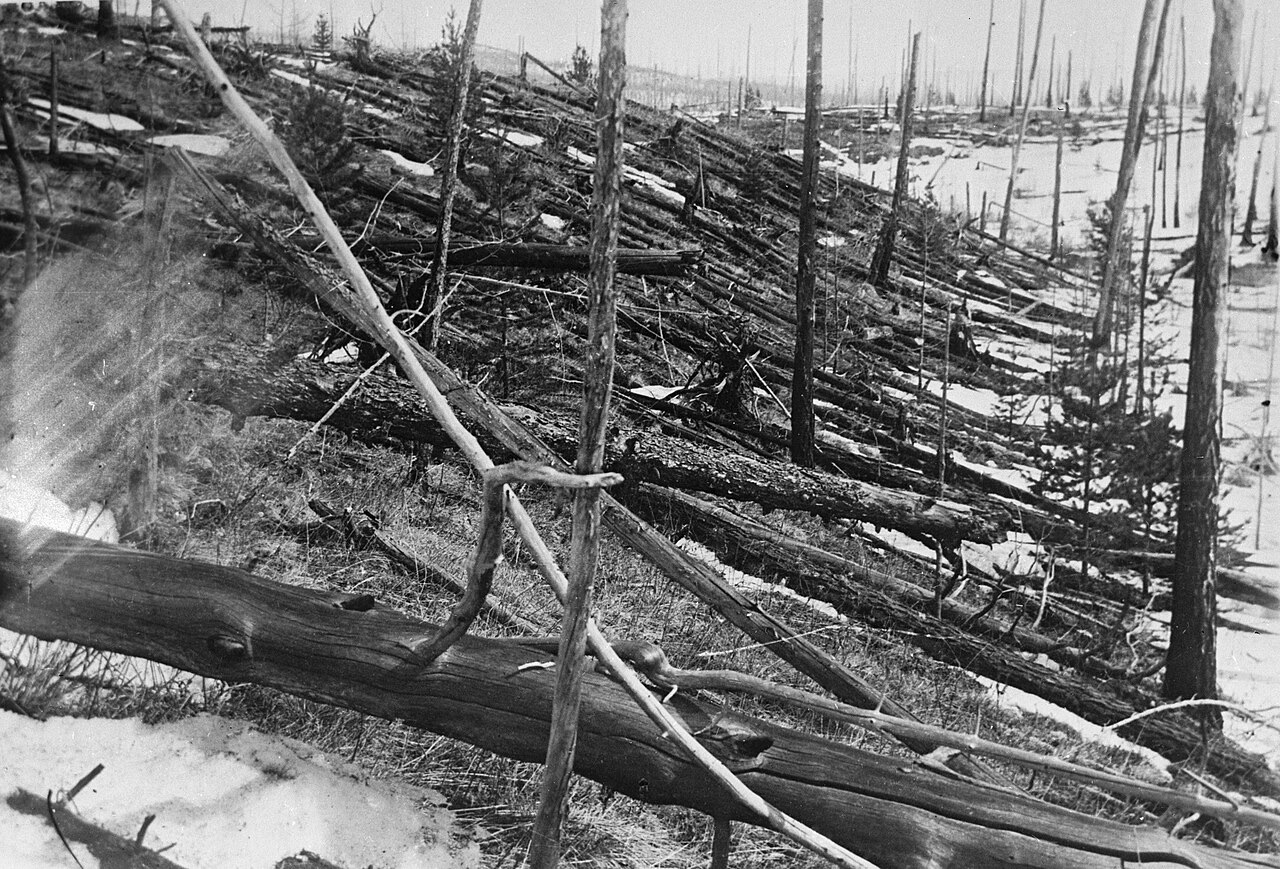
Near the centre, trees were left standing but stripped of branches and bark. Further out, they lay flat, pointing away from the centre like spokes. An often-repeated figure of 80 million fallen trees is, according to a group of impact scientists writing in 2024, probably four times too high. Estimates of the energy released range from about 3 megatons of TNT to 20 or more, hundreds of times the power of the Hiroshima bomb.
The search for a crater
The first scientific expedition did not reach the site until 1927. Leonid Kulik, who curated the meteorite collection at the St Petersburg museum, expected to find a crater and a mass of meteoric iron. Guided by Evenki hunters, he found only a shattered forest. Over the next 14 years he led several more expeditions. He drained a bog that he thought might be a crater, only to find an old tree stump at the bottom. Kulik died in 1942 as a prisoner of war. Later expeditions found tiny particles that suggested an origin in space, but they could not be conclusively tied to the blast.
The mainstream view: an airburst
Most scientists believe that an asteroid exploded in the air. “That is why there is no impact crater,” said Don Yeomans of NASA’s Jet Propulsion Laboratory in 2008. “The great majority of the asteroid is consumed in the explosion.” In 2019 researchers at NASA’s Ames Research Center modelled more than 50 million combinations of asteroid sizes and entry conditions and concluded that the most likely cause was a stony, not icy, object 50 to 80 metres across, which released the energy of 10 to 30 megatons. Others, such as Mark Boslough, have argued that the blast was smaller, 3 to 5 megatons, but directed downwards.
The 2013 airburst over Chelyabinsk in Russia, which blew out about a million windows and injured more than a thousand people, showed that such explosions really happen. In 2016 the United Nations declared 30 June, the anniversary of Tunguska, International Asteroid Day.
The alternatives
A comet
The British astronomer F. J. W. Whipple proposed in 1930 that the object was a comet, which would explain why no rock was found. Critics argue that a comet on such a shallow path would have broken up much higher in the atmosphere. NASA says most scientists today favour an asteroid.
A crater after all
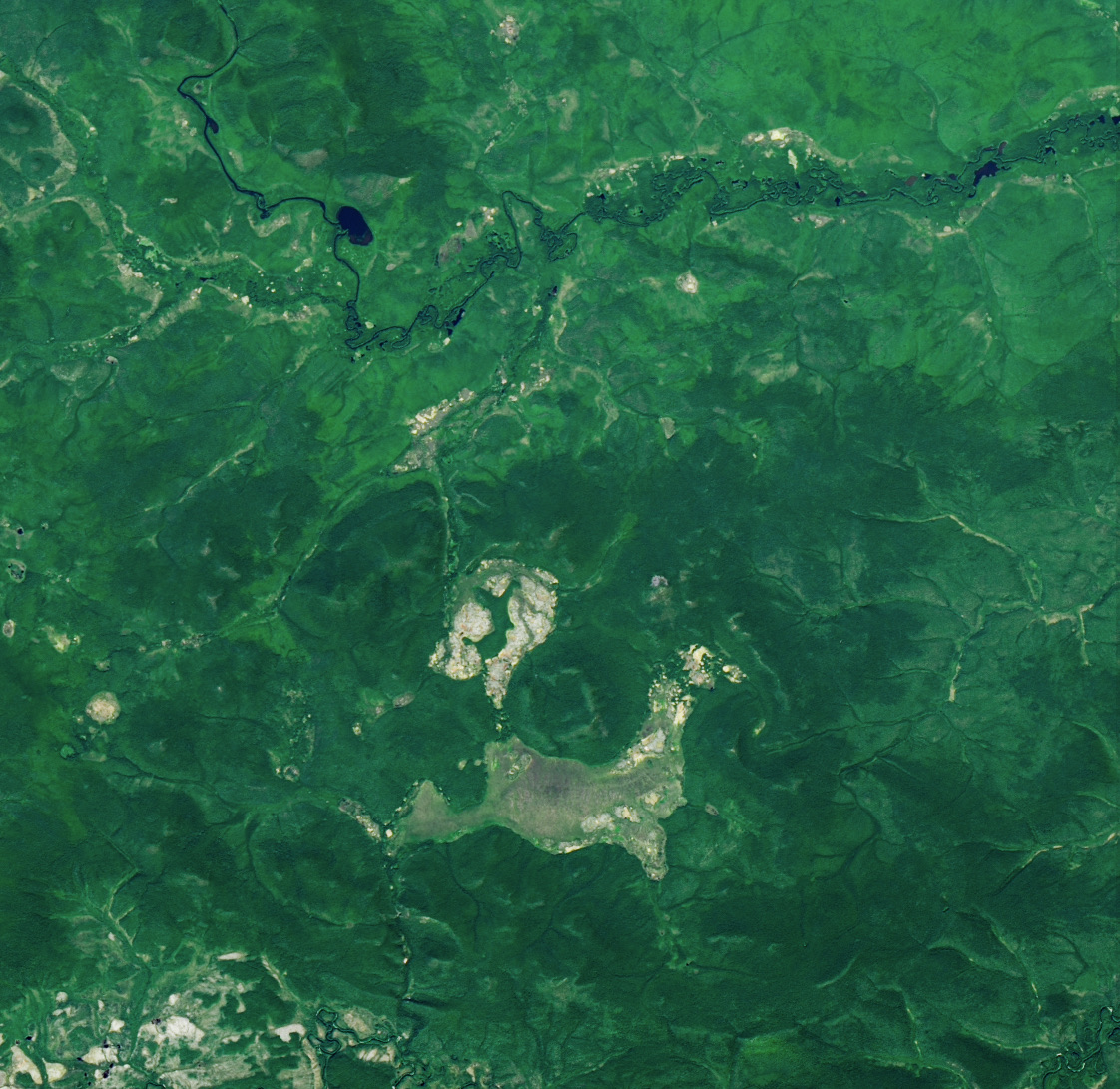
In 2007 researchers from the University of Bologna suggested that Lake Cheko, about 8 km from the centre, fills a crater made by a fragment of the object. Other scientists concluded in 2008 that the lake was “highly unlikely” to be an impact crater, and a Russian team reported in 2024 that the lake is at least 300 years old, older than the blast. The dispute continues.
An asteroid that bounced back
In 2020 a team led by Daniil Khrennikov of the Siberian Federal University argued that the blast was caused by an iron asteroid that passed through the atmosphere and continued on into an orbit around the Sun.
A black hole or antimatter
In 1965 a paper in Nature, by Clyde Cowan and colleagues, discussed the possibility that the object contained antimatter. In 1973 two physicists at the University of Texas, A. A. Jackson and Michael Ryan, suggested in Nature that a tiny black hole had passed through the Earth.
Gas from below
The physicist Wolfgang Kundt of Bonn University proposed that the blast was caused by about 10 million tonnes of natural gas escaping from the ground. Others have suggested violent eruptions of gas and magma from deep below Siberia, sometimes called “verneshots”.
A spaceship or a death ray
In 1946 the Soviet writer Alexander Kazantsev published a short story suggesting that only a nuclear explosion could explain the destruction, so it must have been an exploding alien spaceship. The idea inspired real expeditions, which looked for raised radiation and found none. Another popular story blames the inventor Nikola Tesla, but the Tesla biographer Marc Seifer does not believe Tesla had the technology, and thinks a meteor or small comet was the cause.

What is still argued about
- How large the object and the explosion were.
- Whether any fragment hit the ground, at Lake Cheko or elsewhere.
- Whether impact materials have been found. In December 2025 a team led by James Kennett of the University of California, Santa Barbara, reported shocked quartz and melted material at the site. The 2024 group of impact scientists had stated that no shocked quartz caused by Tunguska had ever been found.
By one count from 2008, there are 66 theories about what happened. No poll appears to have asked what the public thinks caused the blast.
Sources
- NASA, “115 Years Ago: The Tunguska Asteroid Impact Event” (2023)
- NASA Earth Observatory, “A Cosmic Explosion Over Siberia” (2025)
- NASA, “Tunguska Revisited: 111-Year-Old Mystery Impact Inspires New, More Optimistic Asteroid Predictions” (2019)
- APS News, “June 30, 1908: The Tunguska Event” (2018)
- ScienceDaily (Science@NASA), “What Hit Siberia 100 Years Ago? Tunguska Event Still Puzzles Scientists” (2008)
- Slate, “Tunguska Event: Eyewitness accounts” (2013)
- EBSCO Research Starters, “Tunguska event”
- Nautilus, “The Mystery of the Dark Asteroid That Scorched Russia” (2020)
- Discover, “The Last Great Impact on Earth” (1996)
- Scientific American blog, “June 30, 1908: The Tunguska Event” (2012)
- Nature, “Was the Tungus Event due to a Black Hole?” (1973)
- Nature, “Possible Anti-Matter Content of the Tunguska Meteor of 1908” (1965)
- Khrennikov et al., “On the possibility of through passage of asteroid bodies across the Earth’s atmosphere” (2020), arXiv
- Astronomy, “Tunguska explosion in 1908 caused by asteroid grazing Earth, study suggests” (2020)
- Gasperini et al., “A possible impact crater for the 1908 Tunguska Event”, Terra Nova (2007)
- Collins et al., “Evidence that Lake Cheko is not an impact crater”, Terra Nova (2008)
- Limnology and Freshwater Biology, study of the age of Lake Cheko (2024)
- Boslough et al., “Myths and Misinformation about Tunguska and Cosmic Airbursts” (2024)
- Boslough and Truitt, “Effective height of burst revisited” (2019)
- ScienceDaily (UC Santa Barbara), “Earth may have been ravaged by ‘invisible’ explosions from space” (2025)
- UN Office for Outer Space Affairs, “International Asteroid Day, 30 June”
- Dawn (AFP), “100 years later, mystery shrouds ‘cosmic impact’ in Russia” (2008)
- Tesla Universe, “Ask Dr. Seifer About Nikola Tesla” (1997)